
Search Chattanooga Deed Records
Chattanooga deed records are recorded through the Hamilton County Register of Deeds, so city property searches move through the county office in Room 400 on Georgia Avenue. If you need a deed image, a mortgage record, a release, a plat, or a military discharge connected to Chattanooga property, the Hamilton County register is the place to start. Chattanooga deed records can be searched online through the county's subscription portal, and the official document guide gives you the county recording rules in one place.
Chattanooga Deed Records Quick Facts
Chattanooga Deed Records Office
Chattanooga deed records are handled by the Hamilton County Register of Deeds. Marc Gravitt is the register, and the office is at 625 Georgia Avenue, Room 400, Chattanooga, TN 37402. The phone number is (423) 209-6560 and the email listed in the research is Register@HamiltonTN.gov. This is the county office that records Chattanooga deeds and the related land filings that go with them.
The county also publishes a detailed document guide at register.hamiltontn.gov. That guide matters because it explains the recording rules, tax calculations, and index language that shape Hamilton County deed records. If you are filing a deed or trying to understand why a document was accepted or rejected, the guide is the first place to look.
The image below points to the Hamilton County register office that serves Chattanooga deed records. It is the official county doorway for city property filings.
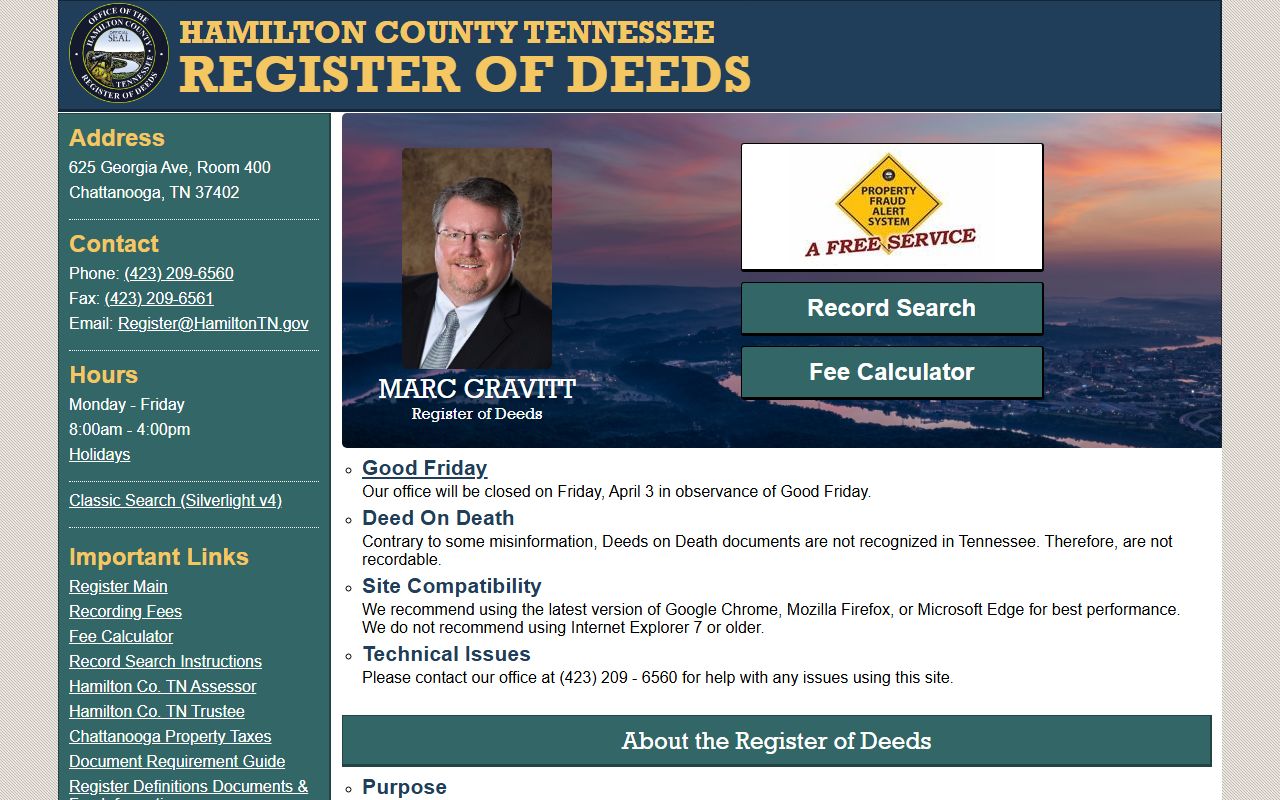
The Hamilton County Register of Deeds page is the official source for Chattanooga deed records contact details, office updates, and recording information.
Search Chattanooga Deed Records Online
Chattanooga deed records can be searched online through a browser-based county database that costs $50 per month. The research says users can apply online or print an application, and the system supports searches by document group, document type, or party. That is useful when you already know the grantor, grantee, or the sort of filing you need. It is also useful when a Chattanooga property has a long title trail and you want to narrow the search before you request a copy.
Hamilton County also supports e-recording through Simplifile and Corporation Service Company. That matters to lenders, title companies, and anyone who wants faster filing on Chattanooga deed records. The county process is built for modern recording as well as older paper work, so online access and electronic submission sit beside the courthouse record books instead of replacing them.
Chattanooga users often need the document guide more than the portal itself because the guide explains what the office expects before a document is recorded. That can save time when a deed, release, or plat has to be corrected before filing. The county's online tools are strong, but the rules still control what becomes part of the public record.
Chattanooga Deed Records History
Chattanooga deed records go back to 1796, and the county also keeps other land records such as mortgages, liens, powers of attorney, marriage settlements, plats, and military discharges. That long record set matters when you are tracing older property in the city, especially in areas that have changed shape over time. A recent portal search may find the newest deed, but older Chattanooga deed records often require a look at the county books and the supporting index trail.
Because the county records run so deep, the Tennessee State Library and Archives deed research guide can still help when you need older county material. The guide explains how deed indexes work, why dates can differ from the record date, and why grantor and grantee searches both matter. Those habits are just as important in Chattanooga as they are in any other Tennessee county.
For people who want to understand the local land history, the county assessor office and the register office should be used together. A parcel clue can pull you into the right deed book faster than a name search alone. That is especially true where a Chattanooga address has changed hands more than once.
Note: Chattanooga deed records are county records first, even when the property is firmly inside the city limits.
Chattanooga Deed Records Requirements
Chattanooga deed records must meet Tennessee recording rules before the register can index them. The state recording guide in the research explains the key requirements: legibility, proper acknowledgment, owner and taxpayer information, the preparer's name and address, and the parcel identification number where required. Those rules come from the Tennessee Code sections cited in the Hamilton County guide, including T.C.A. § 66-24-101 and related provisions.
The county also has to handle conveyance tax and mortgage tax when they apply. That is important for Chattanooga deed records because a sale or a financing instrument can trigger tax before the record is accepted. The guide gives the office's own practical path for checking those numbers. If you are preparing a deed, the county document guide is more useful than a generic summary because it shows how the office handles actual filings.
Recorded documents are public, and the Tennessee Public Records Act supports access during normal business hours unless another law limits the file. That public-access rule matters because Chattanooga deed records are used by buyers, lenders, title professionals, and researchers who need to see what was recorded and when.
The public-records link in the research, T.C.A. § 10-7-503, is the broader access rule that helps explain why Chattanooga deed records are open to the public in the first place.
What Chattanooga Deed Records Show
Chattanooga deed records show the grantor, the grantee, the land description, and the recording data that lets you follow a property through time. They also show the supporting documents that often matter just as much as the deed itself. A mortgage, a release, a plat, or a military discharge can all sit beside the main conveyance and change the story of the property file. That is why Chattanooga deed records are more than a single page in a book.
When you search a Chattanooga deed record, you may also see a chain of title that points to older transfers, subdivision maps, or marriage settlement filings. Those records can matter when the property came through inheritance or was divided before it was sold. A clean title search in Chattanooga usually means reading the deed together with the related filings rather than stopping once the first transfer appears.
Common Chattanooga deed records include deeds, deeds of trust, releases, liens, plats, and powers of attorney. The county office keeps all of them in the same land-record system, so the search strategy should stay broad enough to catch the related papers that explain the property history.
Hamilton County Deed Records
Chattanooga deed records are recorded through Hamilton County, so the county office is the source for current filing rules, online search access, e-recording, and certified copies.
For more county context, the Hamilton County office is also the right place to confirm search subscriptions, fee structure, and document requirements. Chattanooga deed records can be searched online, but the office still controls the official filing path.
Use the county directory at all Tennessee counties when you need to compare Chattanooga with other county land-record systems across the state.