
Search Knoxville Deed Records
Knoxville deed records are recorded through the Knox County Register of Deeds, so the right starting point is the county office that holds the official land file for Knoxville property. That office keeps the deeds, trust deeds, releases, liens, and older manuscript records that shape title in the city. If you need to follow a parcel from the first recorded transfer to a later refinance or release, Knoxville deed records are the place to begin. The city search tools are strongest when you already know a name, a parcel, or a rough recording date.
Knoxville Deed Records Quick Facts
Knoxville Deed Records Office
Knoxville deed records are handled by the Knox County Register of Deeds. Nick McBride serves as the register, and the office is at 400 Main Street, Suite 225, Knoxville, TN 37902. The office phone is (865) 215-2330, and the email listed in the research is nick.mcbride@knoxcounty.org. This is the official county office that records Knoxville deeds and the related papers that sit beside them in the land file.
The county register page shown below is the primary doorway into Knoxville deed records. It is where you go when you need the live record, not just a search summary. The county office also publishes public information that is useful for tracking property movement in Knoxville, including weekly real estate transfer reports and year-to-date recording statistics.
That official office matters because Knoxville deed records are county records even when the property sits in the city. A house on a Knoxville street still follows Knox County recording rules. The register office keeps the book and page trail that future buyers, lenders, and title researchers will rely on.

The Knox County Register of Deeds page is the best official source for Knoxville deed records contacts, search paths, and county office updates.
Search Knoxville Deed Records Online
Knoxville deed records are easier to search when you begin with the clue you already trust. Start with a grantor or grantee name if you have one. If all you have is an address, use the county property and recording tools to move from the parcel to the instrument. If you know the book and page, go straight to the recorded image. That process keeps a Knoxville deed records search focused and avoids guesswork.
Knox County also offers a free fraud alert system at alertme.knoxrod.org. It sends email notices when a document is recorded that matches a subscriber name. That service does not replace a title search, but it gives Knoxville property owners a fast way to watch for new filings. The county also publishes weekly reports and recording statistics, which can help you see how active the local deed market is at the county level.
The fraud alert image below is useful because it shows one of the county's most practical Knoxville deed records services. It sits alongside the official register page and makes the county relationship easy to see.
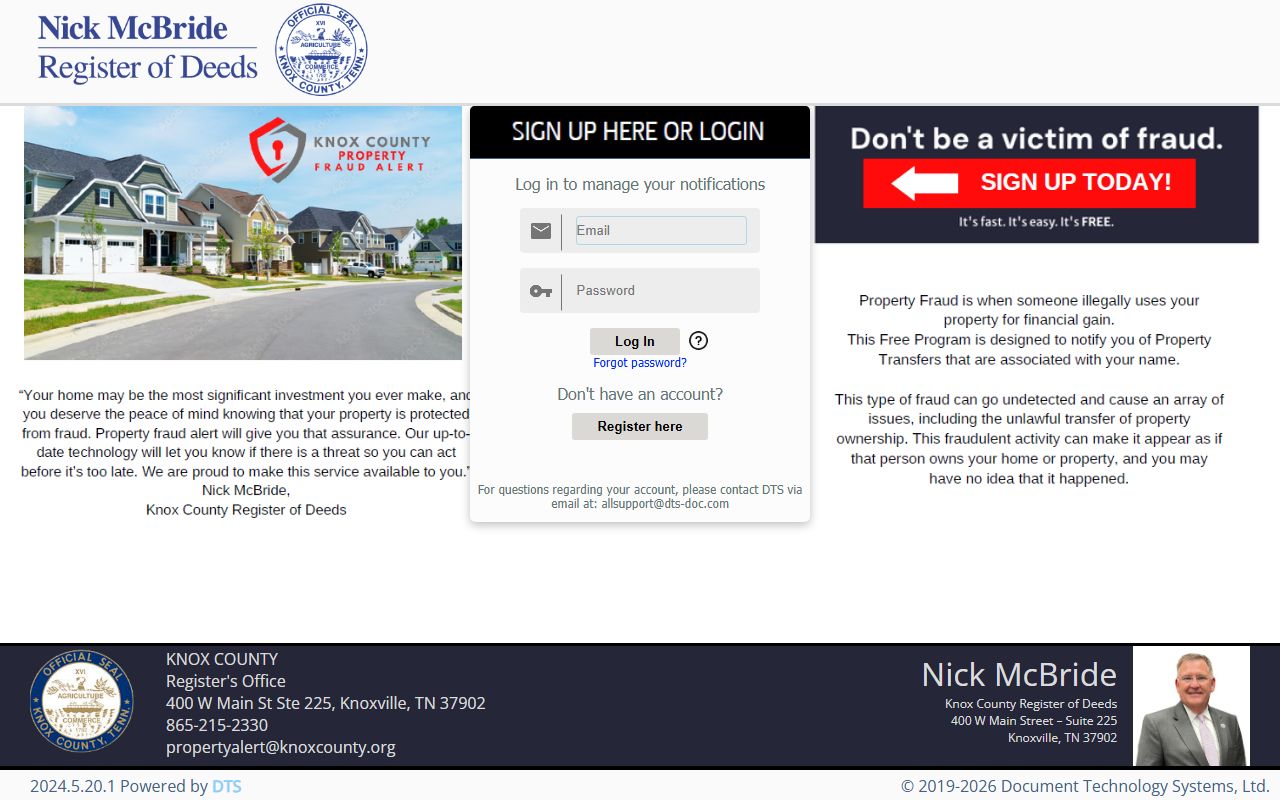
The Knox County fraud alert system is a strong companion to Knoxville deed records research, especially when you want notice of future filings under a specific name.
Knoxville Deed Records History
Knoxville deed records go back to 1792, and the earliest records include handwritten manuscript material. That depth matters if you are tracing old family land, a long chain of title, or a transfer that passed through many hands before reaching the current owner. The county register keeps the live land record, but older Knoxville deed records may still require book-by-book review and an index check by name. A modern portal can only go so far when the trail starts in the eighteenth century.
The county's same-day recording workflow helps keep current records moving. Documents are checked for recordability, fees are verified, instrument numbers are assigned, and the files are scanned, indexed, and backed up off site. That process creates a reliable public record, but it also shows why older record work is different. Early deed books were not produced with the same level of machine support, so the search method changes with the age of the property file.
For deep historical work, the Tennessee State Library and Archives county records resource can help when a Knoxville deed records search has to move beyond the courthouse books. That archive path is useful for older volumes, especially when you need to compare a deed book entry against an earlier county index or a manuscript reference.
Note: Knoxville deed records research gets easier when you treat the oldest records as a separate search task instead of expecting the recent online tools to cover everything.
Knoxville Deed Records Requirements
Knoxville deed records follow Tennessee recording rules. The document must be readable, signed, properly acknowledged, and prepared with the owner and taxpayer information the register needs to index it. The deed also needs the parcel identification number when the form and law require it. The state recording guide in the research, Tennessee recording requirements guide, explains the basic statutory framework that counties use when they accept land records.
Those rules matter in Knoxville because a bad document can slow a recording or force a correction. The county register has to be able to index the instrument and match it to the right property. If you are recording a deed of trust, a release, or a plat, the same logic applies. The recording office needs the right names, the right format, and the right tax treatment before the document becomes part of the public file.
The county also records military discharges for free and keeps them confidential. That is part of the same public land-record system, even though the document type is different from a deed. If you are checking a transfer, a lien release, or a deed of trust, it helps to remember that several record types may sit in the same Knoxville property history.
In Tennessee, public access to recorded documents is supported by the Public Records Act at T.C.A. § 10-7-503, which is why Knoxville deed records are open for inspection during normal business hours unless another law limits access.
What Knoxville Deed Records Show
Knoxville deed records show the legal path of a property transfer. They identify the grantor and grantee, describe the land, and show the date the document was recorded. Depending on the filing, they can also show a trust deed, a release, a lien, or a power of attorney. That makes Knoxville deed records useful for title work, refinancing, probate research, and simple ownership checks. The county's recorded instruments are the official proof that a transfer happened.
The county also reports statistics on transfers, values, and mortgages. Those reports do not replace the deed, but they help you understand how active the market is and where the county is seeing new filings. A lot of Knoxville deed records research starts with a single parcel, then branches into related filings as the chain of title grows. That is why the county office publishes more than one kind of public report.
Common Knoxville deed records include warranty deeds, deeds of trust, releases, powers of attorney, and liens. The county treats those instruments as part of the same land-record system, so a complete search often means checking the index and the supporting filings together.
The key point is simple. Knoxville deed records are not just one document. They are a chain of filing events, and the county register keeps that chain intact.
Knox County Deed Records
Knoxville deed records are recorded through Knox County, so the county office is the place to request copies, verify current filing rules, and review the broader land-record system behind the city search tools.
Knoxville deed records also connect to parcel research. When a property description is unclear, the county land record and the assessor data should be checked together. The county register, the fraud alert system, and the transfer reports give Knoxville users a practical way to watch both past and new filings.
For broader county context and more Tennessee locations, use the county directory and the statewide register guides at Tennessee Registers Association and County Officials Association of Tennessee.