
Bedford County Deed Records Search
Bedford County deed records are the main paper trail for local land transfers, trust deeds, plats, and liens. If you are trying to prove who owned a parcel, see how title moved, or get a copy of a recorded instrument, the Bedford County Register of Deeds is the office to use. The county seat is Shelbyville, and the office there handles both recent filings and older records that may need a little more patience to track down.
Bedford County Deed Records Quick Facts
Bedford County Deed Records Office
The Bedford County Register of Deeds is led by John Reed and is located at 100 West Side Square, Suite 303, Shelbyville, TN 37160. The office phone number is (931) 684-5719, and the email listed in the research is mrdeedsbedford@hotmail.com. Office hours are Monday through Friday, 8:00 AM to 4:30 PM. That is the place to ask for help with a deed, a release, or a copy of a recorded document.
Online searching is available through TitleSearch.com. The portal supports name, date, and document type searches, and the research notes that images are available for recent records. That makes it useful when you need a fast check before you travel to Shelbyville. It also helps if you already know the rough year a deed was filed.
Bedford County uses a standard county office workflow, so callers should expect the same basic steps used in many Tennessee counties. Bring names, dates, or a book and page reference if you have them. The more precise your request is, the faster the office can help you get to the right deed record.

The Bedford County TitleSearch portal is the county's main online search tool, and it is the quickest way to check a name or date before you ask for a copy.
That is especially useful when you want to narrow a search without waiting on an in-person lookup.
Search Bedford County Deed Records
Bedford County deed searches work best when you start with the grantor or grantee name. That is the common entry point in county land records, and it is how most title work starts. If you know the date or rough year, add that too. Deeds from 1807 forward can appear in the old books, the index, or the digital system, depending on the age of the filing.
The county's historical work is supported by the Tennessee State Library and Archives. The TSLA county records microfilm collection gives you another path when you need an older deed book or a hard-to-read index page. That matters in a county with long-running land records, because old entries often need more than one source to confirm the chain of title.
Use these search details when you ask for Bedford County deed records:
- Grantor and grantee names
- Approximate recording year
- Book and page number if known
- Parcel number or legal description
- Document type such as deed, mortgage, or plat
For broader county office context, the CTAS Registers of Deeds directory is a solid cross-check. It is a simple way to confirm the office name and compare it with other Tennessee counties before you request records.
Bedford County Deed Records Fees
Bedford County follows the standard Tennessee recording model, and the research notes that the base charge is usually in the $10 to $15 range for the first one or two pages, with $5.00 per additional page. Transfer tax is $0.37 per $100, and mortgage tax is $0.115 per $100. Certified copies are listed at $1.00 per page. Those figures matter when you are recording a new deed or ordering copies of an old one.
The fee picture is tied to state law, especially T.C.A. § 67-4-409 and the CTAS guidance on recording rules. The office also follows the standard county computer fee and copy fee practice used across Tennessee. If your document is a deed of trust or another debt instrument, the mortgage tax can change the final total by a lot, so it pays to ask before you file.
Copies are cheaper than new recordings, but the page count still matters. If you are ordering certified copies, make sure you know whether you need the full recorded instrument or just the face page. That small detail can change the fee and the wait time.
Note: Bedford County fees can change with page count, tax due, and the type of instrument, so call before you file or request copies.
Bedford County Recording Rules
Before a deed is accepted in Bedford County, it has to meet Tennessee recording rules. The document must be legible, properly signed, and ready for indexing. The CTAS legal guide explains the basic checks. Under county and state practice, the register looks for original signatures, a valid acknowledgment or witness block, the owner and taxpayer names, the preparer's name and address, and a parcel identification number.
That is not busywork. It protects the chain of title. A deed that misses a parcel number or a derivation clause can slow the whole filing. The state guidance also says the office may collect transfer tax or mortgage tax before the record is accepted. In a county that uses both paper and digital records, clear names and a clean legal description make the process move faster.
Bedford County also keeps military discharges and plats as part of the record set, and those documents have their own rules. If you are bringing in a plat or subdivision map, expect the office to check the survey information and the approval trail more closely than a simple quitclaim deed.
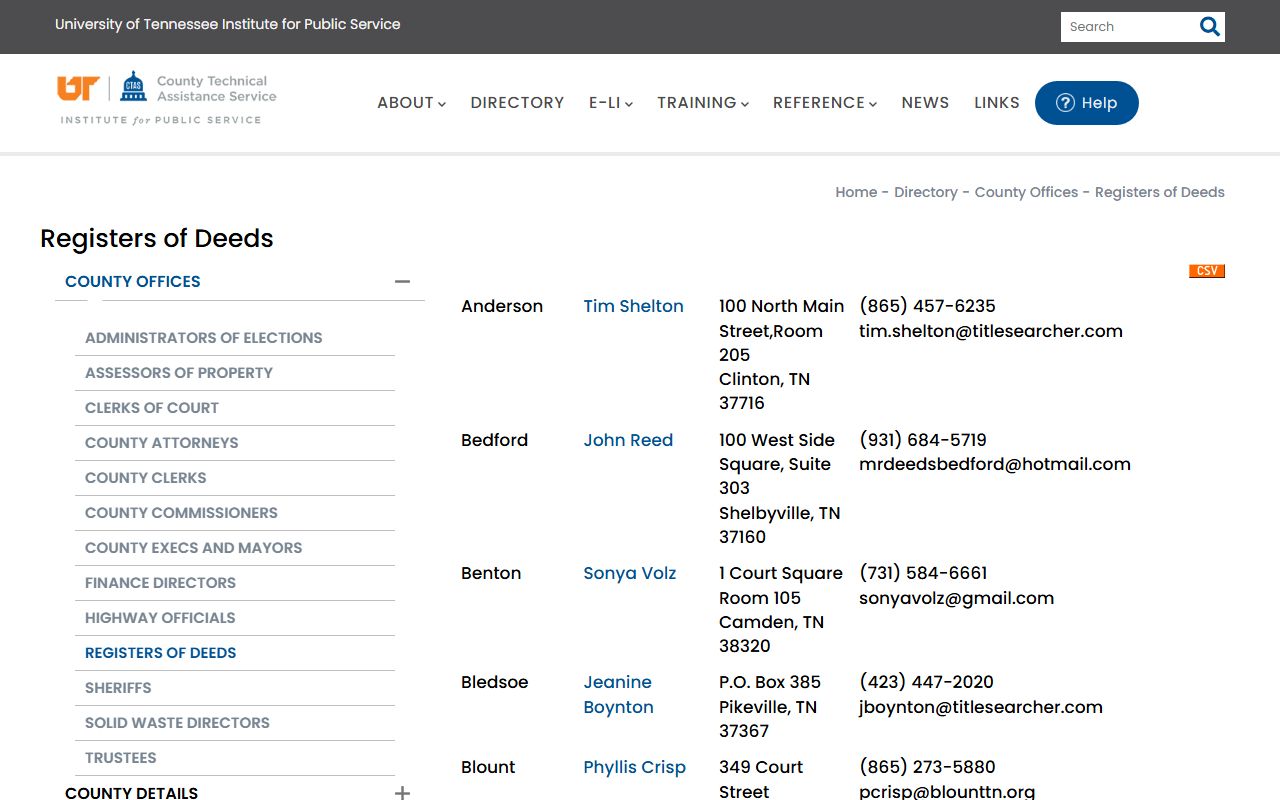
The CTAS deed records guide is a good companion for Bedford County because it explains the documents and indexing rules the office follows.
That makes it easier to spot why one deed is ready and another needs a fix.
Historical Bedford County Deed Records
Bedford County deed records begin with the county's formation in 1807. The early books and indexes can take longer to search, but they are the best source when you are tracing old family land or trying to confirm how a tract changed hands. The Tennessee State Library and Archives microfilm collection is the backup source that often saves the day when the courthouse record is worn, split, or hard to read.
Research in older Bedford County records may also point you toward related documents like releases, assignments, powers of attorney, or liens. Those papers help explain why title changed or why a mortgage was cleared. When a chain of title has gaps, the old index and the deed image together usually tell the story better than either one alone.
Bedford County also keeps other local records that support deed work, such as tax and map materials maintained by county offices. Those materials can help you match a parcel to a legal description. That is useful when a deed gives a metes and bounds description or when a property has changed shape over time.
Note: Older Bedford County documents may still live in book form or on microfilm, so give the office a little more time for deep historical searches.
More Tennessee Deed Records
When Bedford County records are not enough, state tools can fill the gap. The Tennessee Public Records Act in T.C.A. § 10-7-503 supports public inspection during business hours, and the county office follows that general rule when records are open for review. That gives you a legal path to ask for the paper you need without guessing at the process.
For broader county comparisons, visit the CTAS directory or browse all Tennessee counties. If you need older research help, the TSLA county records page is the best statewide starting point for microfilm access and record history.