
Blount County Deed Records Lookup
Blount County deed records cover the core paper trail for local land transfers, trust deeds, liens, plats, and mortgage documents. If you need to see who owned a parcel, how title moved, or whether a release was recorded, the Register of Deeds office in Maryville is the place to start. The county has records from the county's formation forward, so both historic books and newer digital images can matter in the same search.
Blount County Deed Records Quick Facts
Blount County Deed Records Office
The Blount County Register of Deeds is Susan Burchfield, and the office is at 337 Court Street in Maryville, TN 37804. The mailing address is P.O. Box 2737, Maryville, TN 37804. The office phone number is (865) 273-5800, the fax number is (865) 273-5805, and office hours are Monday through Friday from 8:00 AM to 4:30 PM.
Blount County uses US Title Search for online deed access. The portal supports name, date, and legal description searches, and the research says document images are available. That makes it useful when you are trying to confirm a deed before you ask for a copy in Maryville. It is also a good way to verify whether a record is already digitized.
When you contact the office, have the names, approximate date, or legal description ready. Blount County has enough historic depth that even a small clue can save time. The office can help with copies, recording questions, and older book references when you need to work through the chain of title one step at a time.
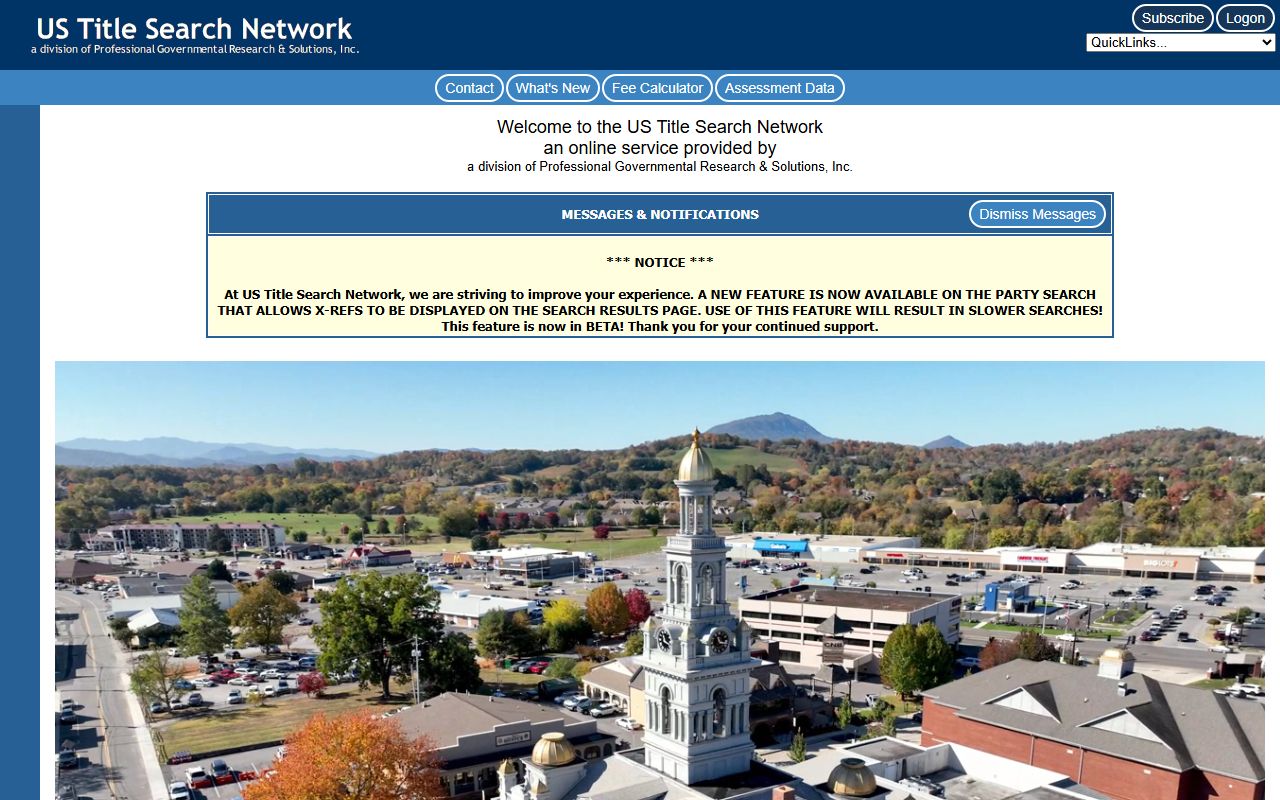
The Blount County US Title Search portal is the county's main online path for deed records and image review.
It is the quickest first check when you want to search by name or legal description before you visit Maryville.
Search Blount County Deed Records
Blount County deed searches usually start with grantor and grantee names. That is the simplest route through the index, and it works well when you know who sold the property or who bought it. If you know the legal description or parcel data, that helps too. Records begin in 1795, so older searches may need the index, the book image, and the document image before the whole trail is clear.
The Tennessee State Library and Archives is the backup source when the courthouse record is old or incomplete. The county records microfilm collection can help you locate hard-to-read books and older deed runs. That matters in Blount County because the older record set is deep enough that a single online pass is not always enough.
When you search Blount County deed records, keep these points close:
- Grantor and grantee names
- Approximate year of filing
- Book and page number if known
- Parcel number or legal description
- Document type such as deed, deed of trust, or plat
For statewide office context, the CTAS Registers of Deeds directory is a useful cross-check. It helps confirm the Blount County office path and compare it with other Tennessee counties.
Blount County Recording Rules
Blount County follows the Tennessee rules for recording land documents. The paper must be legible, signed, and ready to index. The CTAS legal guide explains the normal checks: original signatures, a valid acknowledgment or witness block, owner and taxpayer information, a preparer's name and address, and a parcel identification number. Those details are what let the office place the deed in the right spot.
The derivation clause links the new deed to the older one. That is a big part of chain of title work. If you are recording a deed of trust or another debt instrument, the tax rules also matter. Transfer tax and mortgage tax may apply under state law, and the office has to collect what is due before the document is filed. A missing tax line can stop the process cold.
Blount County also handles other papers that affect real property, such as liens, releases, and plats. Those records often sit next to the deed in the same title trail. If a survey, subdivision map, or release is missing, the deed record may not tell the whole story by itself.
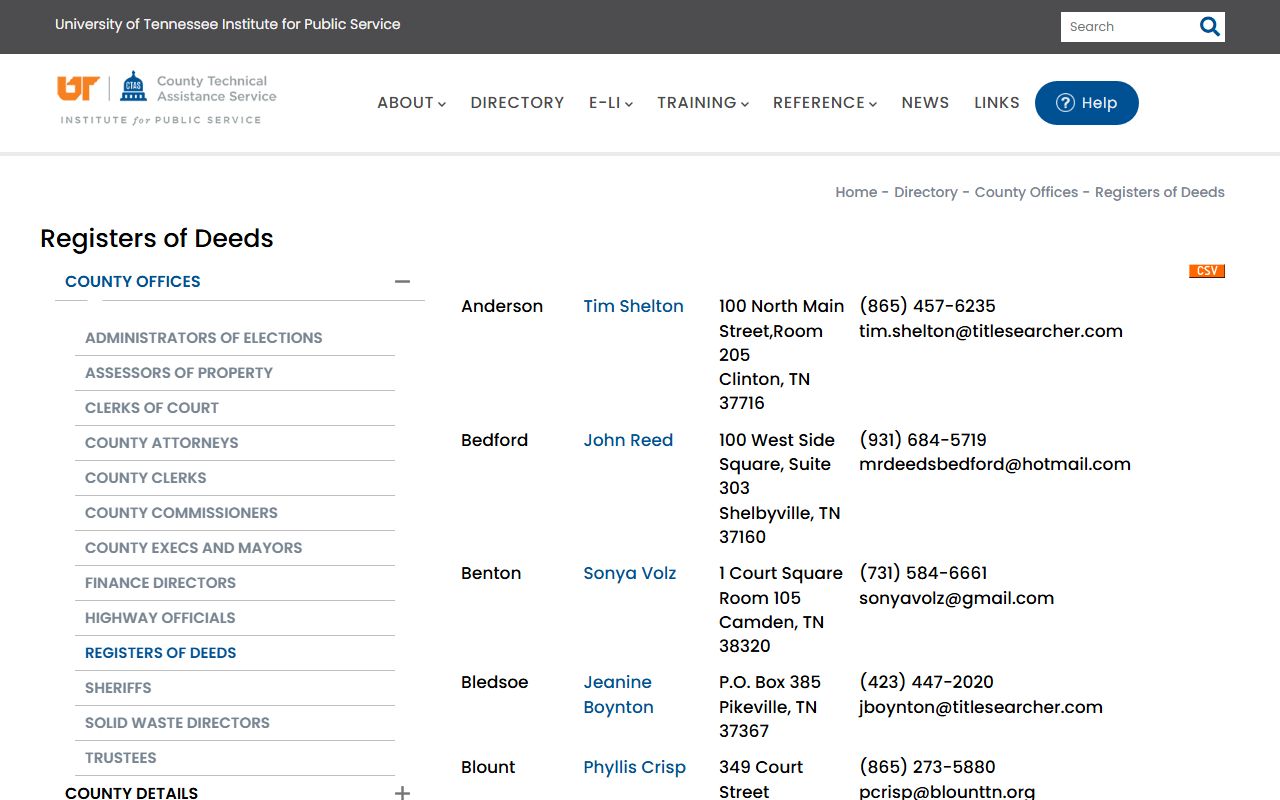
The CTAS deed records guide is the best state-level companion for understanding the record rules Blount County uses.
It gives you the same structure the office follows when a deed comes in the door.
Blount County Deed Records Fees
The research gives a partial fee picture for Blount County. The transfer tax is $0.37 per $100, the mortgage tax is $0.115 per $100, and the computer fee is $2.00 per document. Certified copies are $1.00 per page. The base recording fee varies by document type, so the total depends on what you are filing and how many pages it takes.
That fee structure sits inside the state framework at T.C.A. § 67-4-409. If you are recording a deed, a trust deed, or a document that includes multiple instruments, the office may need to charge more than one fee. That is why a clean estimate from the office is better than guessing.
If you only need a copy, ask whether a plain copy will do. Certified copies cost more and are only needed when another office or lender wants a formal record. A focused request saves time and money.
Note: Blount County fees can shift with page count, taxes, and document type, so confirm the full total before you file.
Historical Blount County Deed Records
Blount County land records begin in 1795, so the county has a very long deed history. That matters when you are tracing older property lines, looking at family land, or checking how a parcel moved across generations. Older books may be handwritten, and some records may need a microfilm check through TSLA before the chain is clear.
The county record set also connects with marriage records from 1795 and probate records from the 1800s. Even if those records live in other county offices, they can still help explain a deed trail when title passed through inheritance, marriage, or estate work. That is common in older Blount County research.
Historical records in a county this old often show more than the deed itself. Releases, plats, and later correction documents can help you understand what happened to the property after the first filing. That is why a deed search in Blount County works best when you read the index, the image, and the later follow-up filings together.
Note: Older Blount County records may be split between courthouse books, digital images, and archive copies, so a complete search can take a little longer.
More Tennessee Deed Records
The live county office, the state archive, and the CTAS guides work well together. Use the Blount County Register of Deeds for current filings, use TSLA county records when you need older material, and use the state rules when you want to confirm what should be in the file. That is the safest way to move from guesswork to proof.
To compare more Tennessee counties, visit all county pages. For broader public access context, the Tennessee Public Records Act at T.C.A. § 10-7-503 explains why recorded deeds are open during business hours unless state law limits access.