
Bradley County Deed Records Lookup
Bradley County deed records help you follow land sales, trust deeds, liens, plats, and other filings that shape property ownership in Cleveland and across the county. You can search them in person at the Register of Deeds office, through TitleSearcher, or by using related Tennessee records tools when you need a broader title trail. The county keeps the local land file, and the state sources help you fill in gaps. If you want a copy, start with the grantor, grantee, or parcel details you already have.
Bradley County Deed Records Quick Facts
Bradley County Deed Records Office
The Bradley County Register of Deeds keeps the county's deed books and related land files. Melissa Boggs serves as the register, and the office is in Room 105 at 155 Broad Street NW in Cleveland. That makes it the main place to ask for recorded deeds, liens, plats, and older land records that are not online. The office phone is (423) 728-7224, and the email listed in the research is mcarter@bradleycountytn.gov.
For local context, the office works beside the county's public access setup and its TitleSearcher tools. That matters when you need to compare an old paper index with a newer digital copy. The CTAS Registers of Deeds Directory is also useful when you need a fast office reference for Bradley County. It confirms the county contact path and helps you cross-check the office before a trip downtown.
Use this image as a quick reminder of the county directory source behind the office listing.
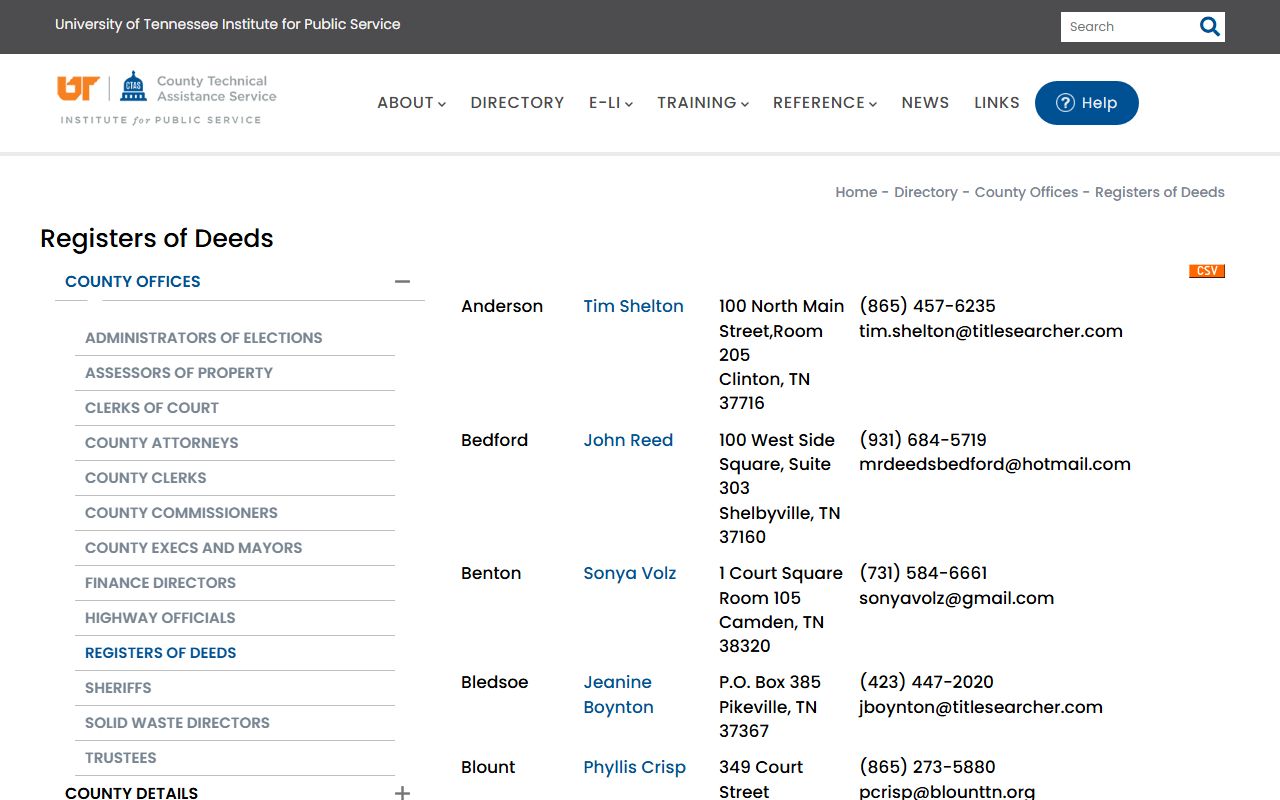
That county directory is the best backup when you need the register name, office route, or a second check on local deed record contact data.
| Office | Bradley County Register of Deeds, Melissa Boggs |
|---|---|
| Address | 155 Broad Street NW, Room 105, Cleveland, TN 37311 |
| Phone | (423) 728-7224 |
| Fax | (423) 728-7226 |
| mcarter@bradleycountytn.gov | |
| County Site | bradleycountytn.gov |
| Online Search | TitleSearcher.com |
How To Search Bradley County Deed Records
Bradley County deed records can be searched a few different ways. TitleSearcher is the main online path named in the research, but the courthouse still matters when you want the full file or a record that was never scanned. A good search starts with a grantor, a grantee, or a rough date range. From there, you can narrow the book, page, and document type. The county also keeps public access terminals, which helps if you are already in Cleveland and want to work through the index one step at a time.
Searches go faster when you bring the right facts. Start with the owner name if you have it. Add a parcel number when the property is part of a tax record search. Then add any legal description, subdivision name, or old deed reference that points to the right tract. Bradley County deed records can be easier to follow when you move from a tax clue to the recorded deed. That is especially true when a parcel has changed hands more than once.
When you ask for a deed record in Bradley County, these details help most:
- Grantor or grantee name
- Approximate date of recording
- Document type, such as deed of trust or release
- Book and page number if you have it
- Parcel identification number or legal description
TitleSearcher is a practical first stop for recent Bradley County deed records. If the image is not clear, or if you need a certified copy, the Register of Deeds office is the better path. That office can point you to the right book, page, or filing group. Keep in mind that older deed books may still need manual review, and that can take more time than a clean name search online.
Bradley County Deed Records And Filing Rules
Tennessee deed records follow state recording rules, not just local office habits. The county has to accept eligible instruments that meet the CTAS Register of Deeds records guide standards, which is why legibility, a proper acknowledgment, and the right filing data matter so much. The research also points to the document requirement guide used by Hamilton County, which is a useful statewide reference for the same basic recording rules. Tennessee is a race-notice state, so the first properly recorded deed can control priority if no one had notice of an earlier unrecorded claim.
For Bradley County deed records, the key filing details include the owner and taxpayer names, the preparer's name, and the parcel identification number. A deed of trust also needs the right trustee and tax data if mortgage tax applies. The CTAS legal issues guide notes that deeds must be readable, original signatures must be present, and notarization or witness rules have to be followed. If a filing is wrong or incomplete, the office may reject it or ask for correction before it is entered into the county record.
Fees also matter. The county uses the Tennessee recording fee schedule, and the state tax rules can add transfer tax or mortgage tax when the document calls for it. Certified copies cost more than plain copies, and military discharges are recorded free when the office accepts them. If you are checking a deed record before a closing, use the CTAS assessor property records guide to compare the parcel ID with the tax roll. That makes the Bradley County search cleaner and cuts down on wrong-filed property matches.
Note: Bradley County recording questions can change with office policy and state tax updates, so confirm the current fee line before you file or request copies.
What Bradley County Deed Records Show
Bradley County deed records show who gave the land, who took it, when the document was recorded, and how the property was described. That sounds simple, but the details often solve title problems. A deed may list consideration, a legal description, witness data, and a notary acknowledgment. A deed of trust can name the borrower, lender, and trustee. Releases, assignments, and liens tell you when a debt was paid, shifted, or attached to the land.
The county's record set is broader than just deeds. The Bradley County office also keeps mortgages, liens, plats, powers of attorney, and military discharges. Those records help when a property changed shape, when a family member signed for someone else, or when a lender needed to clear a lien. Military discharges are especially important because they are recorded free, but they still belong in the permanent land file. That makes them part of the local title story, not a side note.
Bradley County land records begin with county formation in 1836. That history matters if you are tracing an older parcel in Cleveland or elsewhere in the county. The early books may not look like modern scans, and some lines may be handwritten. Even so, the same basic search logic still works. Start with the name. Check the index. Pull the book and page. Then follow the chain of title forward until the property reaches the present owner of record.
Common Bradley County deed records include:
- Warranty deeds and quitclaim deeds
- Deeds of trust and mortgage releases
- Assignments and liens
- Plats and property maps
- Powers of attorney and military discharges
That mix of records gives Bradley County deed research a full paper trail. It also shows why the county office and the online index work best together.
Bradley County Deed Records History
Bradley County has kept land records since 1836, and the county office still relies on that long paper trail. Some older deeds live in original books at the courthouse, while other older material can be traced through the Tennessee State Library and Archives. The TSLA county records microfilm page is useful when a deed is old enough to need archival help. It does not replace the county office, but it helps when you are searching early property transfers or trying to verify an unreadable index line.
For broader context, the Tennessee Registers Association and the County Officials Association of Tennessee show how Tennessee registers work together across the state. Those groups do not give you the deed itself, but they help confirm that Bradley County follows the same public land record framework as the rest of Tennessee. That is useful when you want a quick office reference or a sense of how deed record work is organized statewide.
Bradley County deed records also tie into property tax work. The county assessor keeps parcel data, while the register keeps the recorded instruments. If a deed search stalls, the assessor record can point you to the parcel ID, the old owner name, or the tax location that lets the deed search move again. That is often the fastest way to bridge a gap between a legal description and the actual deed book entry.
Note: Older Bradley County deed books may be indexed in more than one place, so do not stop after a single search if the property changed hands often.
More Tennessee Deed Records Resources
Use state resources when a Bradley County search needs a wider title trail. The CTAS assessor property records guide can help you match a deed to the tax parcel. The CTAS registers directory helps you confirm local contact data. The CTAS deed records guide explains what a register keeps and why deed records stay public. When you want a statewide overview, the legal issues guide gives the filing rules in one place.
If you need more than the county office can answer, the state archives and the Tennessee registers network are the next practical stops. They will not replace the county books, but they can make a hard Bradley County deed search much faster. For many property questions, that second layer is what turns a rough clue into a clean record hit.