
Cannon County Deed Records Lookup
Cannon County deed records are the right place to check when you need a deed, mortgage, lien, plat, or power of attorney tied to Woodbury or anywhere else in the county. The local office keeps the permanent land file, while state sources help when the search starts from a tax clue or an old index line. Because Cannon County has limited online access, a good search often begins with an in-person visit or a call to the office. If you know the grantor, grantee, or parcel description, you already have the best starting point.
Cannon County Deed Records Quick Facts
Cannon County Deed Records Office
The Cannon County Register of Deeds is Pamela Stafford. The office is at 301 West Main Street, Room 202, Woodbury, TN 37190. The phone is (615) 563-4961, the fax is (615) 563-4084, and the email listed in the research is cannoncountyrod@gmail.com. If you need a deed copy or a book and page reference, this is the office that handles it.
Cannon County deed records are not built around a big public portal. Instead, the office recommends in-person research. That makes the county directory image useful when you want a quick contact check before you go. The statewide CTAS Registers of Deeds Directory is the cleanest official fallback, and it gives you the same office reference in a form that is easy to verify before a trip to Woodbury.
Use the directory image as a quick pointer to the office listing that backs the county contact data.
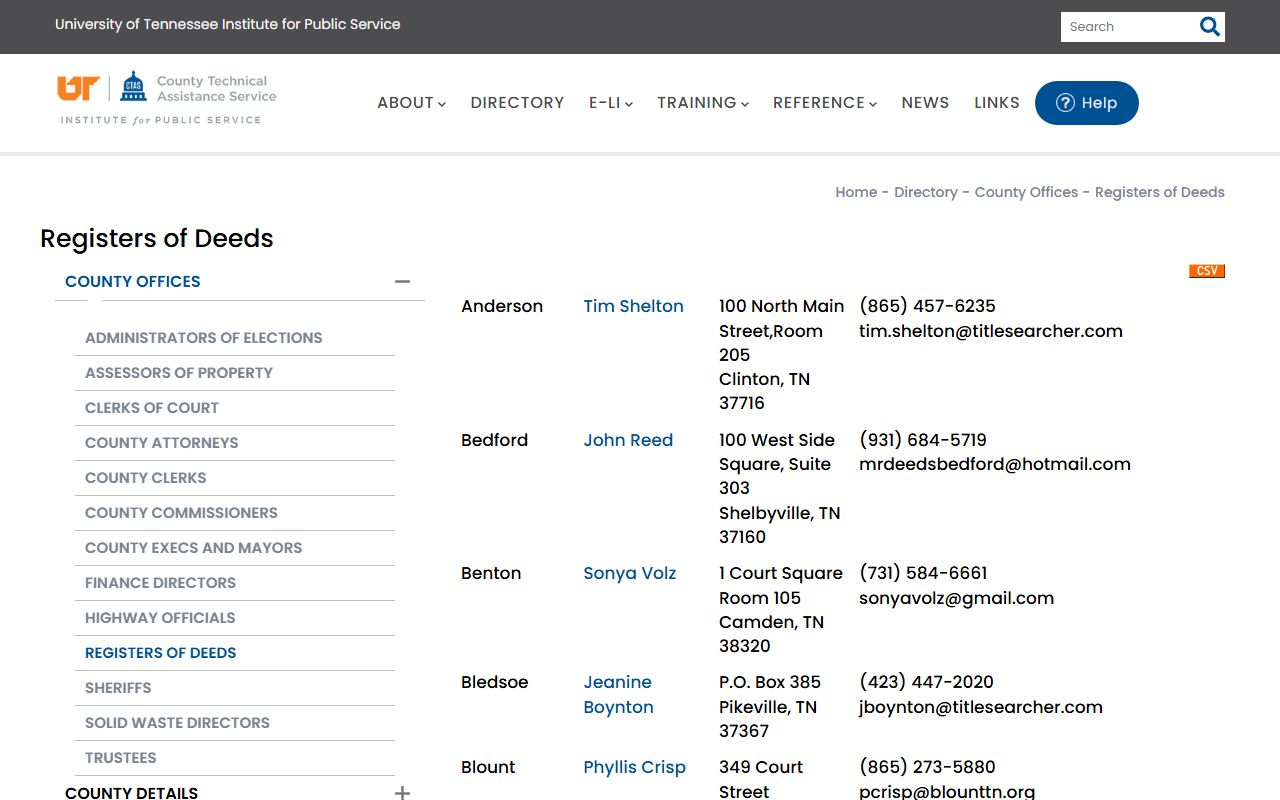
That source helps when you need a quick office check and do not want to guess at the right phone or room number.
| Office | Cannon County Register of Deeds, Pamela Stafford |
|---|---|
| Address | 301 West Main Street, Room 202, Woodbury, TN 37190 |
| Phone | (615) 563-4961 |
| Fax | (615) 563-4084 |
| cannoncountyrod@gmail.com |
How To Search Cannon County Deed Records
Cannon County deed records are easier to search when you know what you are looking for before you start. The office says limited online access is available, but in-person research is the safer path for a full title check. Begin with the names on the deed if you have them. If you do not, use the parcel, subdivision, or legal description from a tax record or old paper file. That will usually get you closer to the right book faster than a blind date search.
The county records go back to 1836, so older filings may be buried in a paper index rather than a modern portal. That does not make the record hard to find. It just means the first clue matters more. A good Cannon County deed search moves from the index to the book, then from the book to the image or original volume. If the document is not online, the staff can still help you locate it in the office.
These details are the best ones to bring:
- Grantor or grantee name
- Approximate filing date
- Book and page number if known
- Parcel ID or legal description
- Document type, such as deed, lien, or plat
Cannon County deed records also include powers of attorney and plats, so do not stop at the first deed if the file points to a later related document. A power of attorney can explain who signed. A plat can explain the shape of the land. Together they make the title trail easier to read, even in a county with limited online scanning.
Cannon County Deed Records And Rules
Cannon County deed records follow Tennessee's statewide recording rules. The CTAS deed records guide explains the document types registers keep, while the ROD legal issues guide explains why legibility, acknowledgment, and complete filing data matter. A deed that is hard to read or missing key details can be delayed. That is true in Cannon County just as much as it is anywhere else in Tennessee.
For a clean filing, the deed should name the owner and taxpayer, show the preparer's name, and include the parcel identification number. If the document creates a mortgage, the state tax rules can also matter. If the property is being sold, transfer tax may apply. The CTAS assessor records guide is a good way to connect the deed to the parcel card before you file or ask for a copy.
Tennessee is a race-notice state, so recording order is not a small detail. If a deed is not recorded, it can create title trouble later. That is why even a simple Cannon County deed search should follow the chain, not just the latest owner name. Check the deed, then the release, then the plat or lien if the land changed shape or the debt changed hands. That is the safest way to avoid a false match.
Note: Cannon County office staff may ask you to narrow the search before they pull older books, so bring more than one clue when you can.
What Cannon County Deed Records Show
Cannon County deed records show the full story of a parcel's movement through time. The grantor and grantee names tell you who sold and who bought. The consideration and legal description tell you what changed hands. The acknowledgment shows that the instrument was accepted under state law. When the file includes a deed of trust or mortgage, it also shows who financed the deal and what land secured the debt.
The Cannon County office keeps deeds, mortgages, liens, powers of attorney, and plats. That record mix is enough to trace a new house lot, a rural tract, or a family parcel that stayed in the same hands for years. If the deed search points to a subdivision or a split parcel, the plat is often the key record. If the land changed due to debt, the lien or release can explain the gap. Those are the documents that keep the title file clean.
Cannon County land records begin with county formation in 1836. The older books may be sparse, but they still matter. A deed recorded in the 1800s can control the way a tract is described today. That is why it is smart to read the oldest available deed first, then move forward one transfer at a time. A short search now can save a lot of work later if the property was subdivided or inherited.
Cannon County deed records often include:
- Warranty deeds and quitclaim deeds
- Mortgages and deed of trust records
- Liens and releases
- Powers of attorney
- Subdivision plats
That set gives you enough raw material to follow the land file from the county formation period to the present day.
Cannon County Deed Records History
Cannon County deed records start with county formation in 1836. Because the county recommends in-person research, older files are often best handled in the office or through state archives support. The TSLA county records microfilm page is the most useful state backup when the file is old or the index entry is thin. It helps when you need a bridge between a paper clue and a record you can copy.
Statewide support matters here. The Tennessee Registers Association and the County Officials Association of Tennessee show how Tennessee land record offices work within the same public system. That matters when the local office has limited online access. The office is still part of a larger state structure that keeps deed records public, searchable, and tied to the property tax file.
When a Cannon County deed search gets hard, the assessor record is often the fastest help. It can show the parcel ID, the current owner, or the tax location that matches the recorded deed. That lets you tie a name to the right tract before you ask for a copy. If the land has changed hands many times, that one step can save hours.
Note: A Cannon County deed search is usually cleaner when you check the old index and the tax roll together, not one after the other.
More Tennessee Deed Records Resources
When you need a statewide frame for a Cannon County search, use the CTAS deed records guide and the CTAS assessor guide. If you need to confirm the office itself, the CTAS Registers of Deeds Directory is the most direct reference in the research.
Those sources do not replace the county office, but they make Cannon County deed records much easier to follow when the first search does not land cleanly.