
Carroll County Deed Records Access
Carroll County deed records are where you look for land sales, liens, plats, and powers of attorney connected to Huntingdon and the rest of the county. The county does not rely on a deep online portal the way some larger counties do, so a good search often starts with the office itself. If you know a name, an old date, or a parcel clue, you can usually work from there. The office can help you move from the index to the recorded deed, and that makes the county record file practical even when the search is old school.
Carroll County Deed Records Quick Facts
Carroll County Deed Records Office
The Carroll County Register of Deeds is Pam Lurry. The office is at 99 Court Square, Room 100, Huntingdon, TN 38344. The phone is (731) 986-1965, the fax is (731) 986-1966, and the email listed in the research is carrollcountyrod@yahoo.com. That office is the place to go for certified copies, older deed books, and any record that is not easy to pull online.
Carroll County deed records are tied to a limited online access model, so the office matters more than a portal search. The county directory image is a good reminder of the official contact source behind the office. The CTAS Registers of Deeds Directory confirms the local register data and gives you a clean place to verify the office before you head to Huntingdon.
Use the county directory image as the source check behind the office listing.
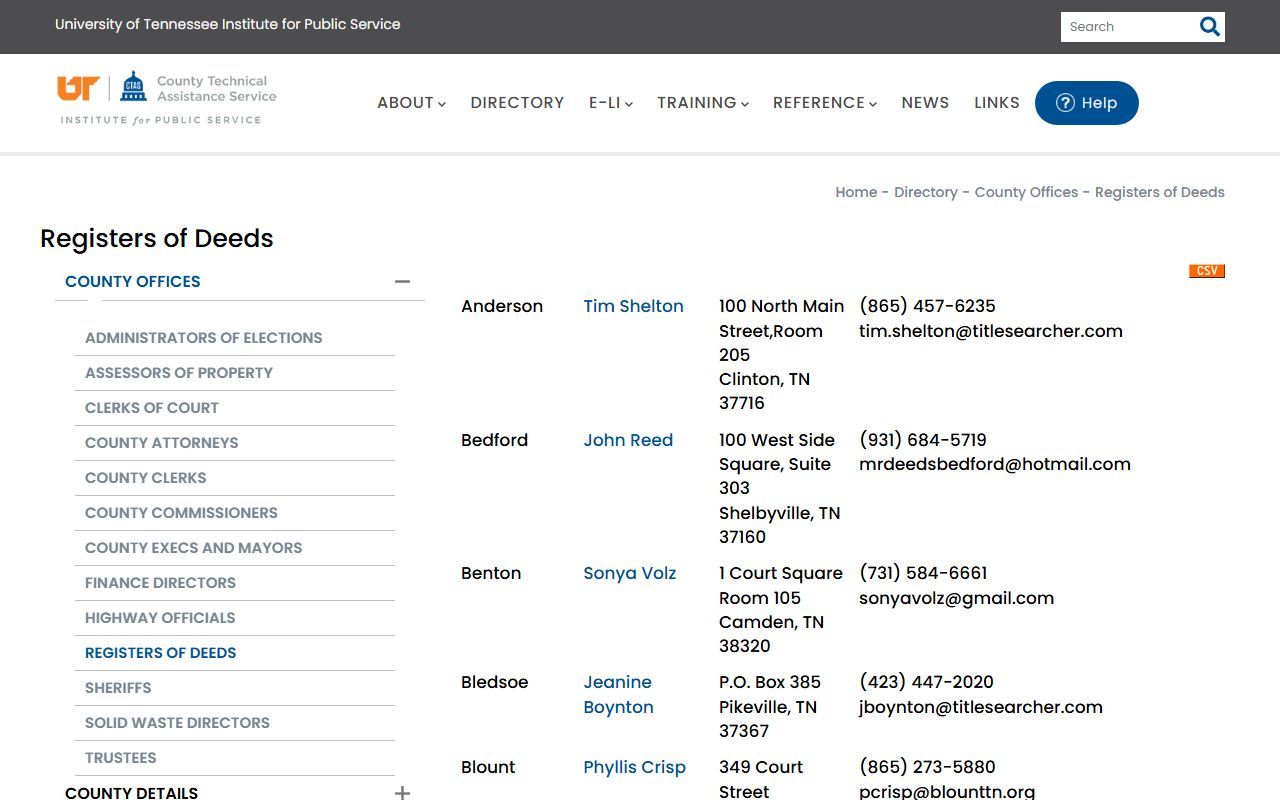
That source is handy when you want the office name, the county contact path, or a quick confirmation before you ask for a deed copy.
| Office | Carroll County Register of Deeds, Pam Lurry |
|---|---|
| Address | 99 Court Square, Room 100, Huntingdon, TN 38344 |
| Phone | (731) 986-1965 |
| Fax | (731) 986-1966 |
| carrollcountyrod@yahoo.com |
How To Search Carroll County Deed Records
Carroll County deed records are best searched by name first. If you know the grantor or grantee, start there. If you only have a tax clue, use the parcel description or the property location to narrow the search. Because online access is limited, the office is often the best place to work through a hard record request. A simple call can tell you whether the deed is in an index book, a later volume, or an older file that needs more time to pull.
The county records go back to 1821, so the oldest deed books are part of the search even when the current owner looks simple on paper. That means the title trail may need a few steps. Start with the most recent deed and work backward, or start with the earliest name you know and move forward. Both routes work. The better route is the one that gets you to the right book and page without guessing.
Bring these details when you look up Carroll County deed records:
- Grantor and grantee names
- Approximate deed date
- Book and page number if known
- Parcel ID or legal description
- Document type, such as deed, lien, or plat
Carroll County also records military discharges, so the office file can hold more than land transfers. That matters when family records and property records overlap. A discharge can help explain a veteran-related filing, and a plat can explain a tract split. Those records are part of the same county land story, even when they are filed under different headings.
Carroll County Deed Records And Rules
Carroll County deed records follow Tennessee's statewide recording rules. The CTAS deed records guide explains why deeds, releases, plats, and powers of attorney all stay in the permanent record. The ROD legal issues guide explains the filing standards too. A filing must be readable, properly signed, and properly acknowledged. If it is not, the office may reject it or ask for correction before it is entered.
For Carroll County deed records, the practical filing details are the same ones that matter across the state. The deed should include the owner and taxpayer names, the preparer's name, and the parcel identification number. If the filing creates debt, the mortgage tax rules can apply. If the filing transfers land, the transfer tax rules can apply. The CTAS assessor records guide is useful when you need to match the deed to the parcel card and the tax roll before you ask for a copy.
Tennessee is a race-notice state, so recording order matters. A deed that is left unrecorded can create a title gap later. That is why a Carroll County search should not stop at the newest deed. Follow the releases, the liens, and the plats too. They often explain why the current description looks different from the old one. That is the kind of detail that saves a bad assumption from becoming a bad title trace.
Note: Carroll County fees can change, and the office may need more time for older books, so confirm the current process before you travel.
What Carroll County Deed Records Show
Carroll County deed records show the names, dates, and land description that make a property trace work. They also show how the property changed from one owner to the next. A deed can list the full sale terms, while a deed of trust can show the debt behind the property. A release can show that the debt was cleared. That is the chain you need when the title question is not just who owned the land, but how the land moved over time.
The Carroll County record set includes deeds, mortgages, liens, plats, powers of attorney, and military discharges. That mix gives you the main tools for a title search. If the property is part of a subdivision, the plat may be the first clue. If a family member signed for another person, the power of attorney matters. If the land sat under a lien, the release matters. Each record type answers a different part of the same question.
Carroll County land records begin with county formation in 1821. That long paper trail is useful when you are trying to prove an old boundary or a transfer that happened before modern mapping. The older books may be harder to read, but they still control how the chain of title is read today. One old deed can explain why a parcel has the shape or name it does now.
Carroll County deed records often include:
- Warranty deeds and quitclaim deeds
- Mortgages and deed of trust records
- Liens and releases
- Powers of attorney
- Plats and military discharges
That set is enough to trace most property questions from the county's early books to the current file.
Carroll County Deed Records History
Carroll County deed records have been kept since 1821, and the office still reflects that older record culture. Some of the work is straightforward, but some of it needs a steady hand and a clean index clue. When the search gets old and the file is not digital, the Tennessee State Library and Archives can help. The TSLA county records microfilm page is the best state backup for older deed work in Carroll County.
Statewide groups also help explain the local office setting. The Tennessee Registers Association and the County Officials Association of Tennessee show the broader records network that Carroll County fits into. That matters when the county search feels slow. The office is still part of a public land record system that keeps the deed books open and the index accessible to the public.
If you need to bridge a tax clue to a deed clue, start with the assessor record and the parcel ID. That simple step can tell you where to search next. Once the tax roll, the deed book, and the legal description all agree, the Carroll County search gets much cleaner.
Note: Old Carroll County deed indexes can use short forms, so give the search room to breathe if the first attempt does not hit.
More Tennessee Deed Records Resources
When you need statewide help with a Carroll County search, use the CTAS deed records guide and the CTAS assessor guide. If you want to confirm the office, the CTAS Registers of Deeds Directory is the cleanest official reference in the research set.
That stack works well when Carroll County deed records need a county check and a state check at the same time.