
Carter County Deed Records Lookup
Carter County deed records are one of the oldest land files in this batch, and that makes them especially useful for long title chains. If you need a deed, lien, plat, or military discharge tied to Elizabethton or another part of the county, the Register of Deeds office is the first stop. Carter County also gives you more than one online path, which helps when you want to search before you go. Use the name, date, or document type you already know, then work toward the recorded instrument that proves the transfer.
Carter County Deed Records Quick Facts
Carter County Deed Records Office
The Carter County Register of Deeds is Teresa R. Lyons. The office is at 801 East Elk Avenue in Elizabethton, TN 37643. The phone is (423) 542-1830, the fax is (423) 542-1833, and the email in the research is teresa.lyons@cartercountytn.gov. That office handles the county's permanent land file, so it is the right place for deed copies, map checks, and older recording questions.
Carter County deed records are well supported online, but the office still matters when the file needs a manual pull or a certified copy. The county's CTAS directory entry is a clean office check, and the local image below points to that same source. The CTAS Registers of Deeds Directory confirms the county register reference and gives you a high-authority backup before you request records from Elizabethton.
Use the CTAS directory image as the office contact source behind the Carter County record search.
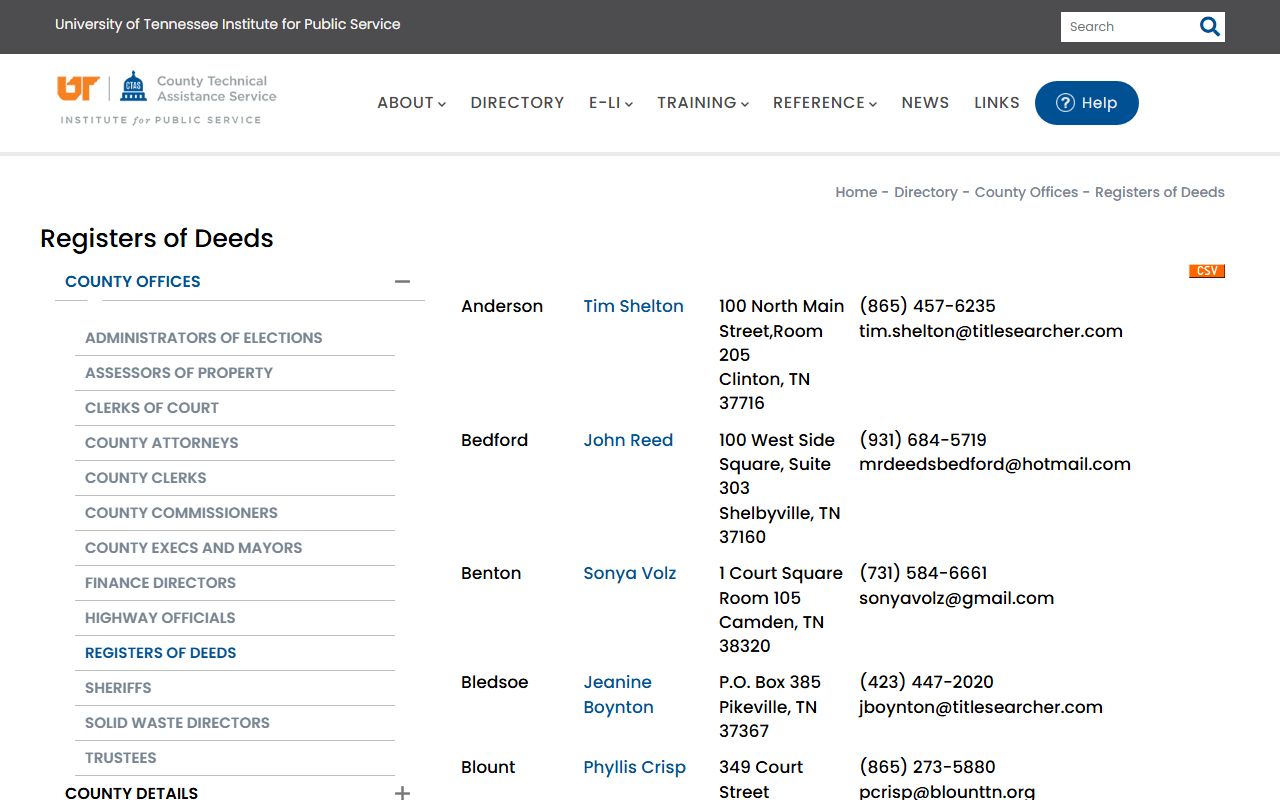
That source is the easiest way to confirm the register name and the county office path before you search the record books.
| Office | Carter County Register of Deeds, Teresa R. Lyons |
|---|---|
| Address | 801 East Elk Avenue, Elizabethton, TN 37643 |
| Phone | (423) 542-1830 |
| Fax | (423) 542-1833 |
| teresa.lyons@cartercountytn.gov |
How To Search Carter County Deed Records
Carter County deed records can be searched through two main online tools named in the research, eCCLIX and CourthouseDirect.com. The county also allows searches by multiple criteria, which helps when one name is not enough. Start with the grantor or grantee if you have it. If not, use the parcel number, legal description, or approximate date. A good search often finds the recorded deed faster than a broad property search, especially in a county with a long record history.
Because Carter County dates to 1796, some searches will run into older books that do not behave like modern scans. That is normal. The trick is to move from the index to the recorded instrument and then follow the chain. If you know the property changed hands or the land was split, add those clues to the search. That helps you avoid the wrong file and keeps the title trail straight.
These details help most when you search Carter County deed records:
- Grantor and grantee names
- Approximate recording date
- Book and page or instrument number
- Parcel ID or legal description
- Document type, such as deed, lien, or plat
Carter County also records military discharges free, which means the land file may contain documents that help prove a family or service connection. If the deed search stalls, check the related land records too. A plat can explain a split tract, and a lien or release can explain why the chain changed. That broader view often matters more than a single deed image.
Carter County Deed Records And Rules
Carter County deed records follow Tennessee's statewide filing rules. The CTAS deed records guide and the Document Requirement Guide both show why clear writing, proper acknowledgment, and complete filing data matter. A deed that is not readable or is missing key details can be held back. That is not unique to Carter County, but it is important when you need a fast recording or a clean copy.
To file cleanly, the deed should identify the owner and taxpayer, name the preparer, and include the parcel identification number. If the filing creates debt, mortgage tax may apply. If it moves land, transfer tax may apply. The CTAS assessor property records guide helps connect the deed to the parcel card, which is often the easiest way to make sure the recorded instrument matches the tax roll and the legal description.
Tennessee is a race-notice state, so Carter County deed records should be recorded quickly. The first recorded deed can control priority if no one had notice of a prior claim. That is why the online tools and the office copy request should both point to the same tract. If the title chain has a gap, check the release, the assignment, or the older book reference. That usually shows where the next piece belongs.
Note: Carter County recording fees and copy fees can change, so confirm the office process before you mail a request or file a new instrument.
What Carter County Deed Records Show
Carter County deed records show who owned the land, when a transfer happened, and how the property was described at the time. That record can include the deed itself, the trust deed, a release, or a lien that changed the chain of title. The instrument number, book, and page can help you find the file again later. The legal description matters too, because it tells you whether the tract matches today's parcel or an older split.
The Carter County record set includes comprehensive deed records, military discharges, plats and maps, and liens. That means the file can tell you not only who bought land, but also how the land was laid out and whether it carried a recorded obligation. The county's older files are especially useful in long-running family property searches. A map or plat can explain a boundary that does not make sense in a modern tax card. A discharge can explain a related filing that lives with the land records.
Carter County land records go back to county formation in 1796. That long history is a real advantage when you need to trace an old parcel through several generations. It also means the records can be spread across different eras of indexing and storage. If you are not finding the deed you expect, do not assume it is missing. It may simply be in an older index, an early book, or a related filing group that needs a second pass.
Carter County deed records often include:
- Warranty deeds and quitclaim deeds
- Deeds of trust and lien records
- Plats and maps
- Military discharges recorded free
- Releases and other related instruments
That mix gives you the pieces needed for a real title trace, not just a quick name check.
Carter County Deed Records History
Carter County deed records date to 1796, which makes the county one of the more useful places in Tennessee for older land research. When a deed is too old for an easy portal search, the state archives are a good backup. The TSLA county records microfilm page is the main state research tool named in the research set and can help you move into the early books when the local scan is not enough.
Statewide groups also help explain how Carter County fits into the Tennessee records system. The Tennessee Registers Association and the County Officials Association of Tennessee show the broader office network that supports local deed record work. That matters when you need to understand the role of the register, the county tax office, and the record rules that sit behind a deed filing.
When a Carter County search gets hard, the assessor data is often the best bridge back to the deed. It can give you the parcel ID, owner name, or location reference you need to match the recorded instrument. Use that with the online portal, and the chain usually becomes clear. That is the fastest way to move from a rough clue to a useful deed copy.
Note: Old Carter County deed records may appear in more than one index format, so widen the search if the first hit does not line up with the parcel you expected.
Use the CourthouseDirect image as a second reminder of the local online search path.
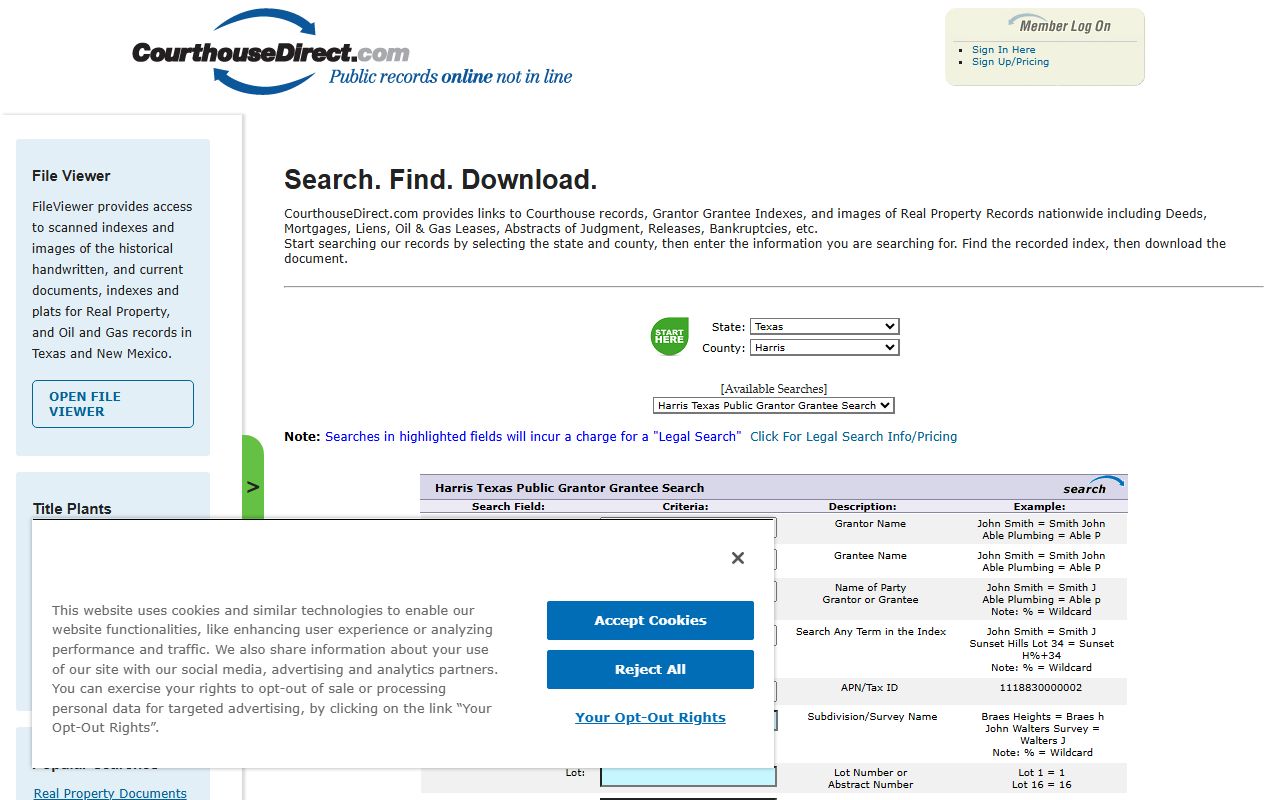
That portal is useful when you want another route into Carter County deed records and do not want to rely on just one search path.
More Tennessee Deed Records Resources
For a Carter County search, the most helpful statewide references are the CTAS deed records guide, the CTAS assessor guide, and the CTAS Registers of Deeds Directory. Together they explain the county record file, the parcel link, and the office contact path.
Use them when the local search tools are not enough. They will not replace the Carter County file, but they will help you reach it faster.