
Find Claiborne County Deed Records
Claiborne County deed records are the best trail for land transfers, liens, plats, and mortgage papers tied to property in Tazewell and the rest of the county. The local office has a long paper run, and older books can take you back to the first years of county history. Because online access is limited, the county office stays important here. If you need a copy, a title clue, or a deed page from an older tract, begin with the Register of Deeds office and then work outward to the state tools that help fill gaps.
Claiborne County Quick Facts
Where to Find Claiborne County Deed Records
The Claiborne County Register of Deeds office is at 1740 Main Street, Tazewell, TN 37879. The mailing address is P.O. Box 117, Tazewell, TN 37879. Kimberly Reece serves as Register of Deeds. The office phone numbers are (423) 626-3283 and (423) 626-3325. The fax number is (423) 626-1661, and the email on file is charlottelramsey@hotmail.com. Office hours are Monday through Friday, 8:00 AM to 4:30 PM.
Claiborne County land records begin in 1801, so the office has a long history of deed books to work through. That matters when you are tracing a parcel that has changed hands many times or when a family transfer sits deep in the older books. The county notes also point to in-person research. That is a good sign that the book set is still the core source for serious deed work in Claiborne County.
| Office | Claiborne County Register of Deeds |
|---|---|
| Address | 1740 Main Street Tazewell, TN 37879 |
| P.O. Box 117 Tazewell, TN 37879 |
|
| Phone | (423) 626-3283 / (423) 626-3325 |
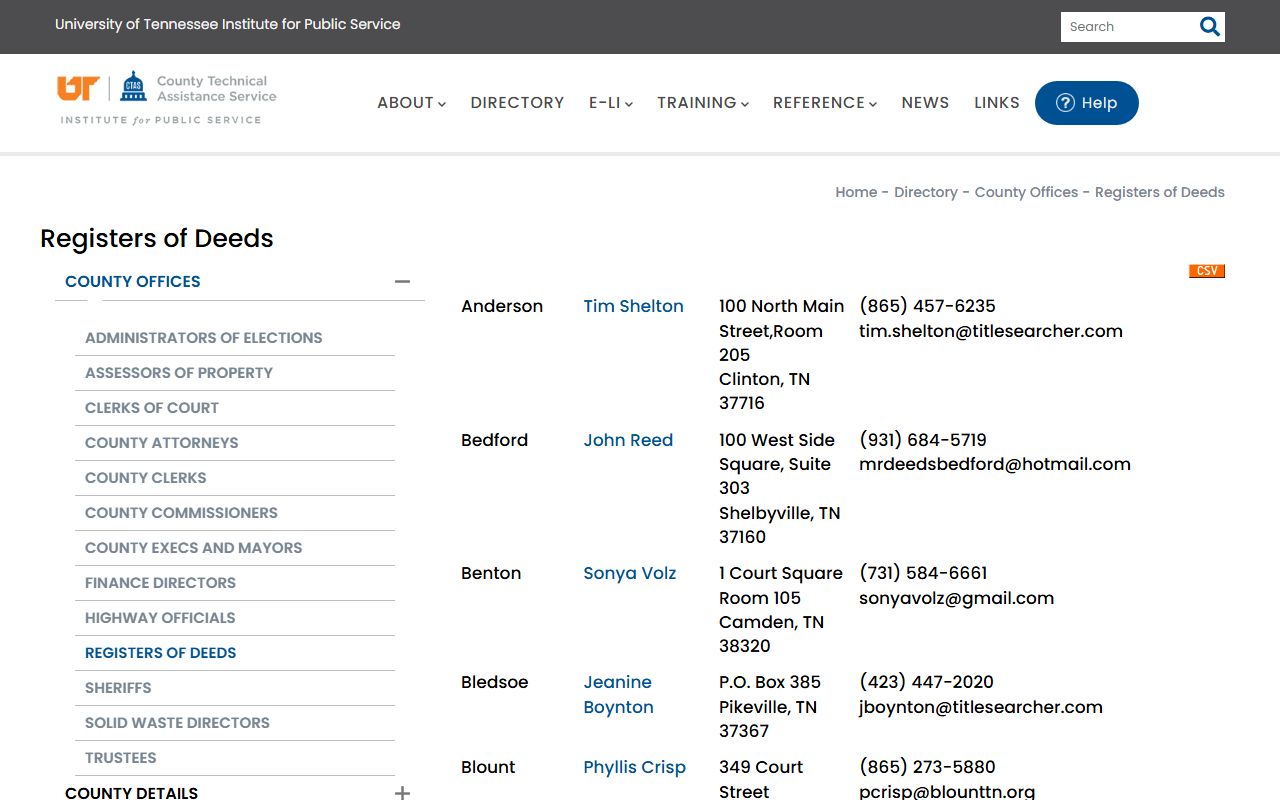
The statewide directory at CTAS Registers of Deeds is the cleanest way to confirm the Claiborne County office and its contact details. Use it when you need a fast check before driving into Tazewell.
How to Search Claiborne County Deed Records
Claiborne County has limited online access, so the best search path starts with the office. Bring the names you know, the rough recording year, and any parcel details you can find. If you have the book and page, that is even better. The more exact your starting point, the faster the office can move through the deed books and index pages. In a county with older records, that little bit of prep saves real time.
In-person research is recommended because the county's deeper deed history is easier to work by book than by guess. Ask for deeds, mortgages, liens, powers of attorney, or plats as needed. If one entry does not answer the question, use the index around it. Older papers often hide the real answer in a related page or a cross-reference. That is common with older Tennessee deed files.
To search Claiborne County deed records, keep this handy:
- Grantor or grantee name
- Approximate year of recording
- Book and page number, if known
- Parcel or legal description details
What Claiborne County Deed Records Show
Claiborne County deed records show the people, the land, and the date the transfer became part of the public record. Deeds list the grantor and grantee, the legal description, and the recording details. Mortgages and liens help explain claims tied to the parcel. Powers of attorney show who signed for whom. Plats show how a tract was split or mapped. When you line those records up, the history of a parcel gets much easier to read.
Older Claiborne County books can be especially useful because they reach back to 1801. That gives you a chance to see early land movement, family transfers, and property changes that do not show up in later summaries. If a tract has a long history, the older deed books are often the best place to start. They can show the chain before the modern index does.
Common details in Claiborne County deed records include:
- Names of the grantor and grantee
- Legal description and acreage
- Recording date and instrument type
- Book and page citation
- Consideration or price statement
- Notary or witness acknowledgment
Recording Rules for Claiborne County Deed Records
Tennessee recording rules still control deed work in Claiborne County. The CTAS register guide at CTAS Register of Deeds Records Guide and the legal issues PDF at CTAS Legal Issues PDF explain the core requirements. A deed should be readable, signed, notarized, and indexed-ready before the office accepts it. Those basics matter more than people think.
The key statutory pieces include the owner and taxpayer information under T.C.A. § 66-24-114, the preparer line under T.C.A. § 66-24-115, the derivation clause under T.C.A. § 66-24-110, and the parcel ID under T.C.A. § 66-24-122. If a transfer tax or mortgage tax applies, T.C.A. § 67-4-409 controls the tax side. That is one reason title work starts with the deed itself and then moves to the assessor side.
When you need a land-history check, the Tennessee State Library and Archives deed FAQ and the county records microfilm page can help with older books. If the grantee is a company, the Secretary of State business search is a smart cross-check. It helps confirm the entity name that appeared on the deed.
Note: A deed that lacks a clear parcel ID or a proper derivation clause can slow recording and make later title work messier than it should be.
More Tennessee Deed Records Help
Claiborne County deed research works best when you do not rely on one source alone. The county office tells you what is on the local books. The state archives help when the books are old. The assessor side helps when you want the parcel to line up with the tax record. Put those pieces together and the search gets much cleaner.
For state context, use the CTAS Assessor Property Records page and the Tennessee Registers Association. Those sources are good when you want to understand how county record offices work or when you need another official contact path.
Claiborne County's older deed books reward slow work. Start with the office, confirm the book, and let the older page references lead you forward. That is the cleanest way to get from a family name to a parcel history.