
Search Coffee County Deed Records
Coffee County deed records are kept by the Register of Deeds in Manchester. If you need a deed, deed of trust, release, plat, or lien, start with the local office and work back through the grantor and grantee indexes. Coffee County land records begin with the county formation in 1836, so both old and newer filings can matter. Some people need a quick copy for title work. Others need the full chain of title. Either way, the records are built to help you track property by name, date, and book reference.
Coffee County Quick Facts
Coffee County Deed Records Office
The Coffee County Register of Deeds is the place to start when you need the deed books. The office is at 1341 McArthur Street, Suite 2, in Manchester. Donna Toney serves as Register of Deeds, and the office can be reached at (931) 723-5130 or by email at dtoney@coffeecountytn.org. Office hours are Monday through Friday, 8:00 AM to 4:00 PM. That matters when you want in-person help, because deed searches often move faster when you can give a name, a date, or a parcel clue right at the counter.
The CTAS Coffee County ROD Directory is a fast statewide reference if you want to confirm the office details before you leave home. The directory is useful when you are building a search plan or checking who keeps the local index. 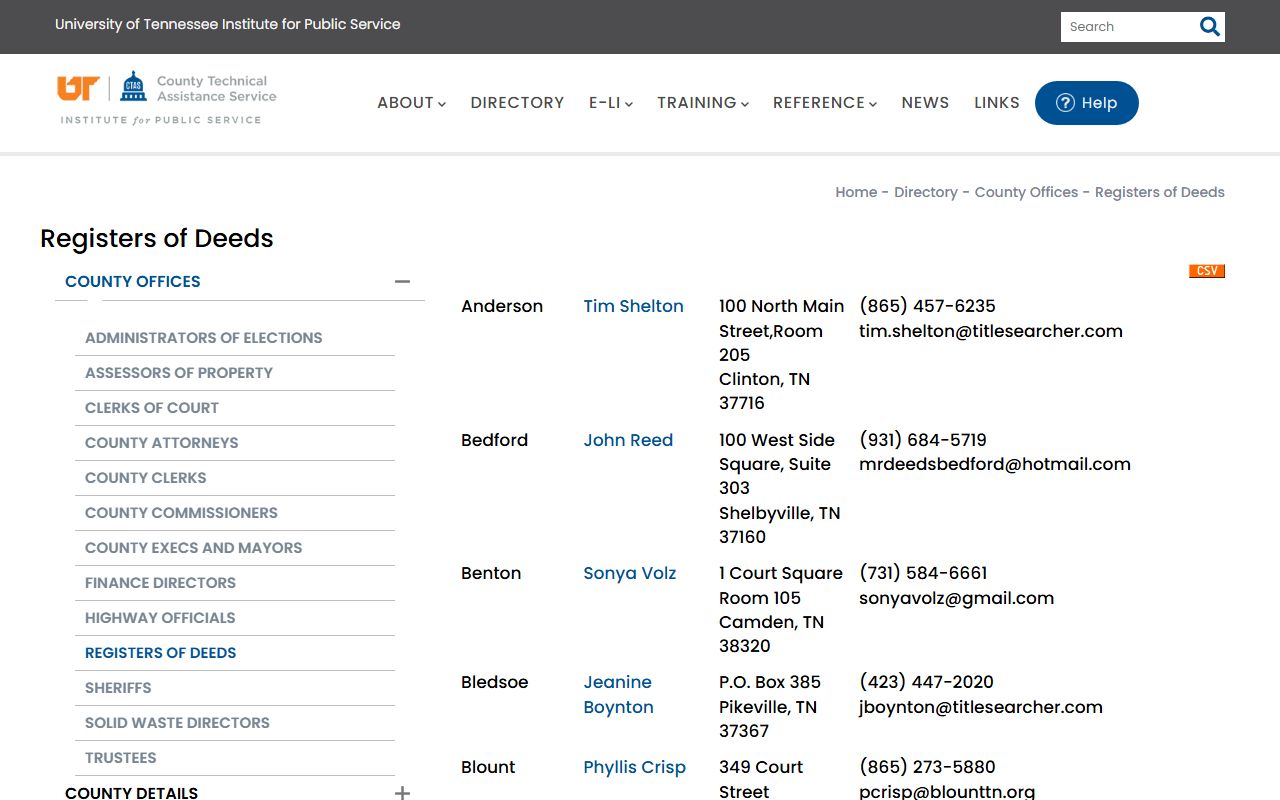 The directory snapshot is a simple reminder that Coffee County deed research still starts with the county office, not a guess from a broad web search. Once you know the office, you can move with more purpose.
Because deed records are public records, you can inspect them during business hours under T.C.A. § 10-7-503. If you are asking for copies, be ready to pay the office fee schedule. The county can also use the state rules on legible instruments, owner and taxpayer names, and parcel numbers when it reviews a document for recording.
How to Search Coffee County Deed Records
Start with a grantor or grantee name. That is the cleanest path in Coffee County. If you know the party that sold the land, search the grantor index. If you know the buyer, use the grantee side. The deed book and page number will send you to the exact record. That matters when you want the chain of title, not just a loose hint that a tract changed hands. Coffee County records can also include date clues, instrument numbers, and legal descriptions that help you narrow a run of filings.
Under the CTAS deed guidance, a recorded deed normally shows the names of the parties, the property location, the legal description, and the consideration. The county also keeps deeds of trust, releases, assignments, liens, plats, powers of attorney, and military discharges. That mix makes the office useful for more than one task. You may be tracing a sale. You may be checking whether a lien was released. Or you may need a plat tied to a parcel change. In every case, the same office and index work can get you there.
For old records, the Tennessee State Library and Archives can help when the deed books are not easy to read at the courthouse. TSLA keeps county records microfilm and county inventories. Use the county records microfilm guide when you need a backup path for older Coffee County deed research. It is a good fit when you know the approximate year but not the exact book.
Coffee County Deed Records Fees
Coffee County follows the Tennessee fee rules for recording. The state schedule matters because the local office must collect the fees before a document is accepted. For deeds, the recording fee, computer fee, transfer tax, and mortgage tax can all come into play. The exact total depends on the paper count and the type of instrument. If you are recording a deed of trust or a deed with a taxable transfer, the amount can change fast. That is why a quick call to the office is wise before you mail anything in.
State law also sets the tax rate for transfers at T.C.A. § 67-4-409. Mortgage tax applies to debt instruments, and the first $2,000 of indebtedness is exempt. The CTAS legal guide also notes that deeds must be legible, signed, notarized or witnessed, and marked with the owner, taxpayer, preparer, and parcel ID information. Those details keep the record clean and help the office avoid rejection. If you plan to record in Coffee County, check the document before you leave the house.
What Coffee County Deed Records Show
Coffee County deed records are more than a list of names. They show who gave the land, who took it, what land changed hands, and how the title was tied to earlier books. A recorded deed can show the sale price, the legal description, and the note that links the tract to a prior deed. That is the core of title work. When a parcel changes hands, the deed record helps prove the move. When a lender takes a security interest, the deed of trust or mortgage record shows the debt tied to the land. Later, the release clears that cloud from title.
In Coffee County, the Register of Deeds also keeps plats and maps that can help place a tract on the ground. If you are checking a subdivision lot or a split parcel, the plat may matter as much as the deed itself. Those maps often help when the legal description is dense or when a tract crosses more than one lot line. That is why searchers often pair deed records with assessor data and tax maps. The record types work together, and the county office is where the paper trail stays tied up.
Note: A clean deed search in Coffee County usually starts with names, then moves to book and page, then back to the legal description for a final check.
Coffee County Deed Records History
Coffee County land records begin in 1836, the same year the county was formed. That gives researchers a long run of books to work with. Older deeds may sit in handwritten volumes or on microfilm, while newer filings may be in the office system. When a tract has changed hands many times, the older chain can matter just as much as the latest deed. A solid search often means following one owner back through several links until the title line makes sense.
The state archives can help when Coffee County records are older than the local index is easy to use. TSLA keeps county inventories and microfilmed deeds for historical work. The archives do not replace the county office, but they can fill gaps when the local books are worn or when the date range is wide. That is a practical path for old farms, inherited land, or property that stayed in the same family for years.
If you are checking whether a tract was ever part of a business deal, the Tennessee Secretary of State business search can also help with entity names. That can matter when a deed names an LLC, trust, or corporation as the owner. The state business search at sos.tn.gov/businesses helps you see if the entity was active when the deed was signed. It is a useful cross-check, not a replacement for the deed book.
Related Coffee County Property Records
Coffee County deed records often make more sense when you pair them with assessor records. The property assessment portal and assessor guides help you match a parcel ID to a tract, then test whether the deed description lines up with the tax record. The state comptroller page at comptroller.tn.gov and the TNMap assessment portal are both useful when you need the current owner name, map data, or a parcel number before you go to the deed office.
That extra step can save time. It is easy to miss a tract if you only have a street name or an old family name. A parcel ID, a tax map, or a prior owner makes the county search more exact. If you are tracing a transfer tied to a mortgage or release, the assessment record can also help you see how the parcel moved over time. Once you have the right tract, the Coffee County deed books do the rest.
Browse More Tennessee Deed Records
If you need another county, use the Tennessee counties page to move to the right office fast. Coffee County deed records are local, but the research path stays much the same across Tennessee.