
Crockett County Deed Records
Crockett County deed records sit with the Register of Deeds in Alamo. If you are trying to trace a sale, verify a mortgage, or check whether a release was filed, the local deed books are the first stop. Crockett County land records begin with the county formation in 1871, so the office can help with both newer filings and older chains of title. The work is part name search, part book search, and part patience. Once you know the right grantor, grantee, or parcel clue, the record trail gets much easier to follow.
Crockett County Quick Facts
Crockett County Deed Records Office
Alan Castellaw is the Register of Deeds for Crockett County. The office is at 1 South Bells Street, Suite 2, in Alamo, Tennessee. The phone number is (731) 696-5455 and the fax number is (731) 696-5454. When you need help with deed books, the office can point you toward the index, the book, or the page that matters. That is the direct route. It saves time and helps keep the search tied to one tract instead of a whole town name.
The county does not list a broad online search portal in the research packet, so a careful in-person or office-assisted search is the safest path. The CTAS Registers of Deeds Directory can still help you confirm the office setup before you go. 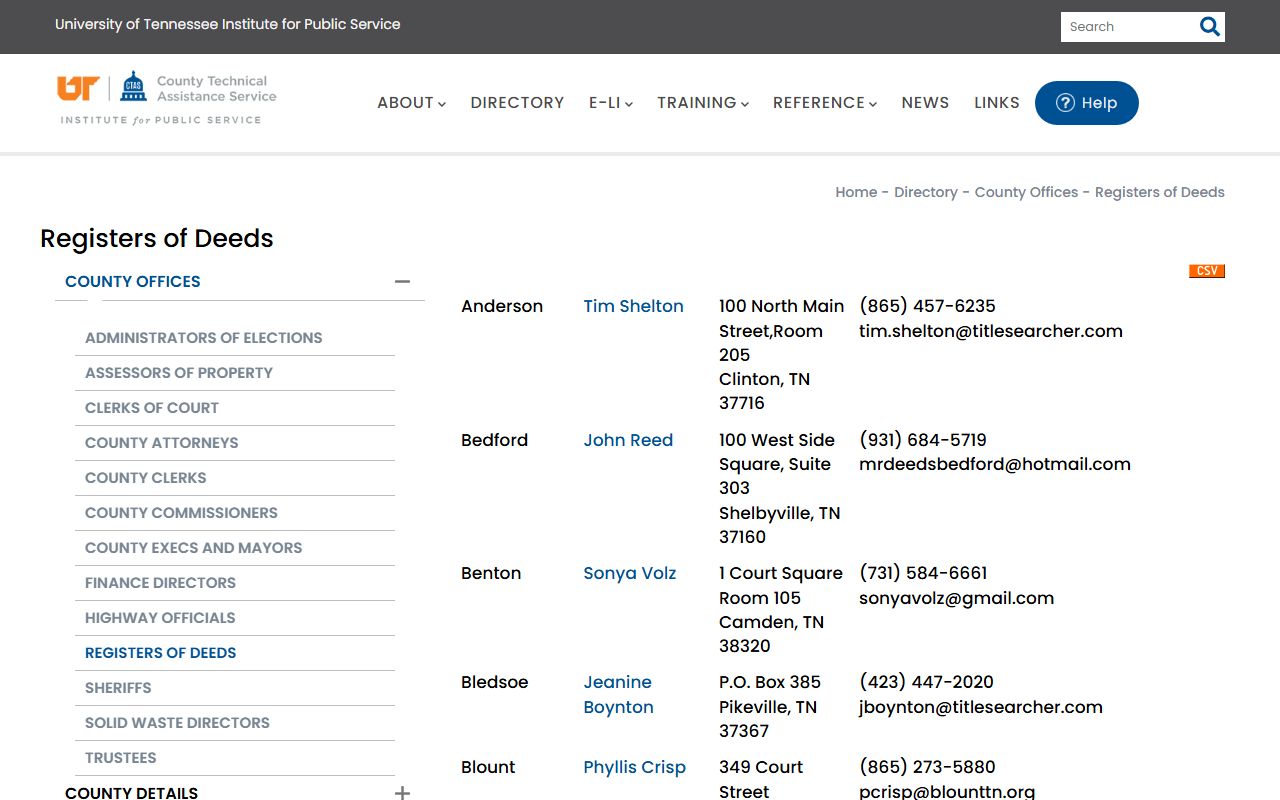 That directory is not the record itself, but it does make it easier to track down the right county office quickly. After that, the office can guide you to the local deed books.
Crockett County deed records are public under Tennessee law. Under T.C.A. § 10-7-503, public records must be open during business hours unless another law says otherwise. That rule is the backbone of access for deed searchers. It means you can ask for inspection and copies, then pay the set fee if you need a copy for title work or closing work.
How to Search Crockett County Deed Records
Start with names. A deed search in Crockett County usually works best when you know the grantor or the grantee. If the land was sold, the seller should show in the grantor index. If the land was bought, the buyer should show in the grantee index. From there, the book and page number send you to the deed. That is the cleanest path when you need the exact tract and not just a broad hint that the parcel changed hands. A date range can help too, especially when you know the sale happened in a certain year but do not know the book.
The CTAS deed guidance explains what a deed should show. Names of the parties matter. So does the legal description, the property location, and the consideration. If the document is a deed of trust, the trustee and debt terms matter as well. Crockett County also keeps releases, liens, plats, powers of attorney, and military discharges. That means one trip to the record office can answer more than one title question. Many searchers come for a deed and leave with a release or plat that clears up the whole chain.
If a record is old, the Tennessee State Library and Archives can help. The county records microfilm guide at sos.tn.gov/library-archives/researchers/county-records is useful when the local books are worn or the date range is broad. TSLA is not a replacement for the county office. It is a backup path when you need a historical deed or when you want to test an old index entry before making a trip.
Crockett County Deed Records Fees
Crockett County follows Tennessee recording rules for fee collection. The local office can tell you the exact cost before you file a deed, a trust deed, or a release. The state fee schedule matters because recording fees, transfer tax, mortgage tax, and copy charges can all apply. If you bring a document with several pages or with more than one instrument, the cost can rise fast. That is why a quick check with the office is worth the time.
State law sets the transfer tax rate under T.C.A. § 67-4-409. The CTAS legal guide also notes that deeds must be legible, signed, notarized or witnessed, and marked with the owner, taxpayer, preparer, and parcel ID details. Those items are not busywork. They are the pieces that let the register accept the record and tie it to the right tract in Crockett County.
What Crockett County Deed Records Show
Crockett County deed records show the path of title. A warranty deed can give broad covenants. A quitclaim deed can transfer whatever interest the grantor has, if any. A deed of trust shows debt tied to the land. A release clears the lien when the note is paid. Those records work together. They tell the story of ownership, debt, and transfer in a way that is useful for buyers, heirs, lenders, and title workers.
The county also keeps plats and maps that can help place a lot on the ground. That matters when a legal description is hard to read or when the parcel was carved out of a larger tract. A plat can show roads, boundaries, and lot lines in a cleaner way than a deed paragraph can. If you are comparing a tax map to a deed, the plat often makes the match easier.
Note: A deed record in Crockett County is strongest when the name search and the parcel search point to the same tract.
Crockett County Deed Records History
Crockett County land records begin in 1871, the year the county was formed. That gives the office a clear starting point, but older family and title questions can still reach back well before the current owner. When you are tracing a long run of transfers, the chain of title may move through several generations. That is why deed research is often a slow build. Each book entry gives you one more step, then the next one starts to make sense.
Historical research often goes better when you combine the deed books with state archives and assessor tools. TSLA county records help on the old end. The state property assessment tools help on the current end. If you need the current tract number, the county assessor and the TNMap property portal can help you line up the land with the tax record before you ask for a copy. That cross-check saves time when the legal description is thin.
The Tennessee Comptroller page at comptroller.tn.gov is another good companion to deed work. It explains the statewide assessment system and gives you another path to the parcel side of the search. Deed records, tax maps, and assessment data are not the same thing, but they fit together cleanly when you are checking ownership in Crockett County.
Related Crockett County Property Records
Property assessment records are often the bridge between a deed and the land on the ground. If you know the owner name, a parcel number, or a tax map reference, you can use that information to confirm the tract before you go to the deed office. That helps when the same family name appears on several parcels or when a road name has changed over time. A deed search is faster when the parcel clue is strong.
Business entity records can also matter when a deed names a company, not a person. The Tennessee Secretary of State business search at sos.tn.gov/businesses can help you verify an LLC or corporation in the same time frame as the deed. That is useful in Crockett County when the chain runs through a corporate owner or a closing entity. The deed office still controls the land record, but the business search gives the ownership chain extra shape.
Browse More Tennessee Deed Records
Use the county index page if you need another office. The same record type may live in a different county, but the research pattern stays steady.