
Find Cumberland County Deed Records
Cumberland County deed records are kept in the Register of Deeds office in Crossville. If you need to confirm who owned a tract, when a deed was filed, or whether a lien was released, this is the office that keeps the paper trail together. Cumberland County land records begin in 1856, the year the county was formed. That gives researchers a long run of books to work with. Some searches are simple. Others need a slow walk through the indexes. Either way, the office is built to help you move from a name to the right book and page.
Cumberland County Quick Facts
Cumberland County Deed Records Office
Trey Kerley serves as Register of Deeds. The office is at 2 North Main Street, Suite 204, in Crossville, Tennessee. You can reach the office at (931) 484-5559 or registerofdeeds@cumberlandcountytn.gov. Office hours are Monday through Friday, 8:00 AM to 4:00 PM. Those hours matter when you are planning a deed search in person. Deed books, deed of trust files, and plat records are easier to handle when you can ask for help at the counter and keep your notes tied to the exact tract.
The CTAS Registers of Deeds Directory can help you confirm the Cumberland County office before you travel. 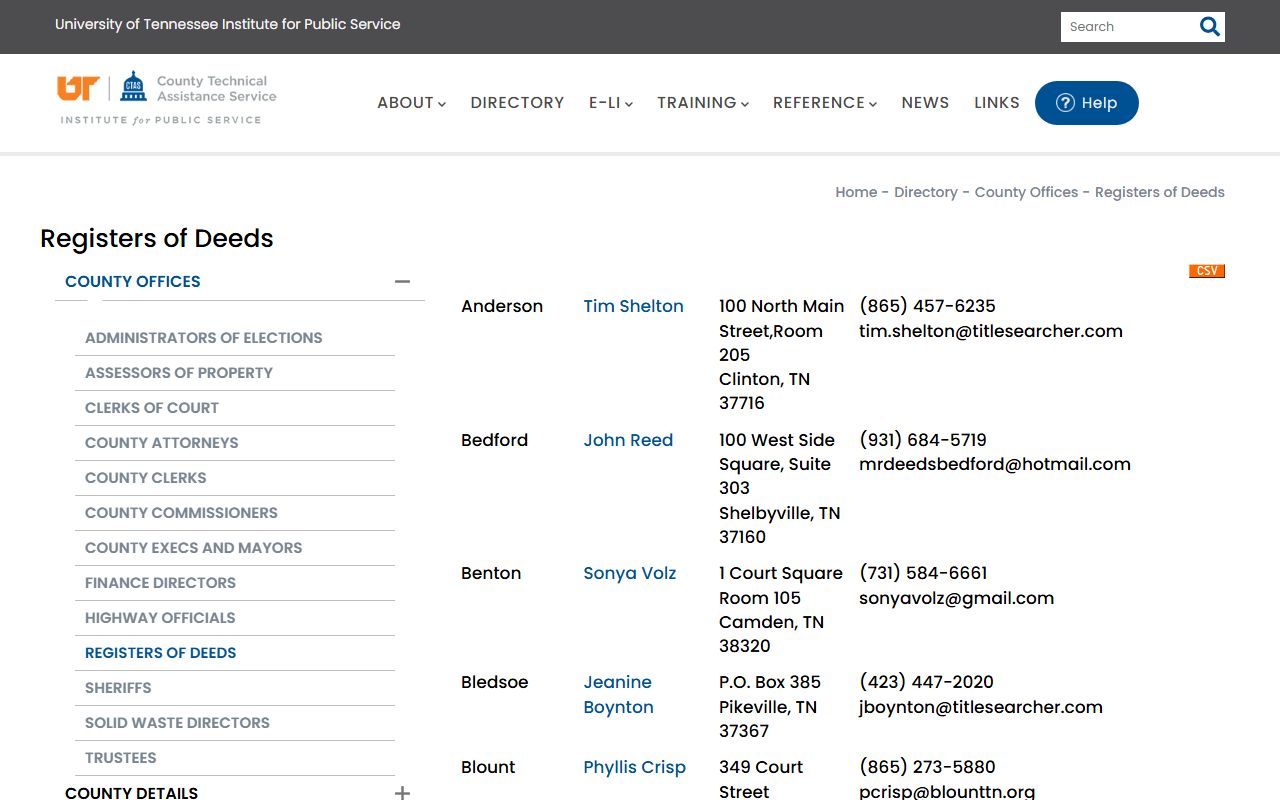 That directory is a statewide reference, but it still points you to the right local office fast. Once you are in the office, the county staff can help you work through the index, the book, and the page number that matches your request.
Cumberland County deed records are public records under Tennessee law. The access rule in T.C.A. § 10-7-503 gives you the right to inspect records during business hours unless a different law limits access. That is the baseline for deed work. It means the office can give you the file, the copy, or the book reference once you identify the right record.
How to Search Cumberland County Deed Records
A good deed search in Cumberland County starts with a name. If you know who sold the land, begin with the grantor side. If you know who bought it, start with the grantee side. That simple split saves time. Once you find the right entry, the book and page take you to the deed itself. If you only know an old address or a family name, pair that clue with a date range or tax map data. The office can often help you narrow the path if you bring a little context with you.
The CTAS deed guidance says a deed normally shows the parties, the property description, the consideration, and the acknowledgment. Other records in the same office can include deeds of trust, releases, liens, powers of attorney, and plats. That is why deed research in Cumberland County often spills into related records. A release may clear a prior loan. A plat may explain the lot lines. A power of attorney may explain who had authority to sign. The record set works as a group.
For older work, the Tennessee State Library and Archives can help with county records microfilm. The county records guide at TSLA is useful when the local book is hard to read or when the date span is wide. Cumberland County researchers also use the archives when they need to confirm a family chain that starts long before the present owner. It is a steady backup source for deed history.
Cumberland County Deed Records Fees
Recording fees in Cumberland County follow Tennessee law. The office must collect the fee before it can accept a deed or mortgage record. The exact total depends on the document type and the page count. A transfer can also trigger state transfer tax, and a debt instrument can trigger mortgage tax. If your deed has several pages or includes more than one instrument, the total can change quickly. It is smart to verify the cost before you make the trip.
Tennessee sets the transfer tax in T.C.A. § 67-4-409, and the CTAS legal guide lays out the common recording requirements. Deeds need to be legible. They need original signatures. They need notarization or two witnesses. They also need the owner name, taxpayer name, preparer name, and parcel ID. Those rules make the land record easier to trust and easier to index in Cumberland County.
What Cumberland County Deed Records Show
Cumberland County deed records show how land moved from one owner to another. The deed tells you who granted the property, who received it, and what land was covered. The deed of trust shows the debt side. The release shows when the debt ended. That paper trail matters for title work, family land transfers, and closing checks. It is also useful when the same property has been sold more than once in a short span. The record office can show you how each step fits the next.
Plats and maps can be just as useful as deeds. A plat may show the lines of a subdivision lot, while the deed gives the transfer details. Together, they make a cleaner picture of the tract. If you are checking a parcel against tax records, the deed books and the assessment records should point to the same ground. That is the value of a county deed search. It connects the paper to the place.
Note: In Cumberland County, the fastest deed search usually starts with a name, then checks the parcel record before asking for a copy.
Cumberland County Deed Records History
Cumberland County land records start in 1856. That means the office holds more than a century and a half of title history. Older books may be handwritten or microfilmed, while newer files may be easier to read at the desk. Either way, the county record is the core source. If you are tracing inherited land or a long family chain, the historical books can help fill in the missing links. A careful search often makes the title story clearer one entry at a time.
When the county books are not enough, state resources can help. TSLA county records, county inventories, and microfilm guides can point you to older deed coverage. The county assessor side also matters. The CTAS assessor property records guide explains how assessment cards, deed copies, and building permits can support the deed search. A deed record is stronger when the parcel record and the assessment card line up.
The Tennessee property assessment portal at tnmap.tn.gov/assessment can help you match the land to a parcel number before you go to the office. That is useful in Cumberland County because the right parcel ID often saves a lot of guessing. It is a practical way to turn a broad place name into one exact tract.
Related Cumberland County Property Records
Deed records and tax records work best together. If you can find a parcel ID, a tax map, or an owner name in the assessment system, the deed search becomes much tighter. That is useful when a parcel has changed hands many times or when a road name has changed over the years. It is also helpful when you are checking whether a deed of trust or release was filed under the right tract.
The Tennessee Comptroller page at comptroller.tn.gov is the state gateway for property assessment information. It gives you a statewide path to the parcel side of the work. If the land record is the story, the assessment record is the map that helps you read it. Together, they make the Cumberland County search less vague and more exact.
Browse More Tennessee Deed Records
If you need another county, use the county list to move on to the next office. The search method stays the same, but the office details change from place to place.