
Dyer County Deed Records Access
Dyer County deed records are the core land papers for Dyersburg and the rest of the county. They show who held title, what was sold, and what claims still sit on the land. If you need a deed, lien release, mortgage, or plat, the Register of Deeds is the right office to start with. Old books can matter just as much as current ones, because a clean title search often depends on the first recorded transfer and the later filings that follow it.
Dyer County Quick Facts
Dyer County Deed Records Office
John Fowlkes is the Register of Deeds for Dyer County. The research lists the office at P.O. Box 1360, Dyersburg, TN 38025, with phone number (731) 286-7806 and fax number (731) 286-7818. That office handles the county's deed records and the related land books that go with them.
The CTAS Dyer County ROD Directory gives a direct county contact reference if you want to start with an official directory instead of a broad web search. It is a good first step when you need the local office before asking for deed copies or older index help.
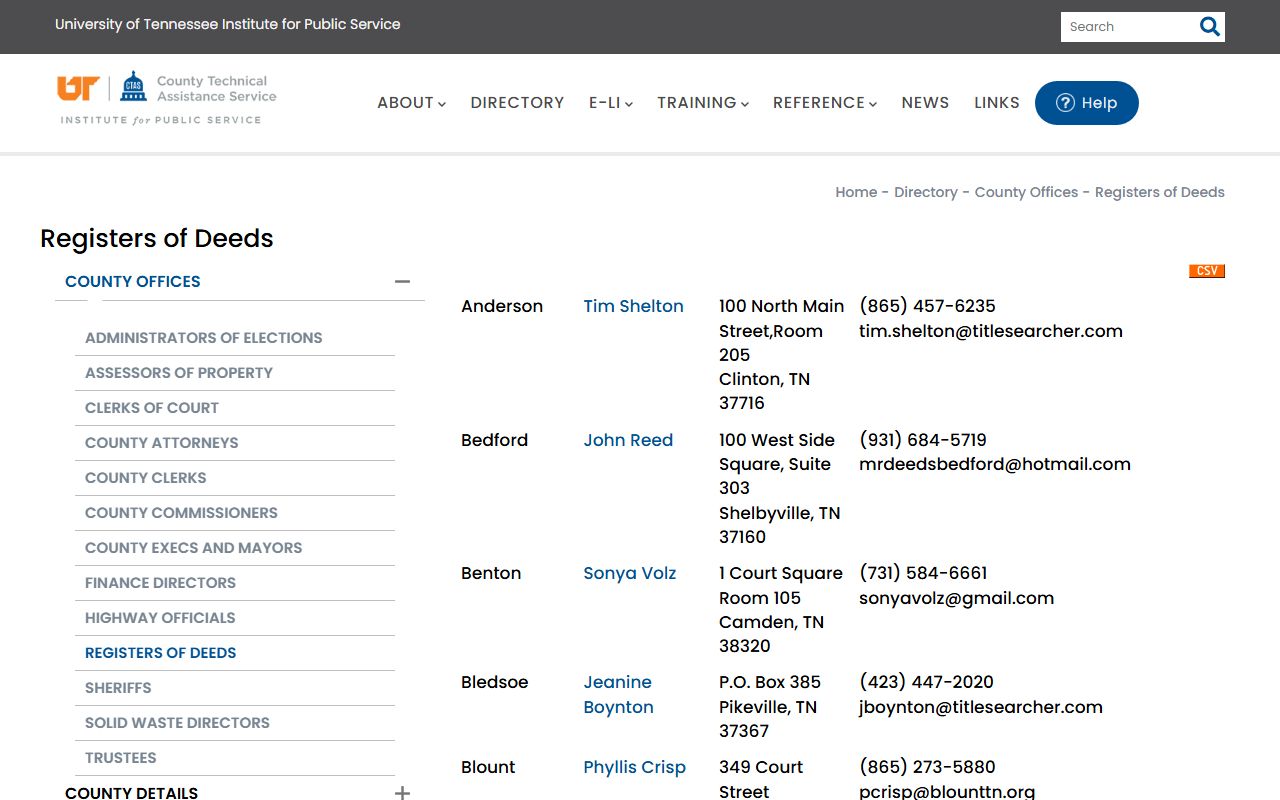
This CTAS listing is the cleanest captured local image for Dyer County deed records. It points right back to the office that keeps the county land books.
| Office | Dyer County Register of Deeds |
|---|---|
| Mailing Address | P.O. Box 1360 Dyersburg, TN 38025 |
| Phone | (731) 286-7806 |
| Fax | (731) 286-7818 |
| dfowlkes@co.dyer.tn.us |
How to Search Dyer County Deed Records
The simplest route is still the best one. Start with a name, then move into the county index, then pull the book and page that match the transfer. Grantor searches work well when you know the seller. Grantee searches work well when you know the buyer. If you do not know both names, the year and a known property clue can still get you close.
Dyer County land records begin in 1823, the county formation year. That gives you a long trail to work with, especially if you are tracking inherited land or an old family parcel. When a county book is hard to read or a set of older books needs backup, the Tennessee State Library and Archives county records resource at TSLA county records microfilm can help.
If you already have a deed reference, use it. Book and page numbers are faster than searching by address alone because the recorded instrument is what anchors the title chain in Tennessee.
Note: A deed search in Dyer County often works best when you also check for later releases, corrections, or related trust deed filings.
What Dyer County Deed Records Show
Dyer County deed records show how land moved and what paperwork followed the move. A deed names the parties and describes the property. Mortgages and liens show financing or claims tied to the land. A release shows that the lien was cleared. Those pieces matter because the property record is really a chain, not a single sheet.
The recording rules in the CTAS guide matter here too. The document must be legible, signed, prepared with the right owner and taxpayer information, and tied to the parcel identification number. The guide at Tennessee recording requirements guide explains the rules and cites the Tennessee Code sections that govern filing.
A Dyer County deed record usually includes:
- Grantor and grantee names
- Book and page reference
- Property description and lot or tract details
- Consideration or value statement
- Notary or witness acknowledgment
- Parcel identification number
Those details are the reason deed records are so useful. They let you track who owned what, when the transfer happened, and what paper still affects the land.
Dyer County Deed Records Access
Deed records are public in Tennessee under the Public Records Act. The reference in T.C.A. § 10-7-503 supports public access during business hours, and Dyer County deed records fit that rule. You can inspect the records and request copies without explaining why you want them.
The county office is the first stop for current land records, but state-level sources help with older research. The TSLA county records microfilm page is one of the best tools when a deed search reaches back to the county's early years. It pairs well with the local office because it helps you bridge gaps between books.
The CTAS register of deeds records guide at CTAS register of deeds records is another useful reference. It explains the kinds of documents the register keeps, including deeds, mortgages, deeds of trust, plats, powers of attorney, releases, and tax liens.
Note: If you are chasing title history, always check the latest release or corrective deed after the original transfer. The last filing is often the one that clears the chain.
Dyer County Deed Records Resources
Deed work often crosses over into property assessment records. The county assessor's data helps match the parcel ID to the tract, and the CTAS assessor page at CTAS assessor property records explains why that link matters. In a county deed search, the tax record and the deed record usually reinforce each other.
The Tennessee Property Records Search Portal at Tennessee Property Records Search Portal can help you line up a parcel number, owner name, or address before you ask the county for a copy. It is a helper tool, not the final record, but it can save time when the paper trail is long.
For company-owned property, the Tennessee Secretary of State business search at Business Entity Search can confirm the exact owner name. That is useful when the deed is filed to an LLC, trust, or corporation and the shorthand on the page is not enough.
The CTAS Registers of Deeds directory and the Tennessee Registers Association are helpful reference points for the wider Dyer County deed records system.
Dyer County Deed Records Summary
Dyer County deed records trace land ownership back to 1823, so the county has depth even when a search starts with a modern parcel. If you can get a name, year, and book or page, the search gets much easier. If you cannot, the index still gives you a path in.
The county office, the state archive, and the property tools all play a part in the search. That is the practical way to handle Tennessee deed records in Dyer County. Build the chain one filing at a time and the story of the land usually becomes clear.