
Hamblen County Deed Records
Hamblen County deed records are the main paper trail for property in Morristown and the rest of the county. If you need a warranty deed, trust deed, release, plat, or military discharge, the Register of Deeds office is where that record is kept and copied. The county record set begins in 1860, so most searches can move from a modern online lookup to a book or image check without losing the thread. That makes Hamblen County a practical place to search when you already have a name, a year, or a parcel clue tied to local land.
Hamblen County Quick Facts
Hamblen County Deed Records Office
The Hamblen County Register of Deeds office is in the Administrative Building at 511 West Second North Street, 3rd Floor, Morristown, TN 37814. Jim Clawson serves as Register of Deeds. The office phone number is (423) 586-6551, the fax number is (423) 318-2505, and office hours are Monday through Friday, 8:00 AM to 4:30 PM. That office keeps the county's deed books, image files, and copy set for the public.
The county website is the best first stop because it points you to the live office rather than a third-party summary page. Hamblen County deed records include warranty deeds, trust deeds, releases, powers of attorney, charters, plats, and military discharges. The office also notes a scanning project that runs deeds and plats back to 1978, which helps when a recent book reference is already digitized.
The official office image below is the cleanest local source for Hamblen County deed records because it points straight to the register's own page.
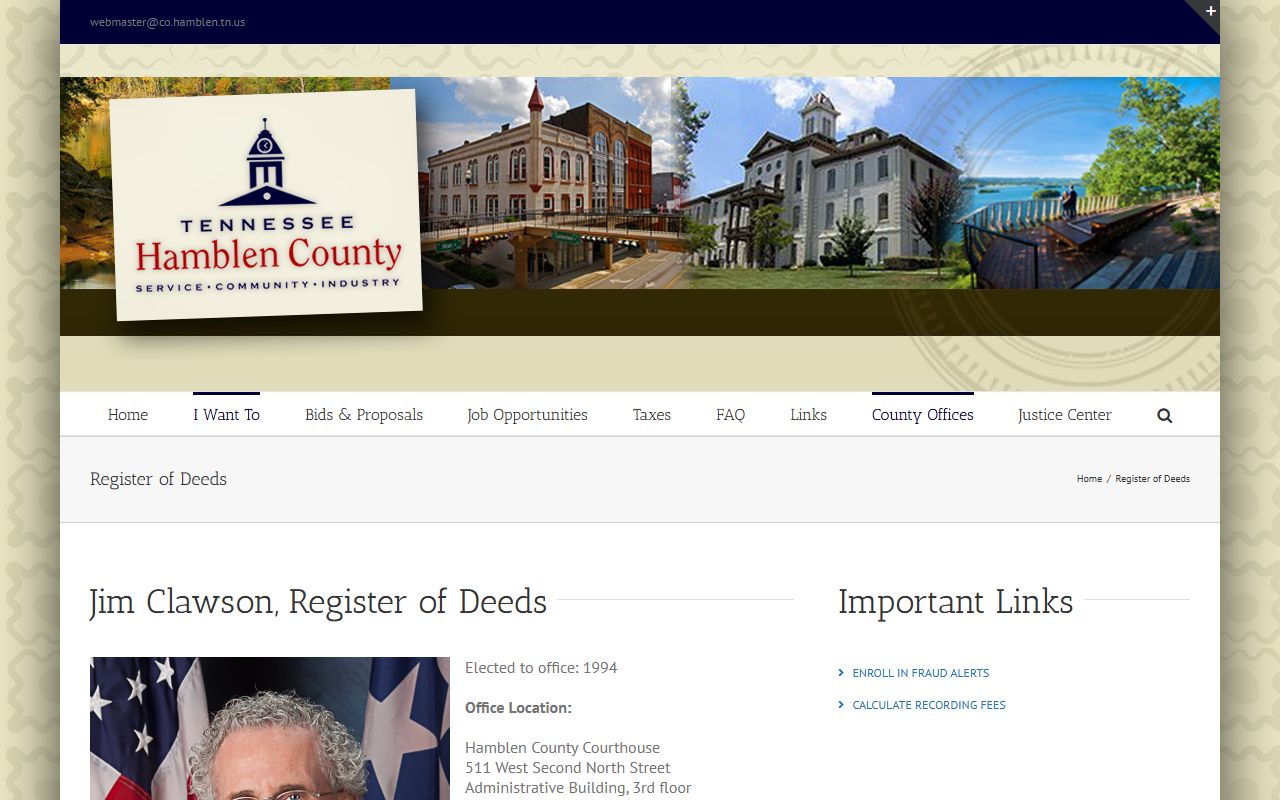
That office page helps you confirm the address, the register name, and the public search path before you start a deed lookup or ask for a copy.
| Office | Hamblen County Register of Deeds, Jim Clawson |
|---|---|
| Address | 511 West Second North Street Administrative Building, 3rd Floor Morristown, TN 37814 |
| Phone | (423) 586-6551 |
| Fax | (423) 318-2505 |
| jclawson@co.hamblen.tn.us |
Search Hamblen County Deed Records
Hamblen County deed records are easiest to search when you begin with a name, a year, or a tract clue. The county office and the scanned record set can usually get you to the right filing without much noise. If you know the grantor or grantee, that is the best way in. If you only know the address, use the parcel clue and work toward the recorded deed from there. Older searches may need the book and page number, while newer searches often work from the image set at the office.
The county records include documents from 1860 and a wide range of land filings. That makes the search more useful when you are checking a deed chain that includes a release, a plat, or a power of attorney. The office also collects realty transfer tax and mortgage tax when a document calls for it, so a search often leads into a recording question as well as a copy question.
When the county record is not enough, the state archive helps fill the gap. The TSLA county records collection is the backup path for older work, and it is especially useful when the record predates the digital scan range or when the index needs a second pass. Hamblen County searches go faster when the county office and the state archive are used together instead of one at a time.
Useful search details include:
- Grantor or grantee name
- Approximate recording year
- Book and page reference
- Parcel number or legal description
- Document type such as deed, release, or plat
Hamblen County Deed Records Fees
Hamblen County recording fees are shaped by the same Tennessee tax rules that apply statewide. The research says realty transfer tax and mortgage tax are collected. That matters because a deed can carry different costs depending on whether it transfers title, secures debt, or both. A plain copy request is simpler than a new recording, but both still depend on the right office check before you pay.
The recording rules are easier to understand when you look at the state guidance in CTAS register of deeds records and the tax rule in T.C.A. § 67-4-409. Those sources explain why the register needs a clean document, a readable legal description, and the right tax line before the file can be accepted. Hamblen County follows that same framework.
If you are recording a document, bring the page count, the parties, and the parcel details. If you only want a copy, ask whether a certified copy is needed. The office can tell you which route is right for your purpose.
Note: Hamblen County deed costs can change with tax due, page count, and document type, so verify the total before you file or ask for certified copies.
Hamblen County Deed Records History
Hamblen County deed records reach back to 1860, which gives the county a long but manageable paper trail. That is enough history to show ownership changes across generations without forcing every search into the territorial era. For many property questions, the first deed in the chain is more important than the newest one because it explains how the tract changed hands and why the current legal description looks the way it does.
The county also scanned deeds and plats back to 1978, which helps bridge the gap between the old book era and the modern digital record set. That is useful when a search starts with a book citation and ends with an image request. The scan project reduces guesswork and makes the county record easier to read for title work, property disputes, and closing files.
The CTAS directory below is another useful reference point because it keeps the Hamblen County office within the statewide register network.
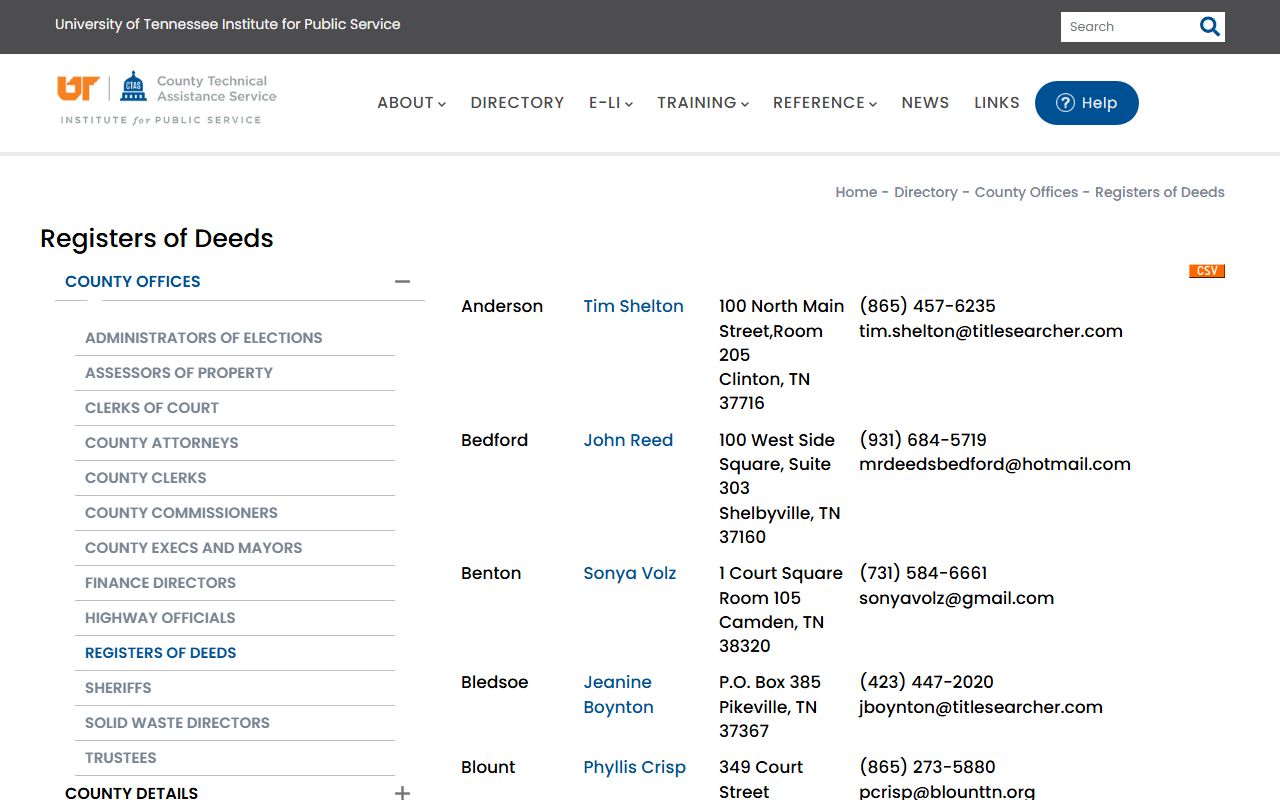
The CTAS county register directory is a quick way to confirm Hamblen County contact structure and compare it with other Tennessee counties.
The county and archive side work best together. The office keeps the current public file, while TSLA helps with older work that has not been fully carried into the current scan set.
Related Hamblen County Deed Records
Hamblen County deed records connect closely to the broader land-record system. The CTAS legal issues guide explains the recording standards that keep a document readable, indexed, and public. The Tennessee Public Records Act, T.C.A. § 10-7-503, explains why the records are open during business hours unless another law limits a specific record.
Those rules matter because a deed is only useful if it can be found again. A good county record keeps the legal description, the parties, the book reference, and the filing date together. That is what makes Hamblen County deed records more than a simple copy file. They are the public proof of the land transfer.
If you need to confirm a tract before you search, the county record and the tax parcel should be read side by side. That keeps the lookup tight and helps you avoid the wrong parcel when a family name has been used on more than one property.
More Tennessee Deed Records
When you need another county, the Tennessee county directory is the quickest way to the next register office. The same search habits still apply from county to county.