
Search Houston County Deed Records
Houston County deed records are the main trail for land transfers, mortgages, and liens in Erin and the rest of the county. If you need to verify who owned a tract, check a recording date, or follow a release that clears title, the Register of Deeds office is the first place to start. Houston County land records begin in 1871, so the search can move from a recent filing to an older book and page reference. The county office and Tennessee state tools work together when the deed is old or the index needs a second pass.
Houston County Quick Facts
Houston County Deed Records Office
Houston County deed records are kept by Angeline T. Wallace, the Register of Deeds, at 100 East Main Street, Erin, TN 37061. The mailing address is P.O. Box 115, Erin, TN 37061. The office phone number is (931) 289-4030, the fax number is (931) 289-4031, and the email listed in the research is houstoncountyrod@gmail.com. That office holds the county deed books, mortgage filings, and lien records, so it is the place to request a copy when a search turns up the book and page you need.
Because the research packet does not include a direct county website URL, the safest official route is the CTAS Registers of Deeds directory. It gives you a clean county-level contact path and keeps the search tied to a Tennessee government support source. That matters when you want to confirm the right office before you drive into Erin or mail a request.
The image below points to that same CTAS directory and gives a quick visual reference for the Houston County deed records path.
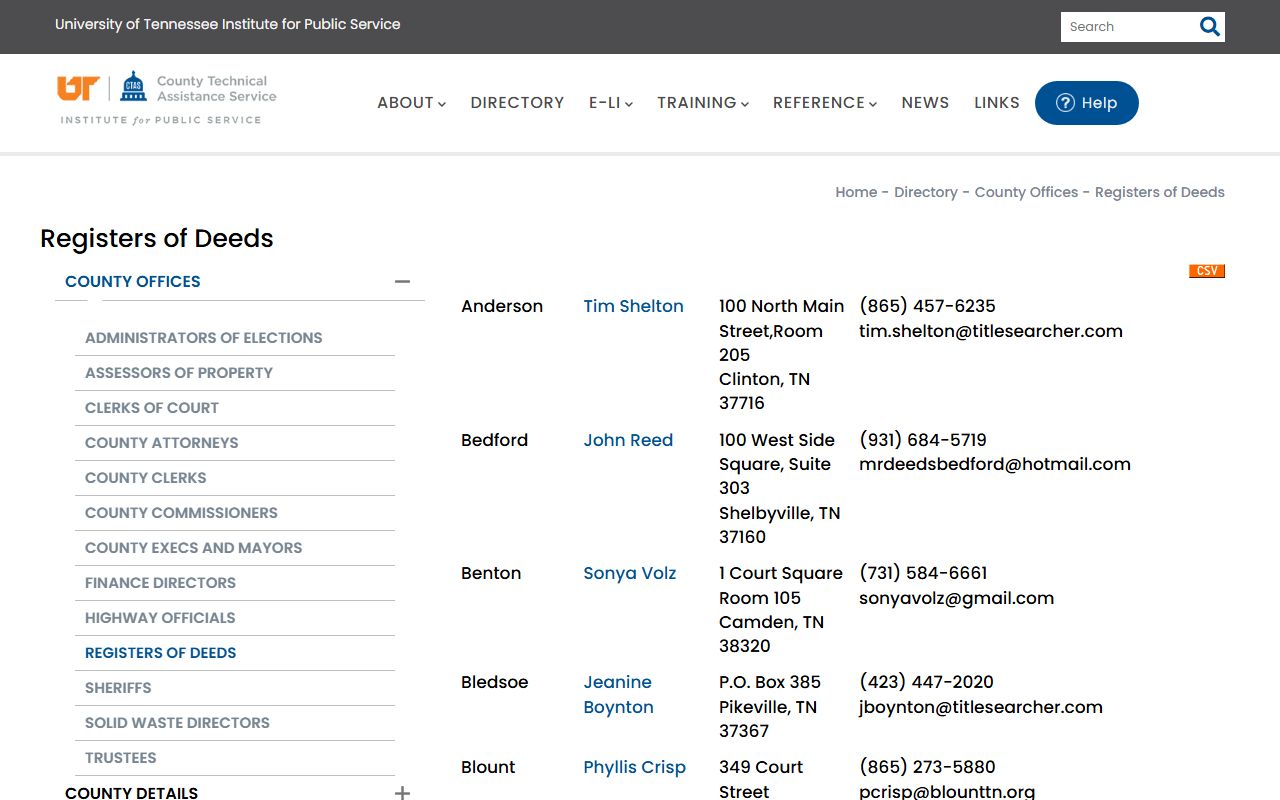
Use that directory when you need a fast contact check or a county office reminder before you ask for a deed copy or a title search.
How to Search Houston County Deed Records
Houston County deed records are easiest to search when you already have a name or parcel clue. Grantor and grantee searches are the best starting point. If you know the property address, pair it with the parcel number or legal description from the tax record. That narrows the filing path before you ask the office for a copy. Because Houston County land records begin in 1871, older searches may need more patience than a recent recording check.
The Tennessee assessor system helps line up the land first. The CTAS assessor property records guide explains how assessment records support deed research. The TNMap property assessment portal is also useful when you need a parcel ID, owner name, or legal description before you search the county deed books. Those details make Houston County deed records easier to match to the right tract.
When you need an older deed, the Tennessee State Library and Archives page at How to Find Deeds is the best backup. It explains how grantor and grantee indexes work, why deed books are not always filed by the same year they were signed, and how archived copies are requested when a record is older than the courthouse index you are using.
Useful search details include:
- Grantor or grantee name
- Approximate year of filing
- Book and page number if known
- Parcel number or legal description
- Document type such as deed, mortgage, or lien
For a wider office context, the Tennessee Registers Association at tennesseeregisters.com is a clean statewide reference when you want to see how county registers fit into the Tennessee land record network.
Houston County Deed Records Rules
Houston County follows Tennessee recording rules for deeds, mortgages, and liens. The CTAS register guide explains the main record types the office keeps. Deeds show the grantor and grantee, the property description, and the consideration. Deeds of trust show the parties and the security terms. Releases help clear a lien when the debt is paid. That is why Houston County deed records are more than a list of names. They are the paper trail that shows how title moved.
The legal issues guide from CTAS explains why a deed has to be legible, signed, notarized or witnessed, and marked with the owner name, taxpayer name, preparer name, and parcel identification number. The derivation clause matters too, and that is part of T.C.A. § 66-24-110. When tax is due, T.C.A. § 67-4-409 controls transfer and mortgage tax. Those rules connect the new filing to the older one and keep the chain of title clear. That detail is often what turns a loose deed search into a useful property history. The same guidance fits the county record office because Tennessee law sets the rules the office follows when an instrument is recorded.
Houston County deed records also sit inside the Tennessee public records framework. Under T.C.A. § 10-7-503, public records are open during business hours unless another law limits access. In practice, that means the county office can let you inspect the record, and then charge the copy fee if you need a print or a certified copy. If you are recording a new deed, call the office first to confirm current fee totals and filing needs.
Note: A clean Houston County filing is easier to record when the parcel ID, owner name, and derivation clause all match the title history.
Houston County Records History
Houston County land records begin in 1871, so the county has enough history to support both recent title work and older chain-of-title research. A parcel can move through several owners, then split, then show up again under a new description. That is common in a county with a long deed trail. The county office keeps the live record, while archive and state tools help fill the gaps when a filing is too old for a quick search.
The County Officials Association of Tennessee at tncountyofficials.com is a useful state-level reference when you want a statewide association path instead of guessing at a county webpage. The Tennessee Registers Association is also useful when you want to compare county register offices across Tennessee. Those references do not hold the deed itself, but they help place Houston County inside the broader land-record network.
If your search reaches back into older books, the archive path can matter more than a current office window. That is where TSLA and the county office work together. The archive helps with older runs, while the county office is still the place that handles current recorded papers. In Houston County deed records work, both sources can be part of the same title trail.
Houston County Property Records
Houston County deed records line up best with assessor data, county index work, and the state archive when the file is old. If you need to compare the deed with the parcel record, start with the assessment side and then use the county office to confirm the recorded instrument. That keeps the search tight and avoids wasted time on the wrong tract. The CTAS register of deeds records guide is a solid companion for that kind of work because it explains what the office records and how the index is usually organized.
The county record always wins for the official filing, but the state tools help you get there faster. When you already know the deed is in Houston County, the next step is to line up the name, parcel, and year range before you ask for a copy. If the deed names an LLC or corporation, the Secretary of State business entity search helps confirm the entity name before you ask for the county record. That makes the office search faster and reduces back-and-forth over the phone or in person.
Note: The best Houston County deed search usually blends the county office, the state assessment tools, and the TSLA deed guide instead of relying on a single database.
More Houston County Records
Use the county office for current filings, TSLA for older books, and the CTAS guides when you need to confirm the rules behind the record. That combination cuts out guesswork and keeps the title work tied to real sources. If the search starts with a parcel, the assessment tools can help you get to the right deed faster. If it starts with a family name, the grantor and grantee indexes are usually the quickest path.
For more Tennessee counties, the county directory page is the cleanest path to the rest of the site. It keeps the local filing office front and center while letting you compare Houston County with other Tennessee deed record offices.