
Johnson County Deed Records
Johnson County deed records are the key land trail for Mountain City and the rest of the county. If you need a deed, mortgage, lien, or old index entry, the Register of Deeds office is the place to start. Johnson County has land records that begin in 1836, so the search can be quick when you know the name, or slow when you need to work back through older books. Either way, the county file is the official source for ownership history, recording data, and the paper trail that follows a parcel through time.
Johnson County Deed Records Quick Facts
Johnson County Deed Records Office
The Register of Deeds for Johnson County is Wanda A. Jennings. The office is at 222 West Main Street in Mountain City, TN 37683. The phone number is (423) 727-7841 and the fax number is (423) 727-7047. That office keeps the county's permanent deed books and related land records, so it is the best place to ask for a certified copy, a book and page citation, or help matching a name to the proper filing.
For a county-wide reference point, the CTAS Registers of Deeds directory gives the official Johnson County register listing. It is a strong starting point when you want to confirm the office path before you visit Mountain City or mail a request. Johnson County does not have the same deep online stack as some of the larger counties, so the office contact matters just as much as the record itself.
The image below points to that county register directory. It is the cleanest visual reference in the manifest for Johnson County deed records and it reinforces the office path that the county uses for land filings.
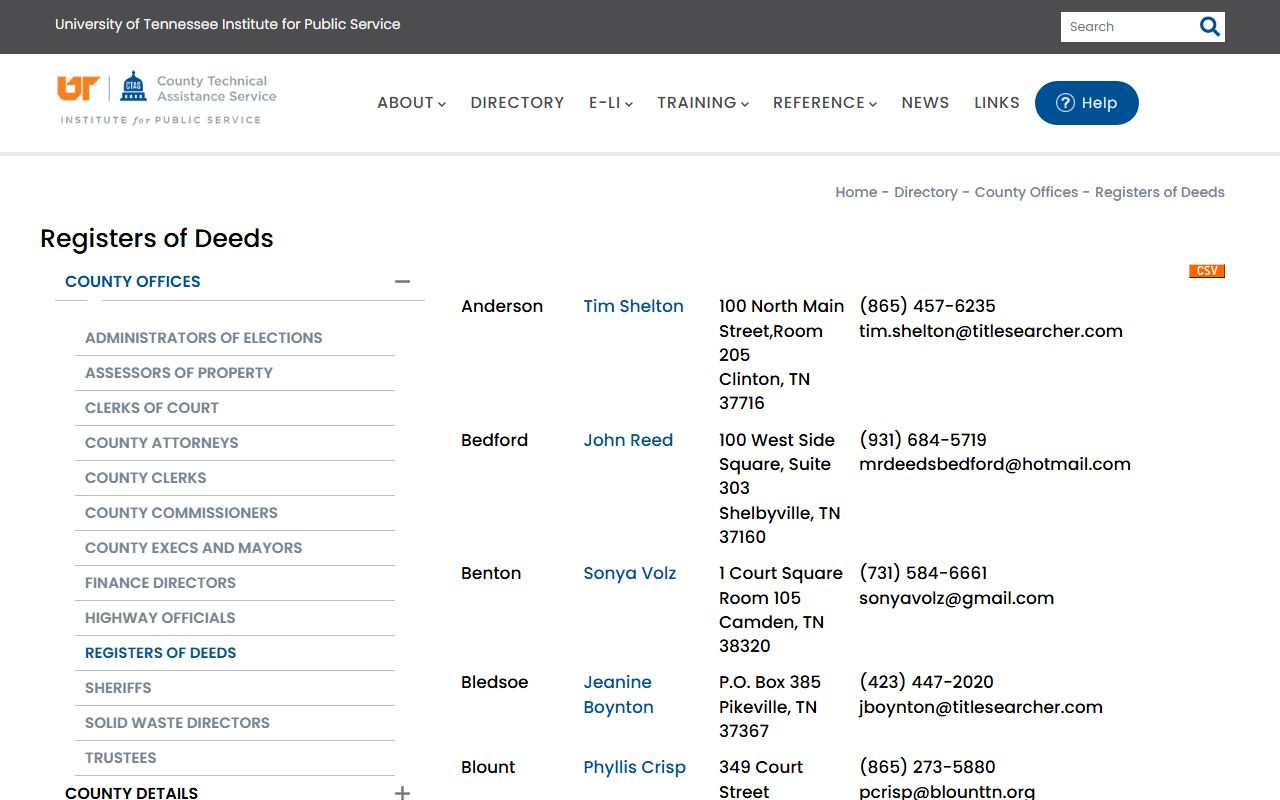
The CTAS directory does not replace the deed book, but it helps you get to the right county office fast when the search starts with Johnson County and not a specific book reference.
Search Johnson County Deed Records
Johnson County deed records are usually easiest to search by name. Start with the grantor or grantee if you know who gave the land or who received it. If you only have a parcel clue, use the tax or assessment record first and then move into the deed book. Johnson County land records are not spread across many different systems, so the right name and the right date range can save a lot of time.
The Tennessee State Library and Archives county records page is the best statewide fallback when a Johnson County deed is old or hard to place. TSLA helps with older deed searches, and its microfilm guidance is useful when the county index only gives you a narrow clue. That matters in Johnson County because a deed may be indexed under the seller, the buyer, or a long-ago book entry that is not obvious at first glance.
When the search gets narrow, the deed should show the parties, the land description, the recording date, and the book and page where it was entered. That is the part of the file that matters most for title work. If you need a deed copy for a closing or for family land research, those four pieces usually get you to the right document.
Useful Johnson County search details include:
- Grantor or grantee name
- Approximate recording year
- Book and page number if known
- Parcel number or legal description
- Document type such as deed or mortgage
Johnson County Deed Records Rules
Johnson County deed records follow Tennessee recording rules. The CTAS register of deeds guide explains that deeds must be legible, signed, notarized or witnessed, and prepared with the owner name, taxpayer name, preparer name, and parcel identification number. Those are not minor details. They are the pieces that let the register index the document and make it usable for the next person who searches the chain of title.
The legal side is also important. Under CTAS recording requirements, Tennessee registers can reject a document that is unreadable or missing key data. That keeps Johnson County deed records clean and helps prevent a bad filing from creating confusion later. The state code behind that framework includes T.C.A. § 66-24-101 and related sections for recording eligibility, plus T.C.A. § 66-24-114 for owner and taxpayer information and T.C.A. § 66-24-122 for the parcel identification number.
When a deed includes tax, the register also has to follow the fee rules in T.C.A. § 67-4-409. Transfer tax and mortgage tax can apply, and the county has to collect what is due before the document is entered. That is why a Johnson County deed search and a Johnson County recording request are really two sides of the same land-record process.
Note: A clean Johnson County deed is easier to record and easier to search later. The right names, parcel data, and derivation clause save time for everyone.
Johnson County Deed Records History
Johnson County land records begin in 1836, which gives the county a long enough history for both modern property work and older family land research. If a parcel has moved through several hands, the deed trail can get layered fast. A newer deed may point back to a much older book, and the index may be the only thing that tells you where to go next. That is why the county books matter as much as the certified copy you eventually pull.
Statewide property tools can help bridge the gap. The TNMap property assessment portal and the Tennessee Comptroller property assessment page help you match a parcel ID to the land itself. That is useful when a deed search starts with an address or a tax roll clue rather than a clean book citation. Once the parcel is clear, the Johnson County deed file becomes much easier to pin down.
The county office is also where questions about old releases, mortgages, and liens usually come back together. Those records can explain when a debt was paid, when a title changed, or when a tract was split and sold. For Johnson County deed records, the title trail often tells the whole story only when you read the deed, the release, and the assessor record together.
Related Johnson County Records
Johnson County deed records sit next to other county land records that help explain the chain of title. The county register handles deeds, mortgages, and liens. The assessor side helps with parcel information and current owner data. The archive side from TSLA can help with older books when the county office needs a backup source. That mix gives you a full view of the property without guessing at the record path.
Public access rules also matter. Under the Tennessee Public Records Act at T.C.A. § 10-7-503, recorded land records are public and available during business hours unless another law limits access. That means a Johnson County deed search does not require a special reason. You can ask for the record, pay the copy fee if needed, and work from the official county file.
When the document came from a company rather than a person, the Tennessee Secretary of State business entity search can help verify the business name before you tie it to a Johnson County deed. That extra check is useful when the chain of title includes an LLC or a corporation.
More Johnson County Deed Records
Use the county directory when you need the right office path for another Tennessee county. The research pattern stays the same even when the local office changes.