
Lawrence County Deed Records
Lawrence County deed records are the main land trail for Lawrenceburg and the rest of the county. If you need a deed, mortgage, lien, or older book entry, the Register of Deeds office is the place to start. Lawrence County land records begin in 1818, which gives the county a long enough history for current title work and older family land searches. The county file is the official source for the record, and it keeps the ownership trail tied to the land rather than to memory or guesswork.
Lawrence County Deed Records Quick Facts
Lawrence County Deed Records Office
The Register of Deeds for Lawrence County is Tammy S. Mathis. The office is at 200 West Gaines Street in Lawrenceburg, TN 38464. The phone number is (931) 766-4180, the fax number is (931) 766-4181, and the email listed in the research is tammy.mathis@lawrencetn.gov. That office keeps the county's permanent deed books and handles the copy requests, book references, and filing checks that come with land-record work.
A strong statewide reference for the office is the CTAS Registers of Deeds directory. It gives the Lawrence County register listing in one place and helps confirm the county path before you call or stop by. The image below points to that same directory and gives the county office path a clear visual reference.
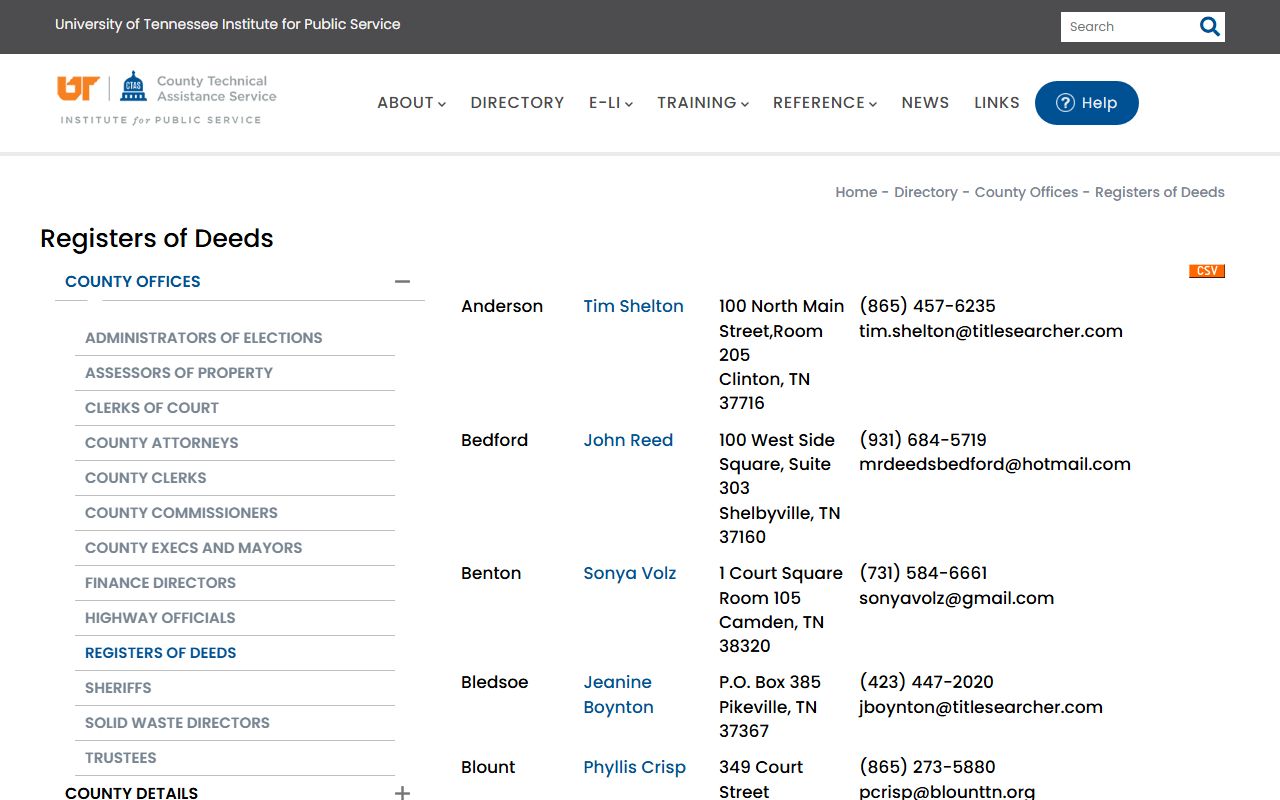
The CTAS directory is the best quick check for the Lawrence County office path when you need the county register details first.
Search Lawrence County Deed Records
Lawrence County deed records are easiest to search by grantor or grantee name. If you only have an address, use the parcel clue and then move into the deed file. A year range also helps because Lawrence County has a long deed history and older books may sit farther back than a casual search would expect. The search gets much easier when you know the seller, the buyer, or at least the tract you want.
The Tennessee State Library and Archives county records page is the best fallback for older Lawrence County deeds. TSLA's microfilm guidance is useful when a deed is handwritten, hard to read, or indexed in a way that does not match modern habits. It is also useful when the deed date and the recording date are different. That gap shows up often in older land work.
Lawrence County deed searches also fit well with the TNMap assessment portal and the Tennessee Comptroller property assessment page. Those tools help connect the parcel ID and the assessment record to the land itself. Once the parcel is clear, the county deed book usually falls into place much faster.
Useful Lawrence County search details include:
- Grantor or grantee name
- Approximate recording year
- Book and page number if known
- Parcel number or legal description
- Document type such as deed, mortgage, or release
Lawrence County Deed Records Rules
Lawrence County deed records follow the same Tennessee recording rules as every other county. The document has to be legible, signed, and ready to index. CTAS explains that owner and taxpayer data, a preparer name and address, a derivation clause, and a parcel identification number are all part of a valid deed package. Those details are what let the office place the deed in the right spot and make it useful for later research.
The legal framework is the same one used statewide. CTAS recording requirements explain why unreadable or incomplete documents can be turned away, and T.C.A. § 67-4-409 governs transfer tax and mortgage tax when they apply. That keeps the Lawrence County record set clean and helps the next searcher follow the chain of title without having to guess at the filing history.
Lawrence County deed records also become much easier to read when you compare them to the assessor record. If the owner name, parcel ID, or legal description does not line up, the deed is telling you to keep looking before you settle on a result. That is the safe way to work a county land file.
Note: Lawrence County deed records are public during business hours under Tennessee access rules, but a good parcel clue still keeps the search efficient.
Lawrence County Deed Records History
Lawrence County land records begin in 1818, so the county has a long record trail that can reach back through generations of property transfers. Older deeds may show sales, boundary changes, releases, and liens that explain how a parcel moved over time. The county books often tell the story best when you read the later filings together with the first conveyance.
The Tennessee Public Records Act at T.C.A. § 10-7-503 supports public inspection of county land records. In Lawrence County, that means the deed books are part of the public record unless another law limits access. You do not need to explain why you want the file. You just need the right name or parcel clue to keep the search on track.
When a search goes farther back than the county office can reach in a single step, the TSLA county records collection is the natural backup. Lawrence County has enough historical depth that the archive path can matter just as much as the current office. That combination is often what turns a rough property clue into an exact deed reference.
Related Lawrence County Records
Lawrence County deed records sit next to mortgages, liens, and releases, which is why a title search often needs more than one document. The assessor file gives parcel clues, the county office gives the official filing, and TSLA gives the older backup path. Together, those tools get you from a broad property question to the exact book and page you need.
If a deed names a company, the Tennessee Secretary of State business entity search can help confirm the legal business name before you tie it to a Lawrence County filing. That is useful for commercial property, inherited property held by an entity, and any transfer where the company name needs a second look. It is a verification step, not a replacement for the county deed.
Lawrence County deed research works best when the county file, the assessor data, and the state archive work together. That keeps the search local, accurate, and tied to the right land.
More Lawrence County Deed Records
Use the county directory when you need another Tennessee county. The deed search stays local to the county where the land sits.