
Search Marshall County Deed Records
Marshall County deed records are the core land files for Lewisburg and the rest of the county. If you need a deed, mortgage, lien, or a copy of a recorded instrument, the Register of Deeds office is the first place to check. Marshall County land records begin in 1836, so the search can be straightforward for newer filings and more detailed for older tracts. The right starting point is usually a grantor name, grantee name, or parcel clue. Once you have that, the office and the state guides can do the rest.
Marshall County Deed Records Quick Facts
Marshall County Deed Records Office
Leah S. Harris serves as the Marshall County Register of Deeds. The office address is 1103 Courthouse Annex, Lewisburg, TN 37091. The phone number is (931) 359-4933, the fax number is (931) 359-4934, and the email in the research is marshallrod@marshallcountytn.gov. That office is the live source for copy requests, filing questions, and older Marshall County deed records that are not easy to pull online.
The research gives no direct county website URL, so the best official shortcut is the statewide office directory. The CTAS Registers of Deeds Directory helps verify the Marshall County office path, while the local office handles the actual books and recorded pages. When you need a fast check on where to send a request or who to call, that directory is the safest place to start.
The CTAS directory image below is the source-linked reference behind this page. It is a quick way to keep the county office details straight before you ask for a record or confirm a book reference.
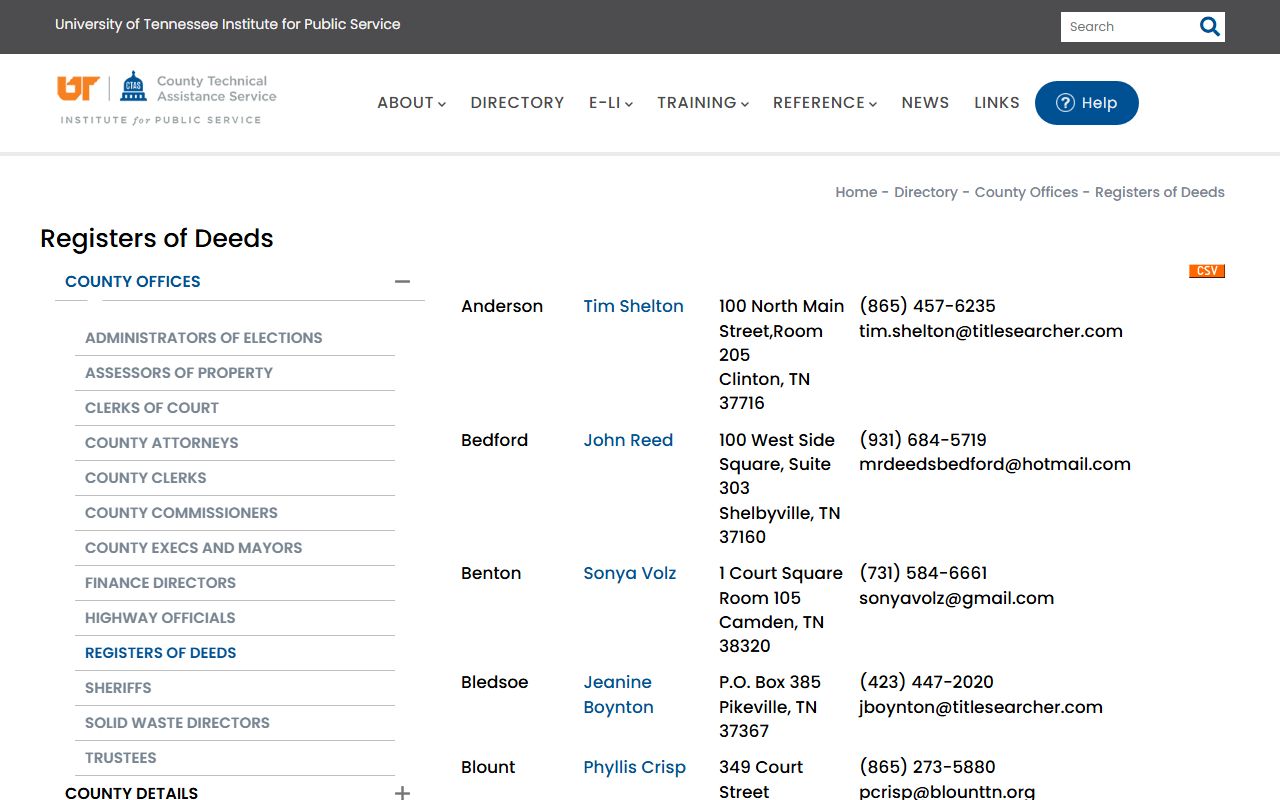
That link is especially handy when you want to confirm the office name first and then move into the deed search itself.
| Office | Marshall County Register of Deeds, Leah S. Harris |
|---|---|
| Address | 1103 Courthouse Annex, Lewisburg, TN 37091 |
| Phone | (931) 359-4933 |
| Fax | (931) 359-4934 |
| marshallrod@marshallcountytn.gov | |
| Directory | CTAS Registers of Deeds Directory |
Marshall County Deed Records Search
Marshall County deed records are easiest to find by name. Start with the seller or buyer, then widen the search window if the first result does not fit. If you have a parcel ID, use that too, but do not skip the name search. Older land transfers in Marshall County can be buried in a chain of earlier transactions, and the index is often the thing that gets you there. The county's 1836 starting point means older books can matter just as much as modern copies.
The Tennessee State Library and Archives has a step-by-step deed guide at How to Find Deeds. It explains why deed research is built around grantor and grantee indexes and why a signed deed date can differ from the record date. The TSLA county records page at County Records Microfilm is another useful backup when the county book is old or the index needs a second look. Those two resources help when a Marshall County deed search moves beyond the current office files.
If the property has a clear tax trail, the assessor side can help too. The CTAS assessor guide at Assessor Property Records shows how parcel IDs and tax data connect to the recorded deed. That is useful when the land has changed hands more than once, or when a legal description is easier to find from the tax roll than from memory.
Marshall County deed records are public land records, so a citizen can inspect them during business hours under T.C.A. § 10-7-503. That matters because it keeps the search open and predictable. If you know the name, the date, or the book reference, the county office can usually take it from there.
Marshall County Deed Records Rules
Marshall County follows Tennessee recording rules. The CTAS legal issues guide at ROD Legal Issues Guide lays out the basics: the deed must be legible, signed, and properly acknowledged. It also has to include the owner and taxpayer information, the preparer's name, and the parcel identification number under the relevant Tennessee Code sections. A clean filing is much easier to enter and much easier to search later.
Taxes can also shape the filing. Under T.C.A. § 67-4-409, transfer tax and mortgage tax may apply depending on the instrument. That means the office checks both the document and the tax line before recording. If something is missing, the file can stall until the issue is fixed. That is normal in a county deed office. It protects the record and keeps the index reliable.
The state guide at CTAS Register of Deeds Records explains the main record types kept by county registers and why deeds, mortgages, and liens are permanent records. Marshall County follows that same structure. Once a document is recorded, it becomes part of the county's public land history and can be used to trace title later on.
Note: Marshall County copy fees and recording fees can change, so check with the office before sending documents or requesting certified copies.
Marshall County Deed Records History
Marshall County deed records begin in 1836, which gives the county a long but manageable land history. Older deeds can show how family property moved through several hands, how a tract was split, or how a mortgage and release changed the title trail. The older the property, the more likely you are to need the index first and the actual deed image second. That is the normal path in a county with decades of recorded land transfers.
The Tennessee Registers Association at tennesseeregisters.com and the County Officials Association of Tennessee at tncountyofficials.com give useful statewide context for the office that handles Marshall County land records. Those sites do not replace the county books, but they help confirm that the register operates inside a standard Tennessee framework. That is useful when you need a broad office reference or want to compare county record practices.
Marshall County land records are built around deeds, mortgages, and liens. When a deed search gets confusing, look for the related filing that explains the next step in the chain. A release can show that a lien was cleared. A later mortgage can show a new loan. A second deed can show where title went next. That sequence is often what turns a flat search into a useful ownership history.
The county books also matter for older property in and around Lewisburg. Even if a deed is not digitized, the office and the archive path can still put you back on track. That is why a clear name search, followed by a careful check of the book and page, remains the best way to work Marshall County deed records.
More Marshall County Deed Records
If you need more Tennessee deed research, use the county office first and the state tools second. The CTAS directory confirms the Marshall County register, the TSLA deed guide explains how to work older books, and the CTAS deed records guide shows what kinds of instruments belong in the permanent land file. That mix is usually enough to make a Marshall County search more precise.
For a wider Tennessee search, the county page works best when you already have a name, parcel, or book clue. The state resources then help you confirm the filing rules and keep the search tied to the actual record instead of to a guess.