
Search Rhea County Deed Records
Rhea County deed records are the core land file for Dayton and the rest of the county. When you need a deed, mortgage, lien, or older title clue, the Register of Deeds office is the place that keeps the official record. Rhea County has a long paper trail that reaches back to the early 1800s, so searches can move from a recent filing to an older book if the property has changed hands more than once. The county office and the state research tools work together when you need to connect a parcel to the document that proves who owns it.
Rhea County Quick Facts
Rhea County Deed Records Office
Rhea County deed records are maintained by Dan Whitman, the Register of Deeds, at 1475 Market Street, Dayton, TN 37321. The office phone is (423) 775-7808, the fax number is (423) 775-7809, and the email listed in the research is dwbitman@rheacountytn.com. That office holds the county's deed books, mortgage files, and lien records, so it is the right place for a copy or a direct lookup when you know the name or book reference.
The county directory image below links to the CTAS Rhea County ROD Directory. That statewide directory is a good first check before you call Dayton or plan a visit. It gives you a clean county-level reference and keeps the search tied to the official office that records Rhea County deed records.
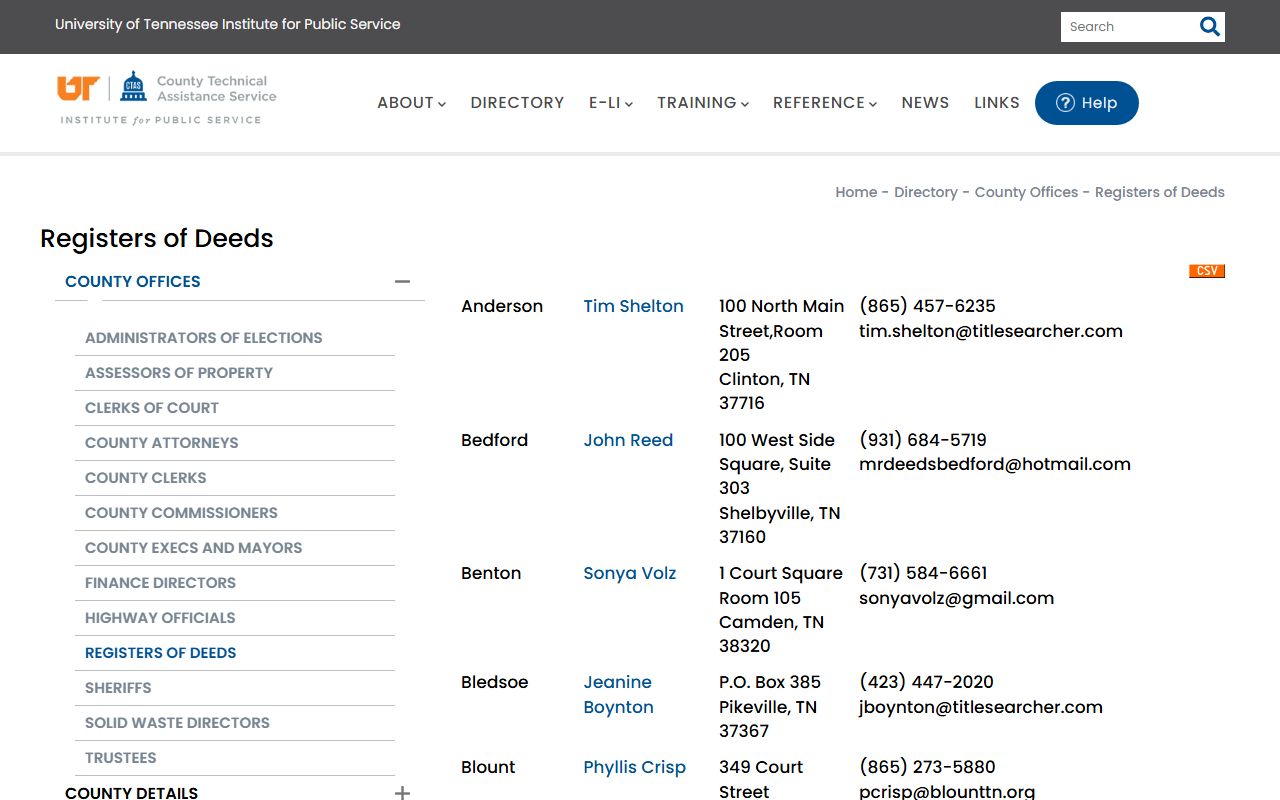
Use the directory when you need to verify the office path or confirm the county contact details. It is especially handy when you are comparing older and newer filings and want to be sure you are looking at the right county record set.
How to Search Rhea County Deed Records
Rhea County deed records usually start with a grantor or grantee name. That is the fastest route when you already know who sold the land or who bought it. If you only have an address, use the assessment side to get the parcel number and then move into the deed index. That approach helps because Rhea County land records go back to 1807, and older titles can sit under a book and page reference that is not obvious at first glance.
The Tennessee assessment tools can help you line up the tract before you search the deed books. The TNMap property assessment portal and the CTAS assessor property records guide both support that kind of work. If the parcel has changed shape, changed owners, or moved through a family transfer, the assessor side often gives you the clue that puts the deed search back on track.
Bring these details when you ask for a search:
- Grantor or grantee name
- Approximate year of recording
- Book and page number if known
- Parcel number or legal description
- Document type, such as deed, mortgage, or lien
If the record is older than the county office image set, the Tennessee State Library and Archives county records page at TSLA county records is the best fallback. It helps you reach older books and microfilmed records when a quick office search is not enough.
Rhea County Deed Records Rules
Rhea County follows the same Tennessee recording rules used by other county registers. The CTAS register guide explains the records the office keeps, including deeds, deeds of trust, mortgages, plats, powers of attorney, and releases. For deed work, the key point is that the document has to be ready to index. That means the names, property description, consideration, and filing details need to be clear enough for the office to file and later search.
The CTAS legal issues guide is useful because it shows why legibility, original signatures, acknowledgments, owner and taxpayer information, preparer information, derivation clauses, and parcel identification numbers matter. Those details are not just formalities. They are the parts that let a Rhea County deed record stand up in a title search and remain useful years later when someone checks the chain of title.
Rhea County deed records are also part of Tennessee's public records system. The Tennessee Public Records Act at T.C.A. § 10-7-503 supports public inspection during business hours. That means the office can let you inspect the file and then charge copy fees when you need a paper or certified copy. If you are bringing in a new filing, confirm the current fee and document requirements with the office first.
Note: A good Rhea County filing is easier to search when the parcel ID, owner name, and prior deed reference all line up.
Rhea County Records History
Rhea County land records begin in 1807, which gives the county enough depth for older title work and family property research. A parcel can move through several hands over time, and one filing may refer back to an earlier book that is not obvious from the current deed. That is why older Rhea County deed records often need the county office, the archive, and the assessment record to work together.
Statewide reference groups help frame that work. The Tennessee Registers Association and the County Officials Association of Tennessee show how county register offices fit into the broader Tennessee land-record system. They are useful when you want a quick office context, but the county file is still the record that proves the transfer. That keeps the search grounded in Dayton while still using state support where it helps.
Because Rhea County is older than many modern record systems, a clean search often means moving backward from the newest filing and checking the previous deed one by one. That is usually the fastest way to reconstruct a title trail that spans more than one generation.
More Rhea County Property Records
Rhea County deed records line up best with assessor data and archive support when the tract is older. If you need to compare the deed with the parcel record, start with the assessment side and then use the register office to confirm the recorded instrument. That is the cleanest way to avoid pulling the wrong lot or the wrong owner.
For state-level help, the CTAS register directory, CTAS register of deeds records guide, and CTAS assessor guide are the best official sources to keep close. They are practical references when a Rhea County deed search needs a quick check on office details, document types, or the parcel side of the file.