
Scott County Deed Records
Scott County deed records are the main trail for land in Huntsville and the rest of the county. If you need a deed, mortgage, lien, or older index clue, the Register of Deeds office is the best first stop. Scott County has land records from 1849, so the search can be quick for a recent filing or slower when you need to follow an old chain of title. Start with the name, date, or parcel clue you already have, then move to the office or county index that fits the record.
Scott County Quick Facts
Scott County Deed Records Office
The Scott County Register of Deeds is Sandy Sexton. The office is at 283 Court Street in Huntsville, TN 37756. The phone number is (423) 663-2588, the fax number is (423) 663-2589, and the email listed in the research is scottcountyrod@gmail.com. That office keeps the county deed books, mortgage filings, and lien records tied to Scott County property.
Because the county research is light on public web links, the best statewide directory link is the CTAS Registers of Deeds directory. It gives you a clean state-level path to county office details when you need to confirm the right register office before a visit or copy request. The directory is also useful if you want to compare Scott County with other Tennessee deed record offices.
The image below points to that same CTAS directory, which is the most reliable statewide reference available in the research for Scott County deed records.
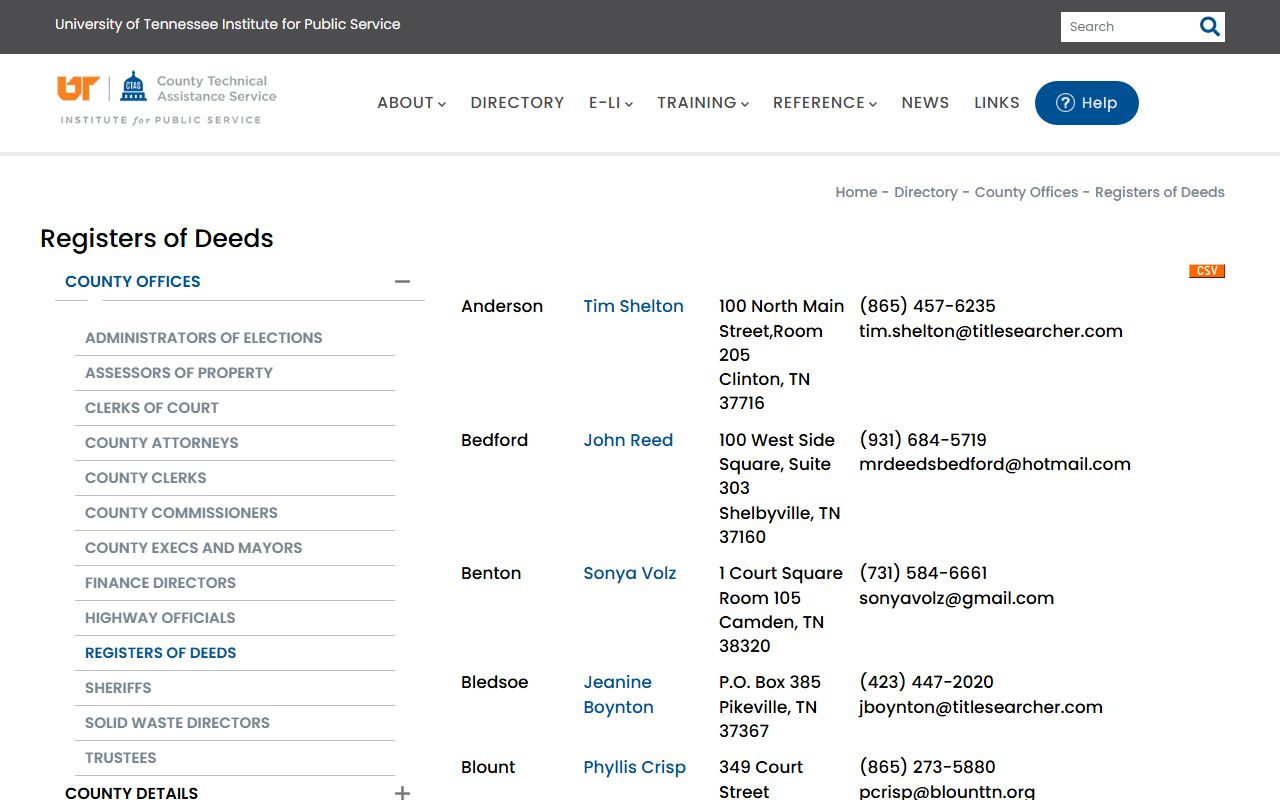
That directory does not replace the county office, but it helps you get to the right Scott County record source fast.
How to Search Scott County Deed Records
A Scott County deed search works best when you begin with a grantor, grantee, or parcel clue. That is the same practical rule used across Tennessee. If you know who sold or bought the land, start there. If you only know an approximate year, use the land-record date range and narrow it as you go. For older Scott County deed records, the index matters as much as the deed image because the book and page trail is what links one filing to the next.
The county record set begins in 1849, so there is enough depth here to require patience on older land. A deed may show up in a later book than the date on the paper itself. That is why a direct year-only search can miss the result. If the office needs more detail, bring the legal description, tax clue, subdivision name, or any prior deed reference you already have. Each clue cuts the search time down.
When you are ready to trace Scott County deed records, the strongest supporting state resource is the Tennessee State Library and Archives guide at How to Find Deeds. It explains grantor and grantee indexes, why deed books are not always filed by the same year they were signed, and how archived copies are requested when a record is older than the courthouse index you are using.
If you are matching a deed to a parcel, the TNMap property assessment portal can help you confirm the parcel ID, the owner name, and the legal description before you request the county record. That extra step is often the fastest way to get from a rough idea to the exact Scott County instrument.
Scott County Deed Records Rules
Scott County deed records follow Tennessee recording rules. The document must be legible, signed, and ready for indexing. State guidance also expects the preparer line, owner and taxpayer names, and the parcel identification number to be clear. Those pieces matter because the county office has to file the document in the correct chain of title. If one part is missing, the office may have to stop and ask for a fix before the record goes in.
The most useful legal backstop is the CTAS recording guide at Register of Deeds Records. It explains the kinds of instruments the office handles and the basic recording steps counties use across Tennessee. That guide is helpful in Scott County because it gives you the same rules the office follows when a deed, mortgage, or lien comes in the door. It is also a good reminder that the register is not just storing papers. The office is creating the public notice that protects the land record.
Scott County deed records also connect with the county assessment side. If you know the current tax map number, the county parcel file can help verify the land description before you ask for the recorded deed. That bridge matters in Scott County because older farms and long-held tracts often have more than one way to describe the same land. The more exact the clue, the cleaner the record pull.
Note: Recording fees and tax charges can change, so confirm the Scott County office total before you mail or file a deed.
Scott County Deed Records History
Scott County deed records reach back to 1849, so the county has a workable historic trail for title research. That is enough depth to matter when you are following inherited land, an old farm split, or a property that changed hands before the modern parcel system. Old Scott County records may live in deed books, older indexes, or archive copies that need a different search path than a recent filing.
The Tennessee Registers Association at tennesseeregisters.com is a useful state-level background source when you want to compare how county registers work across Tennessee. It does not hold the deed itself, but it helps place Scott County inside the broader land-record network. The County Officials Association of Tennessee at tncountyofficials.com is another clean reference when you need a state association path instead of guessing at a county webpage.
If your search reaches back into older books, the archive path can matter more than a current office window. That is where TSLA and the county office work together. The archive helps with older runs, while the county office is still the place that handles current recorded papers. In Scott County deed records work, both sources can be part of the same title trail.
Note: Older deed books may require both the index and the image to understand the full Scott County chain of title.
More Tennessee Deed Records
Scott County deed records are strongest when you pair the county office with the state guides. Use the office for current filings, TSLA for older books, and the CTAS guides when you need to confirm the rules behind the record. That combination cuts out guesswork.
You can compare Scott County with other counties on the county directory page, or use the state property tools when you need parcel context before a deed request. The county record always wins for the official filing, but the state tools help you get there faster.