
Access Sequatchie County Deed Records
Sequatchie County deed records are the key source for land in Dunlap and across the county. If you need a deed, mortgage, lien, or older title clue, the Register of Deeds office is the place to start. Sequatchie County has land records from 1857, so some searches are quick while older ones need a careful run through the index and the deed image. Begin with the name or parcel clue you already have, then move toward the county office or state support source that fits the record.
Sequatchie County Quick Facts
Sequatchie County Deed Records Office
The Sequatchie County Register of Deeds is Ricky A. Rogers. The office is at 111 East 4th Street in Dunlap, TN 37327. The mailing address is P.O. Box 109, Dunlap, TN 37327. The phone number is (423) 949-2622, the fax number is (423) 949-2623, and the email listed in the research is rickyrogers@sequatchiecounty-tn.gov. That office keeps the county's deed books, mortgage filings, and lien records for Sequatchie County property.
When the county website is not supplied in the research, the cleanest statewide office reference is the CTAS Registers of Deeds directory. It gives you the county office path without making you guess at the local contact flow. That is useful in Sequatchie County because the office details are the first step before you ask for a copy, a book reference, or a recorded image.
The image below points to that CTAS directory. It is the most reliable high-authority county reference available in the research for Sequatchie County deed records.
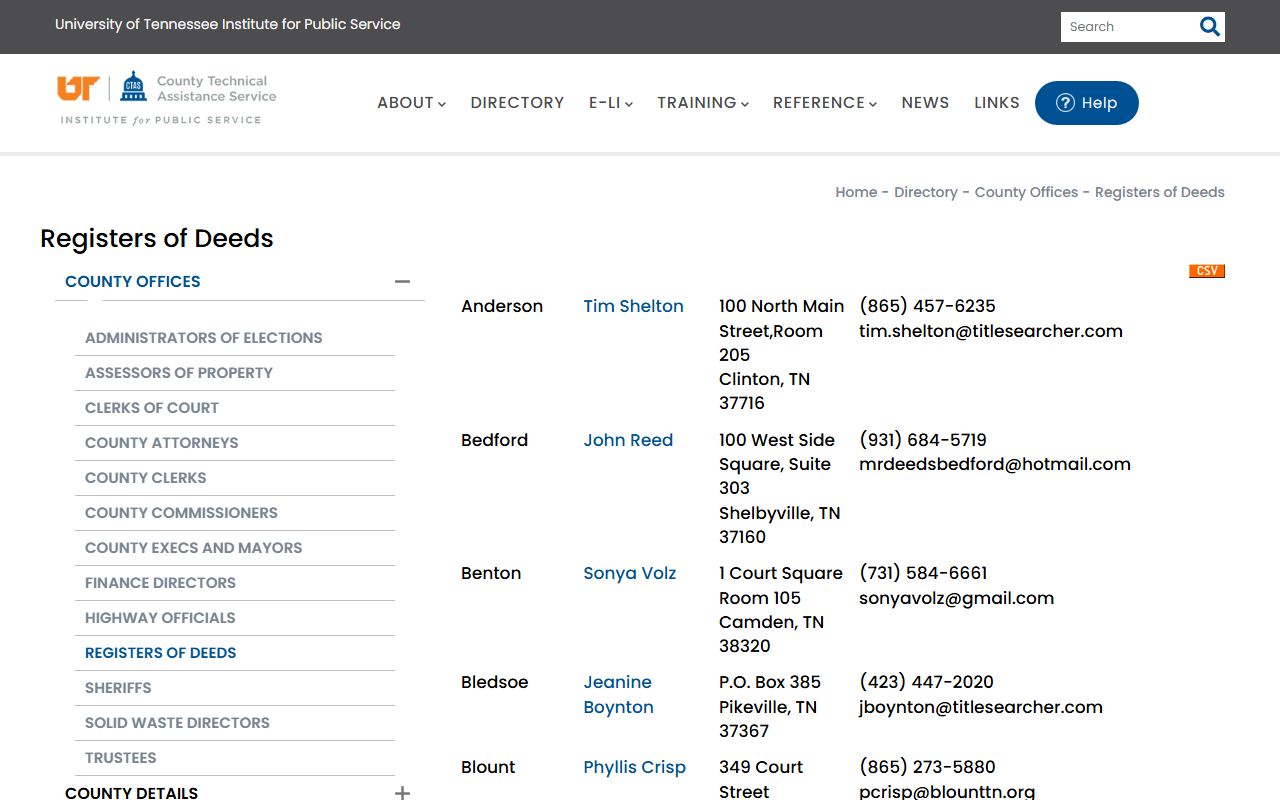
Use the directory first when you want the register office path, then move to the county request process or archive work if the deed is older.
How to Search Sequatchie County Deed Records
The best Sequatchie County deed search starts with a name. Grantor and grantee searches usually get you to the deed faster than an address-only search. If you have a parcel clue, that helps too, because parcel numbers and legal descriptions often separate one tract from another. Sequatchie County land records begin in 1857, so an old deed may sit behind a book reference or an index line that does not show up in a simple year search.
That is where the Tennessee State Library and Archives deed guide can help. The page at How to Find Deeds explains how the grantor and grantee indexes work and why a deed may be recorded later than the date written on it. In Sequatchie County that matters a lot, because the county's older trail can require you to search beyond the exact date you first expected.
If you are matching a deed to a parcel, the TNMap property assessment portal is a useful check before you ask for the county filing. It can help confirm the owner name, parcel ID, and other assessment details that point you to the right Sequatchie County record. That is often the fastest way to reduce guesswork in a rural land search.
The county search works best when you collect the exact name, a year range, and any old book or map clue before you contact the office. The office can handle the record, but the better your starting facts, the faster the pull.
Sequatchie County Deed Records Rules
Sequatchie County deed records follow Tennessee recording rules. A deed needs to be legible, signed, and ready for indexing. The state guidance also expects the preparer line, owner and taxpayer names, and the parcel identification number. Those details help the register file the instrument in the right chain of title and make later searches more reliable.
The most useful state-level explanation is the CTAS guide at Register of Deeds Records. It gives the normal instrument types, the basic public-record flow, and the reason county offices treat deed documents as part of the public land trail. Sequatchie County deed records fit that same framework, so the CTAS guide is a strong match for the office work in Dunlap.
If you need a broader law reference, Tennessee recording and access rules are also shaped by the Public Records Act and recording statutes. You do not need those citations for every search, but they help explain why the county office can provide inspection and copies during business hours. The practical point is simple. Sequatchie County deed records are public, and the office keeps the official copy.
Note: Confirm recording fees and copy charges with the Sequatchie County office before you file or request a certified copy.
Sequatchie County Deed Records History
Sequatchie County deed records start in 1857, which gives the county a useful historical trail without making the search too broad to manage. Older land in Sequatchie County may have moved through several private owners, family transfers, or mortgage filings before it reached the current record. That means a deed search may need more than one book and more than one index run.
The Tennessee Registers Association at tennesseeregisters.com is a solid state reference when you want to understand the county register network behind a search like this. The County Officials Association of Tennessee at tncountyofficials.com is another good state-level point of contact. Neither one replaces the county office, but both help place Sequatchie County deed records in a statewide context.
Older Sequatchie County records may also benefit from archive support. That is where TSLA can help if you need to go beyond the county office's day-to-day search window. The county office handles current filing, but the archive path helps with older books and long title chains that stretch across the county's record history.
More Tennessee Deed Records
Sequatchie County deed records are best handled with the county office, the CTAS guide, and the archive tools used for older books. That combination makes a narrow search much easier to finish.
When you need another county or a parcel cross-check, use the county directory and the state assessment portal together. The county record remains the source of truth, but the state tools help you get there with less backtracking.