
Smith County Deed Records
Smith County deed records are the main trail for land in Carthage and the rest of the county. If you need a deed, mortgage, lien, or older title clue, the Register of Deeds office is the place to start. Smith County has land records from 1799, so the search can move from a recent filing to a deep historic book trail. Start with the name, date range, or parcel clue you have, then narrow the record with the county office or state support tools that fit the search.
Smith County Quick Facts
Smith County Deed Records Office
The Smith County Register of Deeds is Rita J. Brown. The office is at 122 Turner High Circle in Carthage, TN 37030. The phone number is (615) 735-1760, the fax number is (615) 735-1761, and the email listed in the research is smithrod@smithcountytn.gov. That office keeps the county deed books, mortgage records, and lien filings for Smith County property.
The research does not provide a county website URL, so the best high-authority office reference is the CTAS Registers of Deeds directory. It gives you a clean state-level path to Smith County's register office and helps confirm the county contact structure before you visit or ask for a copy. The directory is also useful if you are comparing Smith County with another Tennessee deed-record office.
The image below points to that directory and gives you a quick visual reference for the county office source behind Smith County deed records research.
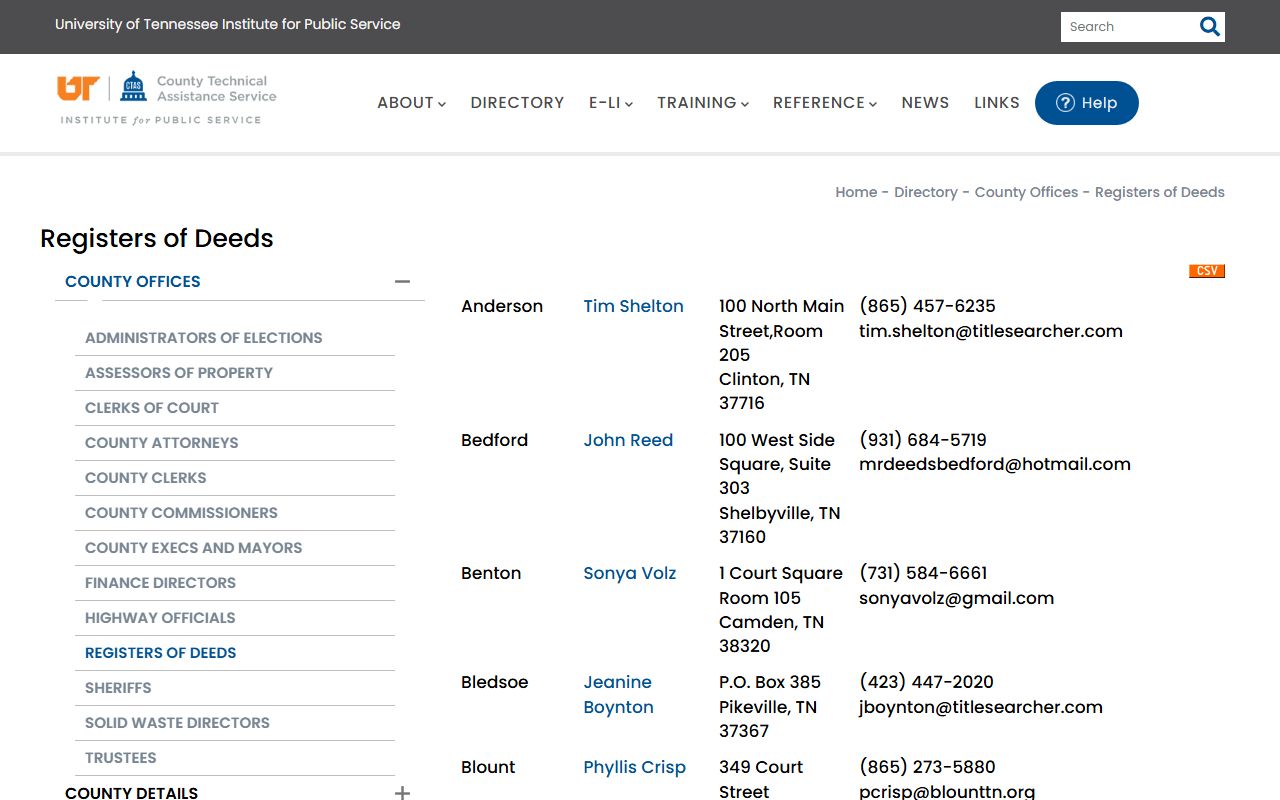
The directory is not the deed book itself, but it is a fast route to the office details you need for the official Smith County record.
How to Search Smith County Deed Records
A Smith County deed search works best when you begin with a grantor or grantee name. That is the fastest route through the index because the deed books are organized around the names tied to the transfer. If you only know the year, you can still work the search, but older records may sit in a different book than you expect. Smith County land records start in 1799, so the county has enough depth to make careful index work worth the time.
The Tennessee State Library and Archives deed guide at How to Find Deeds is a strong companion for older Smith County work. It explains how deed books and indexes function, why a record may be filed later than the date written on the paper, and how archived copies are requested when the courthouse record is too old for an easy pull. That is useful in Smith County because older land can require a broader search window.
If you want parcel context before you ask the office for a deed, the TNMap property assessment portal and the county assessor file can help you verify the parcel ID and owner name. That is a good way to reduce guesswork when the land has changed hands many times or when the legal description is the only clue you have at first.
Smith County deed records are easier to trace when you bring a name, a date range, and one solid parcel clue to the search. That keeps the office request narrow and makes the chain of title easier to follow.
Smith County Deed Records Rules
Smith County deed records follow Tennessee recording rules. A deed has to be legible, signed, and ready to index. The state guidance also expects the preparer line, owner and taxpayer names, and the parcel identification number. Those details let the register file the instrument in the right chain of title and make the record useful for later searches.
The CTAS guide at Register of Deeds Records is the best state-level rule summary for Smith County deed work. It explains the office's role, the kinds of records counties handle, and why a clear filing matters. For Smith County deed records, that is important because the county office is not just holding papers. It is creating the public notice trail that future searchers depend on.
Smith County deed records also connect with tax and parcel data. If a deed search starts with a tax map number, the assessment side can help confirm the tract before you ask for the official filing. That is often the quickest way to keep an older title search from drifting into the wrong parcel or the wrong family name.
Note: Confirm recording fees and copy prices with the Smith County office before you submit a deed or ask for a certified copy.
Smith County Deed Records History
Smith County deed records begin in 1799, which gives the county a long historic trail for property research. That matters when you are tracing inherited land, an old farm split, or a parcel that changed ownership before modern assessment maps were common. Older Smith County records may require book images, index runs, or archive support if the deed is not in the current office file.
The Tennessee Registers Association at tennesseeregisters.com and the County Officials Association of Tennessee at tncountyofficials.com are both solid state-level sources for office context. They do not replace the Smith County record, but they help you keep the search grounded in the right county system. That is useful when the deed trail is long or when you are comparing one county office to another.
Archive support can matter too. If the deed trail goes farther back than the current office window, TSLA may help you continue the search. That combination of county office, state guide, and archive support is usually the cleanest way to handle Smith County deed records.
More Tennessee Deed Records
Smith County deed records are easiest when you use the county office, the CTAS guide, and the archive tools together. That keeps the search close to the official filing while still giving you help with older books.
When you need another county or a parcel cross-check, the county directory and TNMap portal are the safest next steps. They help you confirm the tract before you request the deed itself.