
Van Buren County Deed Records
Van Buren County deed records are the basic trail for land ownership in Spencer and the rest of the county. If you need to find a deed, a mortgage, a lien, or a recorded release, the Register of Deeds office keeps the official copy. Van Buren County land records begin in 1840, which gives the county a long enough record set to matter for both current property questions and older title work. Searches often start with a name or a parcel clue, then move into the book and page line that proves where the land sits in the chain of title.
Van Buren County Quick Facts
Van Buren County Deed Records Office
Shirley Taylor is the Register of Deeds in Van Buren County. The office mailing address is P.O. Box 9, Spencer, TN 38585. The phone number is (931) 946-7363, the fax number is (931) 946-7364, and the email listed in the research packet is vanburencountyrod@gmail.com. That office is where the county's deed books, mortgage records, and lien files stay organized. If you need a certified copy or a book reference, the register's office is the place to ask. It is also the office that can tell you whether an older tract is in the current index or whether you need to push farther back into the book trail.
The county directory page behind the image is the CTAS Van Buren County ROD Directory. It is the strongest statewide backstop when you need office details or a second check before you call the county. The image below points to that directory because it is the cleanest link between a Van Buren County deed question and the register office that holds the record.
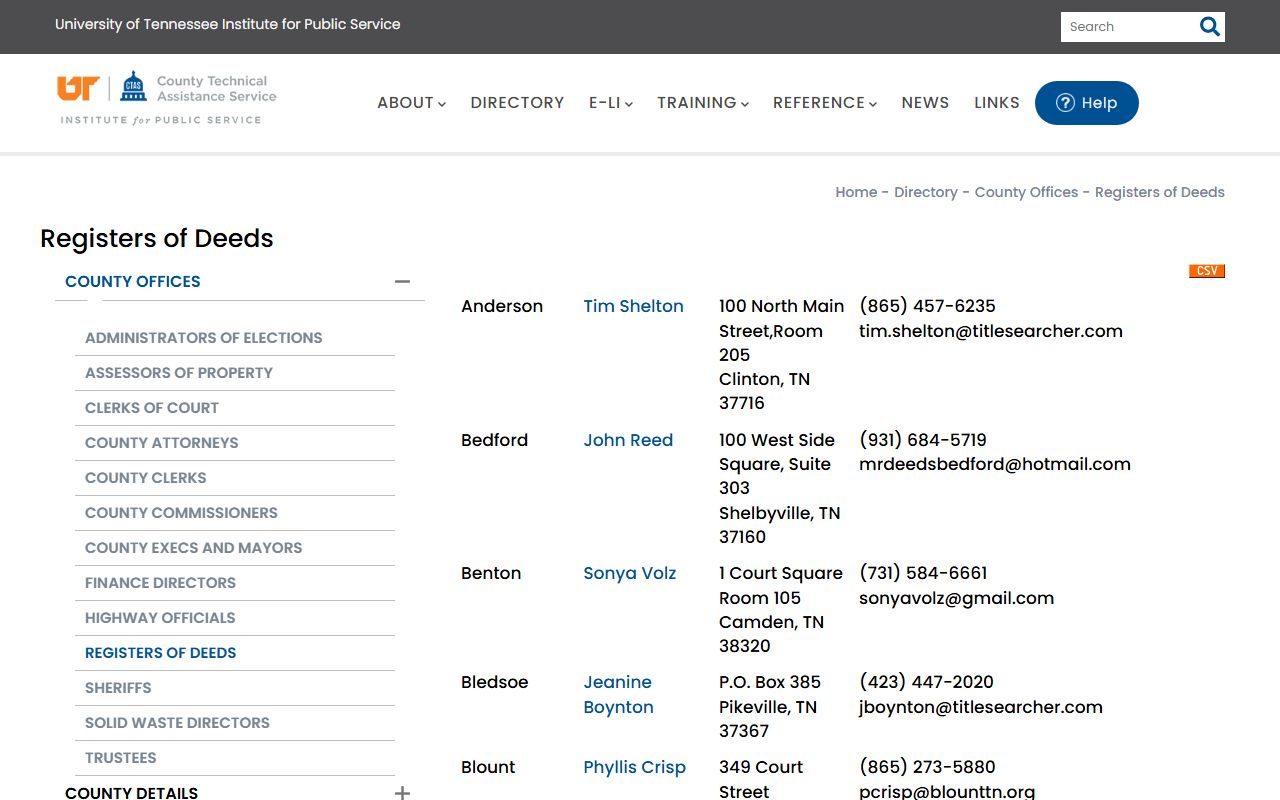
That directory keeps the county office path clear. It is not the deed book itself, but it helps you get to the right office with less guesswork.
| Office | Van Buren County Register of Deeds |
|---|---|
| Mailing Address | P.O. Box 9 Spencer, TN 38585 |
| Phone | (931) 946-7363 |
| Fax | (931) 946-7364 |
| vanburencountyrod@gmail.com |
Search Van Buren County Deed Records
Van Buren County deed searches should begin with the easiest clue you have. If you know the person, start with the grantor and grantee indexes. If you know the rough year, use that to cut the search down. If you know the parcel, move from the tax side back to the deed. Those steps matter because Van Buren County records run back to 1840, and older rural tracts can show up in more than one book before the chain of title is clear. A precise search keeps the work clean and avoids extra time in the wrong volume.
For older records, the Tennessee State Library and Archives deed guide is the best fallback. TSLA explains how grantor and grantee indexes are organized and why a deed may be recorded in a later year than the date on the document. That is a common issue in Van Buren County deed work. A deed written in one season and recorded much later can still matter for the title trail, and the archive guide helps you spot that gap.
The county side pairs well with the statewide assessment tools. The TNMap property assessment portal can give you parcel and owner clues, and the CTAS assessor property records guide explains how assessor data and deed records fit together. If you want a broader office reference, the CTAS register of deeds records guide gives you the common filing rules that apply across Tennessee.
- Grantor or grantee name
- Approximate recording year
- Book and page number
- Parcel ID or legal description
Note: Van Buren County deed searches tend to move faster when the parcel clue and the name clue are checked together.
Van Buren County Deed Records History
Van Buren County land records begin in 1840, which gives the county a long but manageable title history. Early books may be sparse, but they still show who first recorded the land and how later transfers changed the property. A good search often needs both the oldest record you can find and the newest one you trust. That is because one book may show the original tract while another shows the later split or transfer that made the present parcel.
The county records can include deeds, mortgages, liens, and related filings that explain how the land moved over time. Those papers are often enough to answer a question about ownership, but the older trail can also benefit from the state archive guide and the state assessment side. The more rural the tract, the more likely you are to need a second clue to keep the search pointed at the right line of title.
The statewide directory at tennesseeregisters.com is a useful way to place Van Buren County inside the broader Tennessee register network. That does not give you the deed image, but it keeps the county search aligned with the state system.
Van Buren County Deed Records Access
Van Buren County deed records are public, so the register's office can usually let you inspect them during business hours unless another law limits the file. The public records right in T.C.A. § 10-7-503 is the reason those books are open to the public in the first place. That rule matters because it keeps land records from becoming private files. It also means a searcher can ask for a record, inspect the filing, and request a copy when needed.
Because the research packet does not list a Van Buren County fee schedule, the safest move is to confirm the copy cost before you request a certified copy or a long printout. A page count, a book reference, and a date range usually make the request faster. It also helps to know whether the county already has the record digitized. That can save a trip to Spencer when a clean copy can be mailed or pulled on site.
Use the CTAS directory and the County Officials Association of Tennessee if you need a broader office map. Those links are useful support tools, but the county office still controls the live record and the copy process.
More Tennessee Deed Records
State tools make a Van Buren County search stronger. TSLA helps when a book is old. TNMap and the assessor guide help when the search starts with a parcel. The CTAS register guide helps when you want to know what should be in the filing. Together, those tools keep a rural county search precise, which is the whole point of deed research.
If you need to move on to another county later, the same habits still work. Start local. Use the county office first. Then use the state guides to bridge any gap between the parcel, the owner, and the recorded instrument. That is how deed work stays useful instead of just busy.