
Search Nashville Deed Records
Nashville deed records are recorded through the Davidson County Register of Deeds, so the best search starts with the county land-record office that serves property inside the Metro Nashville area. Whether you need a recent deed, a trust deed, a release, a plat, or an older chain-of-title clue, Nashville deed records can usually be tracked through the county portal, archive references, and register office support. This page focuses on how Nashville users can search, verify, and request those recorded land documents without losing sight of the county office that holds the official filing.
Nashville Deed Records Quick Facts
Nashville Deed Records Office
Nashville deed records are handled by the Davidson County Register of Deeds, because Nashville and Davidson County share the same local land-record office. The research lists Karen Johnson as the register, with the office at 300 Deaderick Street, Nashville, TN 37201. The mailing address is Public Square Garage, Nashville, TN 37201. The office phone is (615) 862-6790, and the office is the place to request recorded deeds, plats, trust deeds, and certified copies tied to Nashville property.
Nashville users have a stronger online path than many other cities. The Davidson County online portal supports searching by owner name, address, instrument type, date, book and page, and map and parcel data. That matters because Nashville deed records often begin with an address search and then move into the legal description and recorded image. The portal gives a practical bridge between those two steps.
The image below points to the main register office for Nashville deed records. It is the central county office that records the city land filings and supports copy requests.
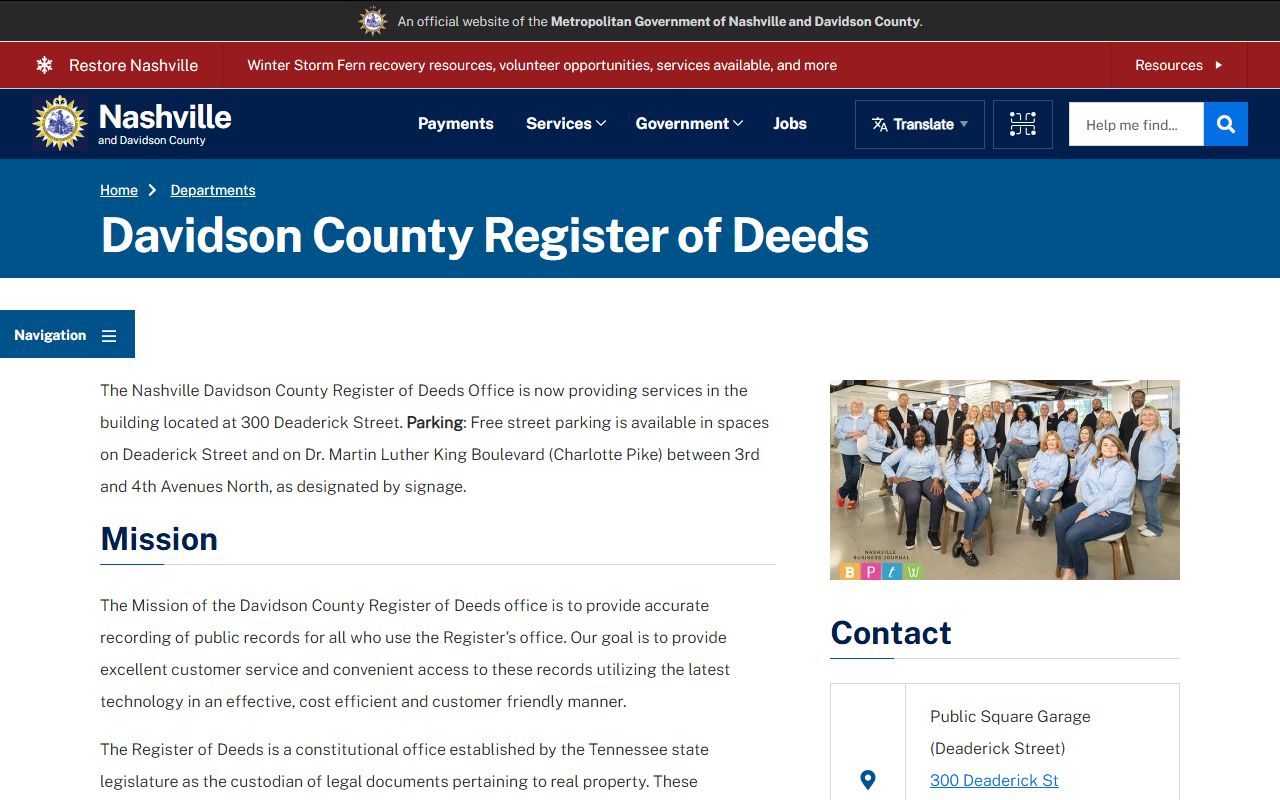
The Nashville-Davidson County Register of Deeds page is the best official source for office contact details, local forms, and service updates tied to Nashville deed records.
Search Nashville Deed Records Online
Nashville deed records are easier to search when you know what clue you have first. If you know the owner, use a name search. If you know the street address, use the county portal and move from address to parcel or instrument results. If you already have a deed citation, go straight to the book and page search. That sequence matters because Nashville deed records are still county-recorded documents, even though the search feels local to the city.
The Davidson portal is the most direct online route for Nashville deed records. It gives public users a way to search by name, address, subdivision, parcel, or instrument type. That is useful for recent conveyances, trust deeds, releases, and related filings. When a property has changed hands many times, a deed search in Nashville often works best by moving backward or forward one instrument at a time.
The portal image below is worth reviewing because it shows the main search tool most Nashville deed records users will start with before calling the register office.
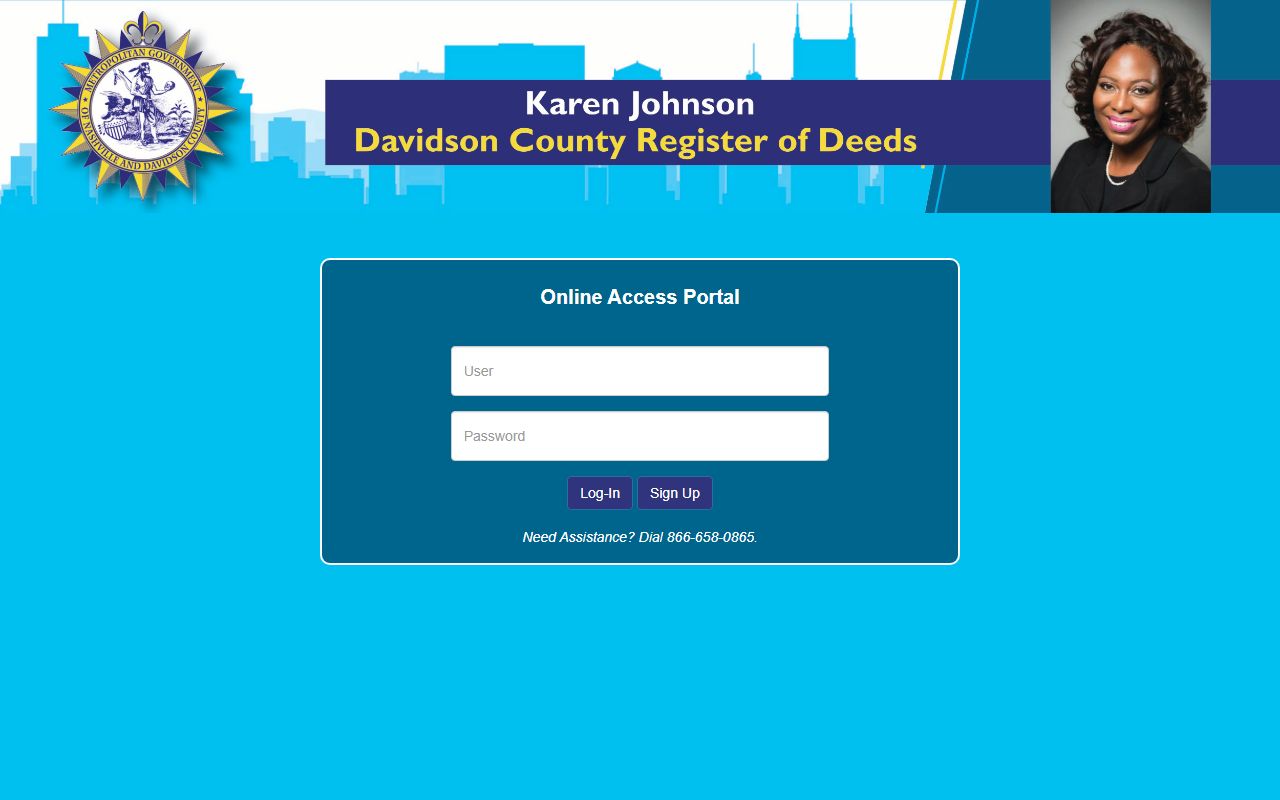
The online portal works well for current Nashville deed records because it ties address, parcel, and instrument lookup into the same county search environment.
Research on the Davidson County section also notes a county mobile app. That can help users who want quick Nashville deed records access without sitting at a desktop portal all day. It is not a substitute for the official recorded image, but it adds one more local search route inside the same county system.
Nashville Deed Records History
Nashville deed records are not only about current filings. The research points to Metro Archives resources, including deed-related historical materials, city directories, maps, and county research aids that help place a property in time. That matters when a Nashville deed search reaches older neighborhoods, old lot lines, or a tract that changed shape long before modern parcel systems were built.
Historical Nashville deed records often require archive support because the land record trail can intersect with maps, directories, and county history materials. The research specifically mentions Nashville city directories, old atlases, and Sanborn maps. Those are not deeds themselves, but they help you match a deed description to a real place on the ground. In older title work, that connection can save hours.
The archive image below points to the historical source most useful when a Nashville deed records search moves beyond a recent county portal result and into deeper property history.
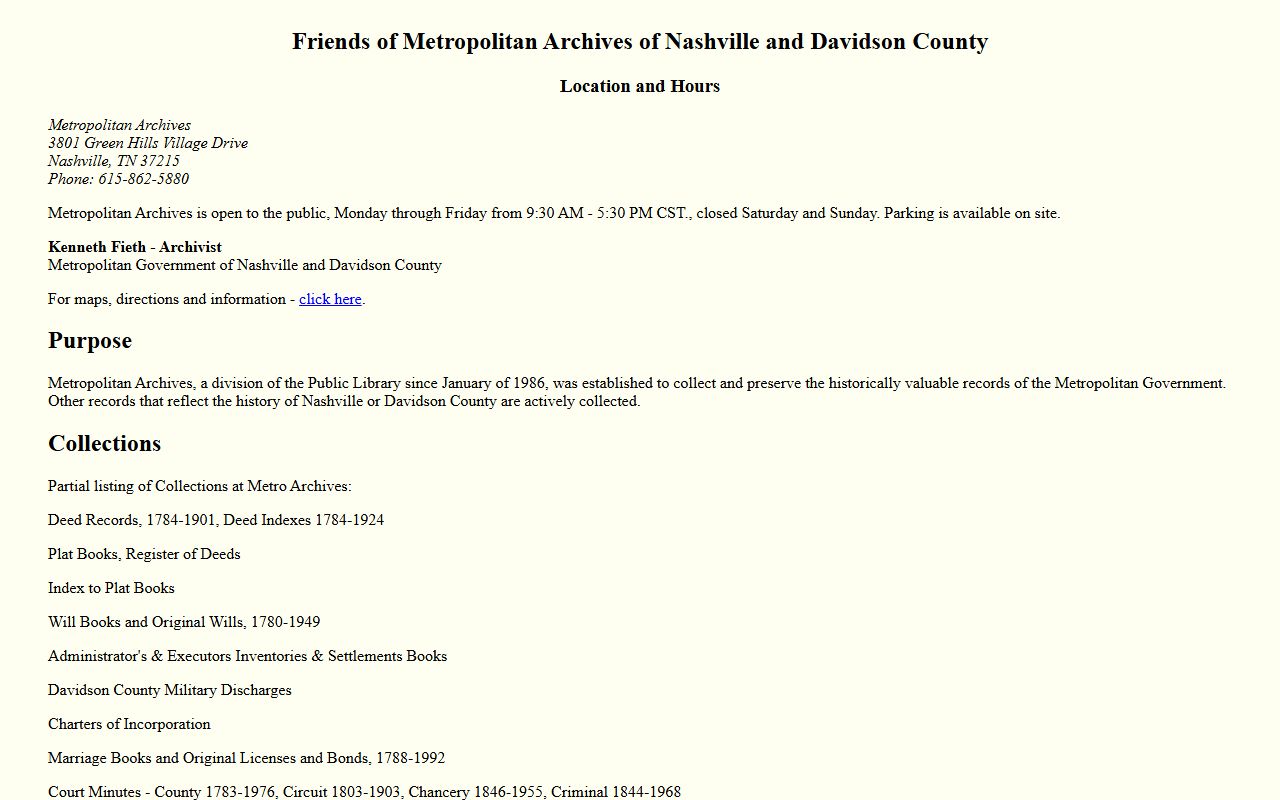
The Metro Archives page helps extend Nashville deed records research into historic maps, records, and local reference materials that support chain-of-title work.
For even older record guidance, statewide archive support still matters. The Tennessee State Library and Archives deed guide explains grantor and grantee index logic, deed book searching, and why recording dates can differ from the date written on the instrument. Those rules apply to Nashville deed records too.
Nashville Deed Records Requirements
Nashville deed records follow Tennessee recording rules because the city records through the county register. A deed still needs legible text, valid signatures, a proper acknowledgment, owner and taxpayer information, a preparer line, and a parcel identification number. The CTAS register of deeds records guide is useful here because it explains the filing standards that shape every county recording office in Tennessee, including Davidson County.
Nashville deed records are also affected by parcel and assessor data. The CTAS assessor property records guide and the county portal both help connect land records to parcel identification. If a deed search starts with a lot address in Nashville, that parcel data can help confirm the tract before you rely on the recorded legal description alone.
Tennessee remains a race-notice state, so the timing of recording matters. Prompt recording protects the public chain of title and helps future searchers see the instrument when they inspect Nashville deed records. If transfer tax or mortgage tax applies, the document has to clear that issue before the office accepts it.
Note: Nashville deed records may feel city-based to the user, but the legal recording standards are county and state rules applied through the Davidson County Register of Deeds.
What Nashville Deed Records Show
Nashville deed records usually show the grantor, grantee, recording date, instrument date, legal description, and the references needed to follow the chain of title. Depending on the document, they can also show trust deed terms, release references, map references, subdivision names, and derivation clauses. That mix is what makes Nashville deed records useful for closings, title review, tax map confirmation, and older property research.
A Nashville deed records search can involve more than standard warranty deeds. The county register also handles deeds of trust, liens, releases, plats, powers of attorney, and military discharges. Each one can shape the title trail. A clean property history often requires reading more than the deed itself. You may need the release, the plat, and the prior conveyance to understand what happened.
For commercial property, the Tennessee Secretary of State business entity search can help verify the company name shown in Nashville deed records. That is especially useful when the grantor or grantee is an LLC or corporation and the recorded name needs to be checked against the state's business registry.
Nashville deed records work best when you compare the county record, parcel clue, and archive support together instead of relying on a single search result alone.
Davidson County Deed Records
Nashville deed records are recorded through Davidson County, so the county page gives the wider office context, county-level search details, and county land-record tools behind the city's filings.
Nearby Tennessee Cities
If you need deed records for another large Tennessee city, use the city directory below to move into the local county register path for that area.